
Last updated September 25, 2026
ADU Design & Permitting Maintenance Checklist for Santa Ana Homeowners
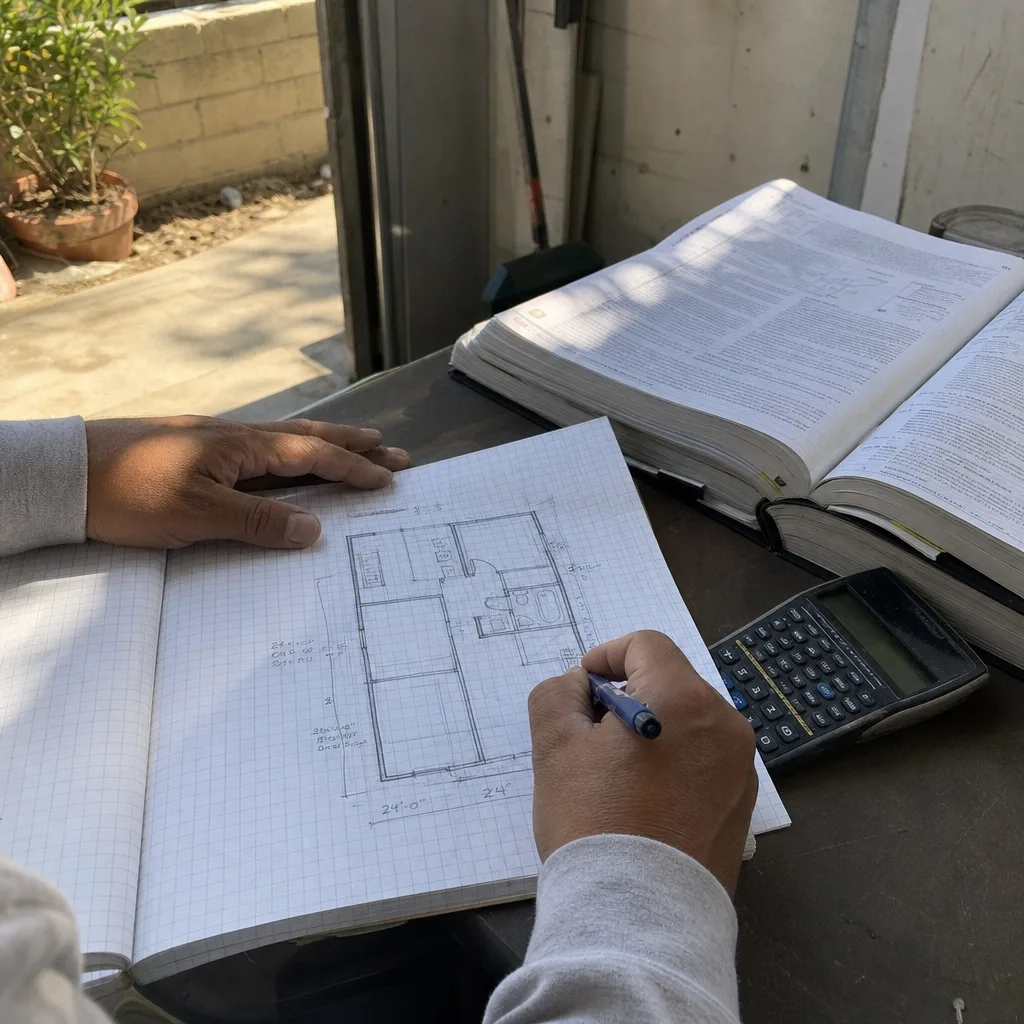
When a Santa Ana homeowner sells a property with an unpermitted ADU conversion, the county assessor’s correction can claw back years of rental income in back taxes. We’ve seen it happen in the Delhi neighborhood and again near Madison Park: a $400 garage conversion, never properly permitted, triggers a reassessment that erases the very cash flow the owner counted on. Most ADU checklists stop at certificate of occupancy. This one starts there, because the permit set you receive at the end of construction is the operating manual for every inspection, insurance claim, and future sale your ADU will ever face. What follows is a document-custody checklist organized around the paperwork that protects your investment, not just the construction milestones that built it.
Quick Answer
An our ADU Design & Permitting services maintenance checklist for Santa Ana homeowners centers on three custody rules: keep the final permit set, the certificate of occupancy, and the as-built drawings in a fireproof location accessible to future title searches; schedule annual maintenance checks tied to the mechanical permit’s HVAC service intervals and smoke/CO detector replacement cycles; and verify any existing ADU’s permit history through Santa Ana’s online portal before purchase or lease. These documents govern insurance claims, tenant disclosures, and resale value for the life of the structure.
Table of Contents
- Why the Permit Set Matters More Than the Build Itself
- Which Documents to Request at Each Permit Stage
- Where to Store Permit Documents for Future Title Searches
- Post-Certificate-of-Occupancy Maintenance Triggered by the Permit Set
- How to Audit an Existing ADU’s Permit History in Santa Ana
- Annual Checks Tied to Santa Ana’s Climate
- The Three Documents California Requires You Transfer to Tenants
- Common Mistakes to Avoid
- When to Call a Professional
- Frequently Asked Questions
- The Bottom Line
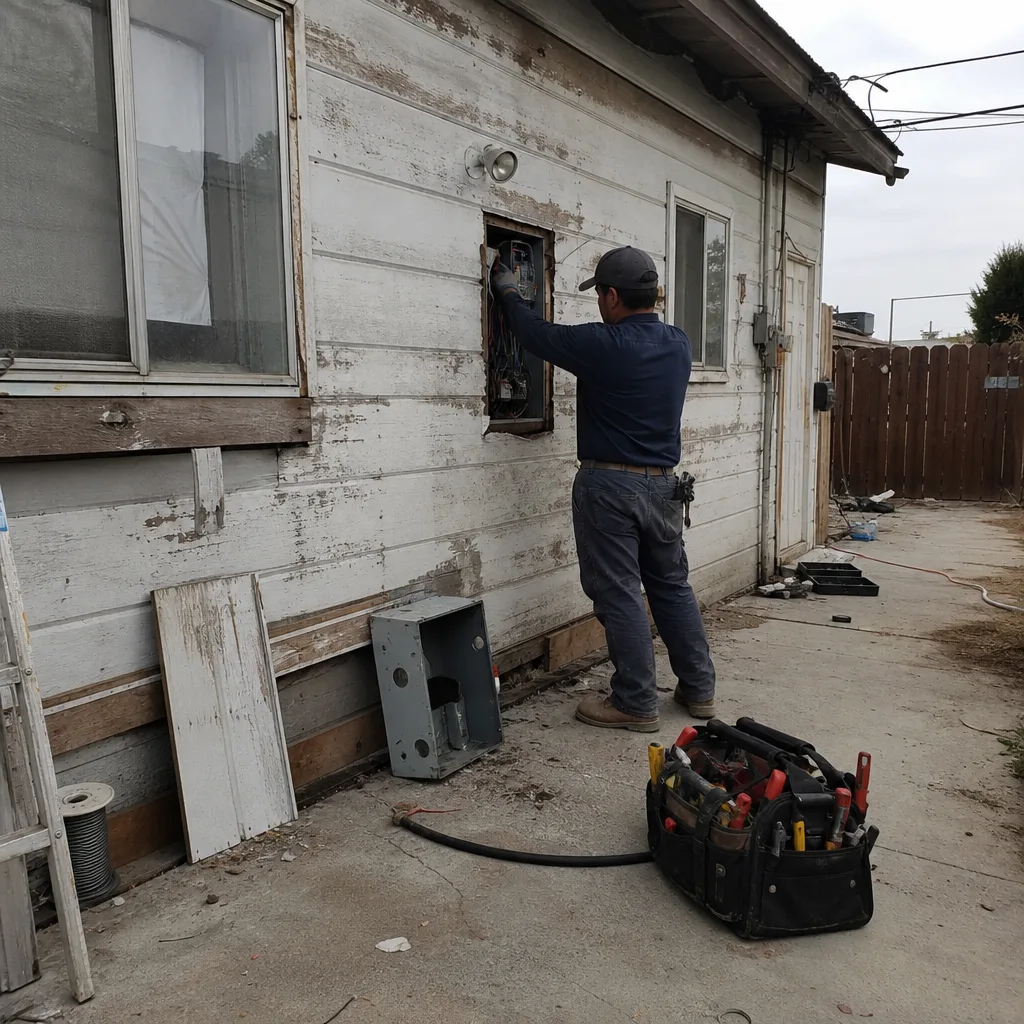 Before
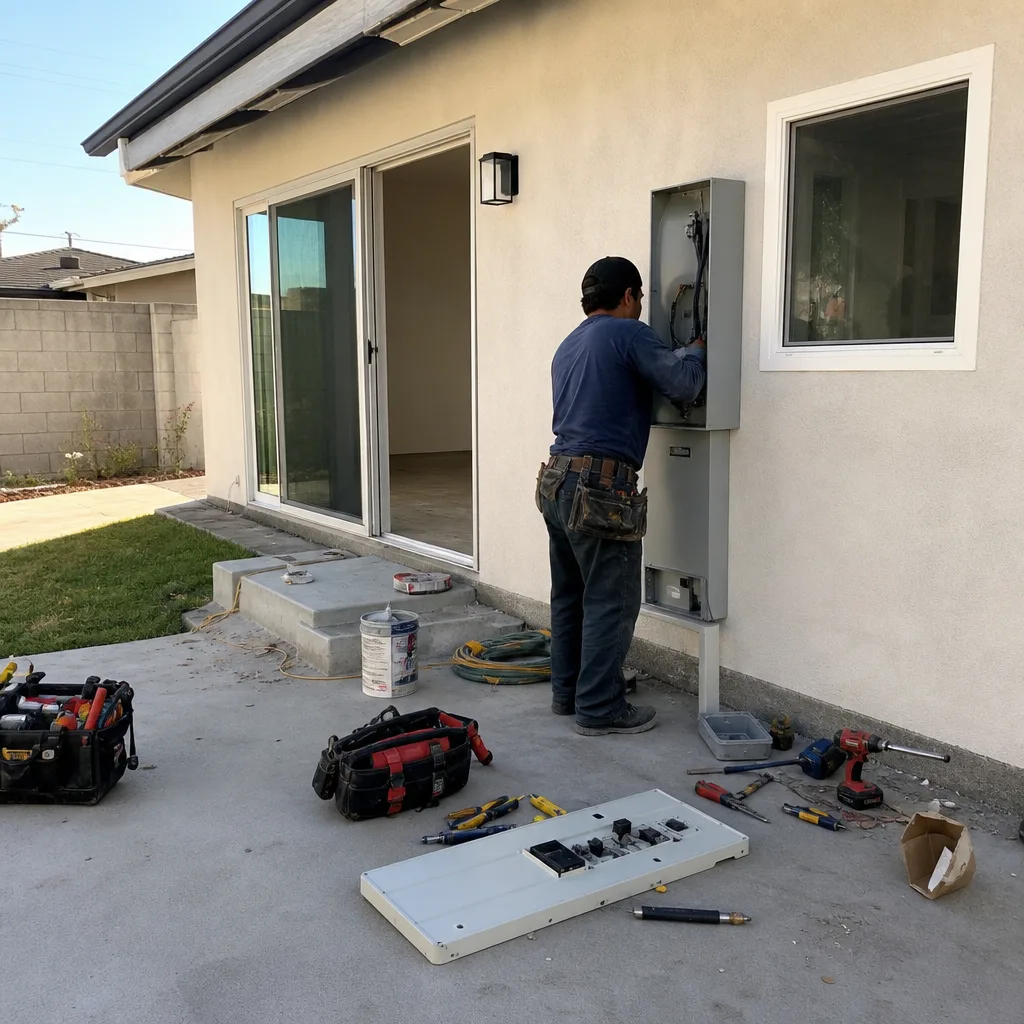 After
AfterWhy the Permit Set Matters More Than the Build Itself
The typical ADU checklist treats permitting as a hurdle to clear. We treat it as the product. At Ellery ADU Studio Santa Ana, every project - whether a garage conversion ADU in Santa Ana or a new detached ADU in Santa Ana - delivers a permit set that functions as the ADU’s permanent record. This is not an afterthought. It is the core deliverable.
Here’s why document custody outlasts construction quality in practical importance:
- Title insurance relies on permit records. A gap in the permit history can trigger an exclusion on your owner’s policy, leaving you exposed if a buyer’s lender flags the ADU.
- Insurance claims require permit verification. After the 2023 flooding in parts of Santa Ana, carriers denied claims on unpermitted conversions where the work had never passed final inspection.
- Tenant disputes turn on code compliance. California’s habitability standards reference the permit set; an unpermitted bedroom window below egress size becomes immediate liability.
- Resale value is permit-dependent. In Santa Ana’s competitive market, buyers and their lenders increasingly run permit histories through the city’s online system before close of escrow.
The Haven Standard, Clause 3 (Documented Deliverable), requires that every Ellery client receive the complete permit set, the certificate of occupancy, and the as-built photo record in both physical and digital form. We’ve delivered on this for 900+ ADUs since 2015. The clients who stay organized prosper. The ones who lose the paperwork call us years later, often in a hurry, usually because a sale or insurance event has forced the issue.
Which Documents to Request at Each Permit Stage
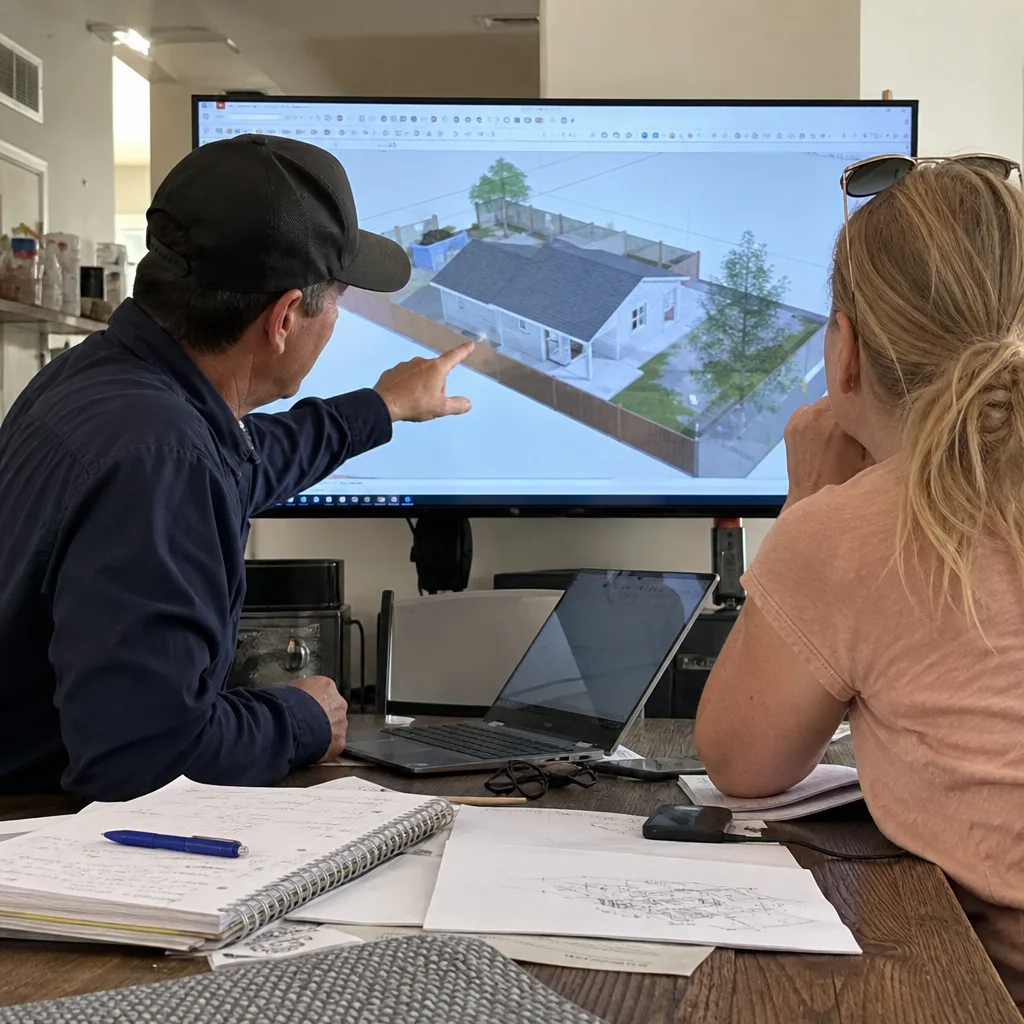
Not all permit documents carry equal weight. Here is what to request, when, and why each item matters for long-term custody.
Pre-Application Phase
- Property survey with ADU footprint noted. Santa Ana requires this for any detached ADU or garage conversion that alters the structure’s envelope. Keep the original survey; copies from the assessor may lack the ADU notation.
- Zoning confirmation letter. The city’s Planning Division issues this after verifying lot coverage, setbacks, and height limits. It is your defense if a neighbor later challenges the ADU’s placement.
- Utility capacity letter. Southern California Gas and SCE issue these separately. The gas letter in particular matters for Santa Ana’s older neighborhoods, where mains may not support additional meters without upgrade.
Plan Check Phase
- Stamped architectural drawings (full set). These are the “permit set” proper: floor plans, elevations, sections, and details. Request the digital .pdf and two physical sets.
- Structural calculations package. Required for detached ADUs and conversions that modify rooflines or open walls. Engineers often retain copyright; confirm you have license to reproduce for future reference.
- Title 24 energy compliance documentation. California’s energy code updates frequently. The version under which your ADU was built determines future retrofit obligations.
- Green building checklist (if applicable). Santa Ana’s local amendments may trigger additional requirements beyond state code.
Construction Phase
- Inspection request cards or digital logs. Each trade inspection - foundation, framing, plumbing, electrical, mechanical, final - generates a pass/fail record. In Santa Ana, these are now logged in the online permit portal, but we recommend screenshotting each passed inspection in real time. Portal migrations have lost historical data.
- Correction notices and resolutions. Failed inspections generate correction notices. Keep these with the resolution documentation. They prove the work was brought to code, not just that it eventually passed.
- Change orders with permit amendment. Any deviation from the stamped drawings requires a formal amendment. The as-built condition must match the amended permit set, or you face the unpermitted-work problem at resale.
Final Phase
- Certificate of Occupancy (C of O). This is the document that transforms permitted construction into legal habitable space. Without it, your ADU is not a rental unit under California law.
- Final inspection sign-off sheet. Confirms all trades passed and no outstanding corrections remain.
- As-built drawings. These reflect actual conditions, including any field changes. They differ from the original permit set and are essential for future renovation or repair.
- Warranty and maintenance schedule. The Haven Standard, Clause 7, provides a 365-Day Done Right Promise backed in writing. We also include manufacturer warranties for specified materials - James Hardie siding, for example, carries a 30-year limited warranty when installed to specification.
Where to Store Permit Documents for Future Title Searches
Document storage is not an organizational preference. It is a risk management decision. Here’s how to do it so the documents survive every scenario that might require them.
Physical storage: A fireproof document safe, rated for at least one hour at 1700°F, stored on an upper floor (flood risk in ground-level storage). Santa Ana’s flat terrain and aging storm drains create localized flooding in low-lying areas during winter storms. The safe should contain the original certificate of occupancy, the stamped permit set, and the final inspection sign-off. These are the documents a title company or assessor may want to inspect physically.
Digital storage: Three locations minimum. Cloud storage with version history (Google Drive, Dropbox, or equivalent), a local encrypted backup, and email to yourself with a clear subject line (“ADU Permit Set – [Property Address] – [Date]”). The email method survives even if you change cloud providers or lose local hardware.
Accessibility planning: Inform your estate attorney or trust administrator of the document location. If the ADU is held in a family trust, the permit set belongs in the trust’s property file. We’ve worked with Santa Ana clients whose ADU permit records were lost in probate because no one knew to look for them.
Update protocol: When you replace the HVAC system, upgrade electrical, or modify the ADU, the new permits and inspections join the original set. Maintain a single chronological file, not scattered folders. A future buyer’s inspector will want to see the complete permit history in sequence.
Post-Certificate-of-Occupancy Maintenance Triggered by the Permit Set
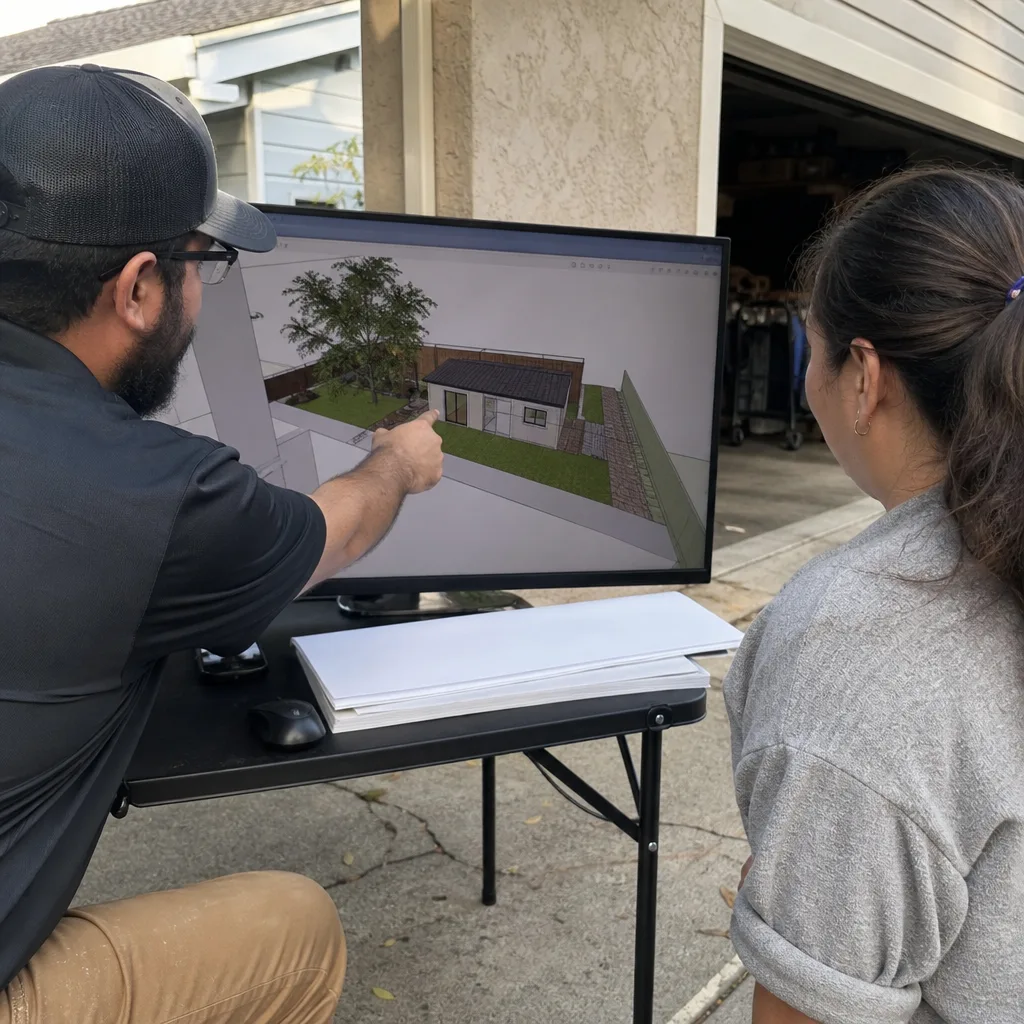
The mechanical permit, electrical permit, and plumbing permit each contain conditions that generate ongoing maintenance obligations. Most homeowners never read these permits after final inspection. They should.
HVAC Service Intervals
Santa Ana’s Title 24 compliance documentation specifies the heating and cooling system’s designed efficiency and the filter specification required to maintain it. The mechanical permit often includes a note: “System to be maintained per manufacturer specification to preserve energy compliance.” This is not boilerplate. A landlord who cannot produce maintenance records may face habitability challenges if tenant complaints arise.
Practical checklist:
- Replace filters per the mechanical permit’s MERV rating specification, not just when they look dirty. Santa Ana’s dust and Santa Ana wind events load filters faster than coastal Orange County.
- Schedule duct inspection every three years. The permit set shows designed airflow; measured airflow below 90% of design triggers Title 24 noncompliance.
- Keep service invoices with the permit set. They prove the system has been maintained to the permitted standard.
Smoke and CO Detector Replacement Cycles
California’s Building Standards Code, referenced in every Santa Ana ADU permit, requires hardwired interconnected smoke alarms with battery backup. The permit set specifies the model and interconnection method. Replacement must match the permitted specification, or you risk code violation.
Detector lifespan is 10 years from manufacture date, not installation date. The permit set’s equipment schedule lists installation dates; set calendar reminders for replacement at year 8, allowing procurement time. CO detectors, required in any ADU with fuel-burning appliances or attached garage, have similar replacement cycles.
Electrical Panel and GFCI Testing
The electrical permit specifies circuit capacity and GFCI/AFCI protection locations. Annual testing of GFCI outlets - the test/reset buttons - verifies function. Failed units must be replaced with the same specification, not the cheapest available substitute. The permit set’s panel schedule shows designed load; adding circuits without permit amendment voids the original approval and may overload the panel.
How to Audit an Existing ADU’s Permit History in Santa Ana
Before purchasing a property with an existing ADU, or before signing a lease as a tenant, verify the permit history. Unpermitted ADUs are common in Santa Ana’s older neighborhoods, particularly in the areas north of 17th Street where garage conversions predate modern ADU law; see ADU Warning Signs: A Santa Ana Homeowner’s Reference Guide for red flags to watch for.
Step-by-Step Portal Audit
- Navigate to the Santa Ana Permit and License Center portal.
- Select “Search Records” and enter the property address. Use the exact assessor’s parcel number if available; street address searches can return adjacent properties.
- Review all permit types: Building, Electrical, Plumbing, Mechanical. An ADU requires all four if it has independent systems. A garage conversion with shared utilities may show fewer permits, which is legitimate but requires verification.
- Check permit status: “Final” means complete. “Expired” or “Cancelled” means work was not finished to code. “Issued” without final means work may be ongoing or abandoned.
- Request a permit history printout from the Building Division counter at 20 Civic Center Plaza. The online system shows summaries; the full history with inspection details requires an in-person or mailed request. Fee is typically $15-25.
- Match permits to physical conditions. The permit set should show square footage, bedroom count, and egress window size. Walk the unit with a tape measure. Discrepancies suggest unpermitted modifications.
Red Flags That Warrant Professional Review
- Permit for “storage” or “workshop” but current use is residential. This is common in pre-2017 conversions and may not meet habitability standards.
- Electrical or plumbing permits without a building permit. Trade permits alone do not legalize habitable space.
- Permit issued before 2017 with no subsequent amendment. California’s ADU laws changed dramatically in 2017, 2019, and 2020; older permits may not comply with current rental standards.
- Missing certificate of occupancy. In Santa Ana, C of O issuance for ADUs became consistent only after the 2020 code updates. Earlier work may lack this critical document.
Ellery ADU Studio offers a Free Second Opinion on any property with an existing ADU. Bring the permit history printout; we’ll review it against current code and tell you what you’re actually buying. No charge, no obligation. Call (949) 541-8498.
Annual Checks Tied to Santa Ana’s Climate
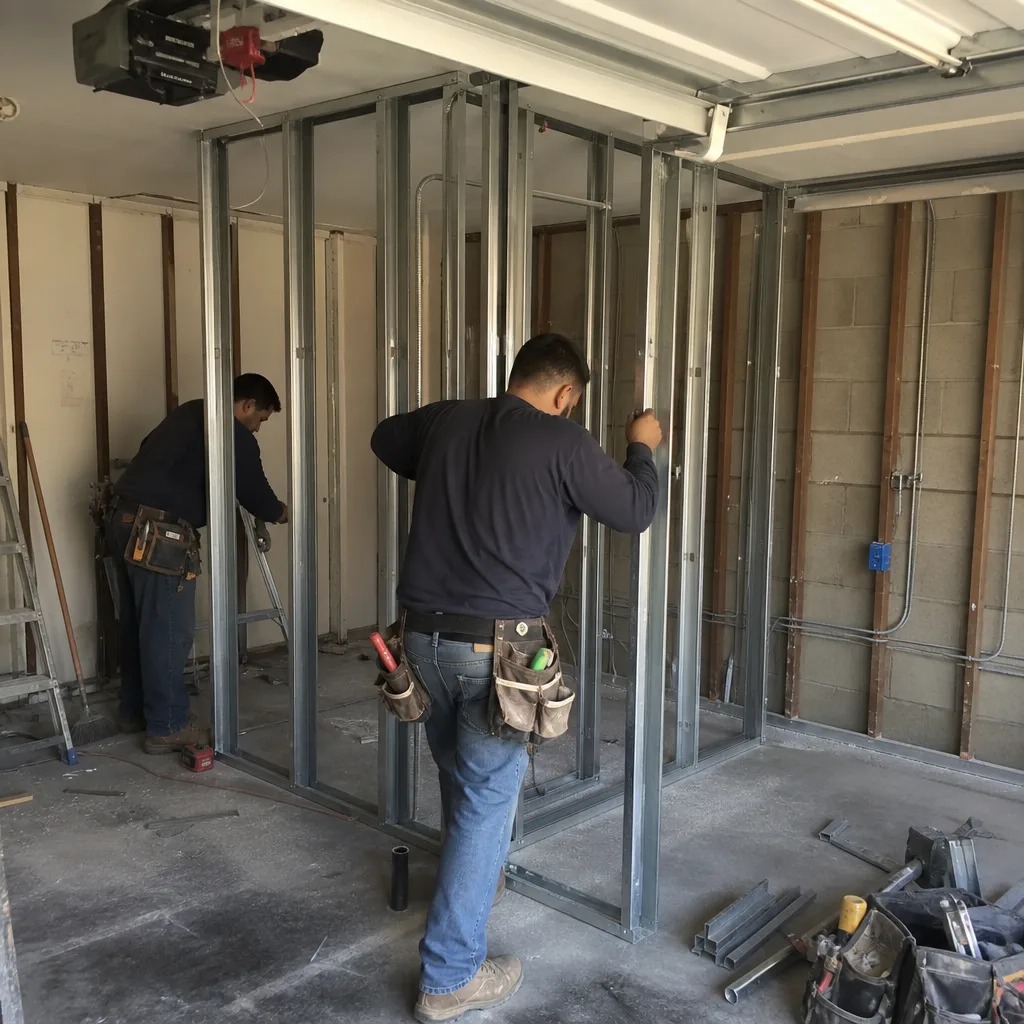
Generic seasonal maintenance checklists fail in Santa Ana because they assume freeze-thaw cycles, heavy snowfall, or humid summers. Our climate is specific: hot, dry summers with Santa Ana wind events; mild, occasionally wet winters with concentrated rainfall; and year-round sun exposure that degrades materials faster than national averages predict.
Summer: Heat and Wind
Santa Ana’s summer temperatures regularly exceed 90°F, with 100°F+ days increasingly common. The ADU’s cooling load peaks in August and September, when thermal mass has accumulated through the season.
- Inspect exterior sealant at windows and doors. The dry heat and UV exposure in Santa Ana cause acrylic latex caulk to fail in 3-5 years, not the 7-10 years predicted by manufacturers testing in moderate climates. Re-caulk with high-performance silicone or polyurethane where the permit set specifies.
- Check roof membrane or shingle condition. Santa Ana’s intense sun degrades asphalt shingles faster than coastal areas. If your ADU uses a Tuff Shed structure or similar pre-engineered system, inspect the factory-applied coating for chalking or cracking.
- Verify Santa Ana wind event readiness. Secure or store outdoor fixtures; the permit set’s structural wind load calculation assumes specific conditions. Added trellises, awnings, or signage may exceed the designed load.
Winter: Concentrated Rainfall
Santa Ana’s winter rainfall is modest in annual total - typically 13 inches - but arrives in intense events. December 2022 and January 2023 demonstrated this pattern clearly, with localized flooding in low-lying neighborhoods.
- Clear roof drains and gutters before November. The permit set shows designed drainage capacity; accumulated debris reduces it.
- Inspect foundation drainage. Santa Ana’s clay-heavy soils in some areas expand when wet, stressing slab foundations. The permit set’s geotechnical note, if present, identifies soil type and designed mitigation.
- Test sump pumps if installed. Not common in Santa Ana, but required in some low-lying lots. The plumbing permit specifies pump capacity; verify function before the rainy season.
Year-Round: Sun Degradation
UV exposure is the hidden maintenance driver. James Hardie fiber-cement siding, which we specify for many Santa Ana ADUs, resists UV degradation but still requires repainting per manufacturer schedule - typically 15 years for factory-applied finishes, 7-10 for field-applied. The permit set’s materials schedule documents what was installed; match maintenance to that specification, not generic advice.
The Three Documents California Requires You Transfer to Tenants
California Civil Code imposes specific disclosure obligations on ADU landlords. These are not optional, and the permit set is the source document for compliance.
Document 1: The Certificate of Occupancy or Equivalent
Civil Code Section 1940.4 requires disclosure of any uncorrected violation of building standards that affect health and safety. The certificate of occupancy is your proof that no such violation exists. Provide a copy to tenants before lease signing. Keep a signed acknowledgment in your file.
Document 2: The Approved Permit Set (Selected Pages)
Not the full architectural package. The pages tenants need: floor plan showing bedroom count and square footage (prevents disputes over what was promised), egress window locations (required for habitability disclosure), and mechanical permit summary showing ventilation design (relevant for health complaints).
We recommend extracting these pages, redacting any proprietary structural calculations, and providing as a “Unit Information Sheet.” This is not required by code, but it prevents the disputes that generate habitability claims.
Document 3: Lead-Based Paint Disclosure (Pre-1978 Structures)
Many Santa Ana ADUs are conversions of garages or additions to homes built before 1978. Federal law requires lead disclosure; California amplifies this with specific form requirements. The permit set should include a lead survey if required; if not, you must obtain one or assume presence and disclose accordingly.
Additional Santa Ana-specific disclosure: if the ADU is in a designated flood zone, the permit set will show this. Tenants must be informed. The city’s floodplain maps are available through the Santa Ana city website; cross-reference your property address.
Common Mistakes to Avoid
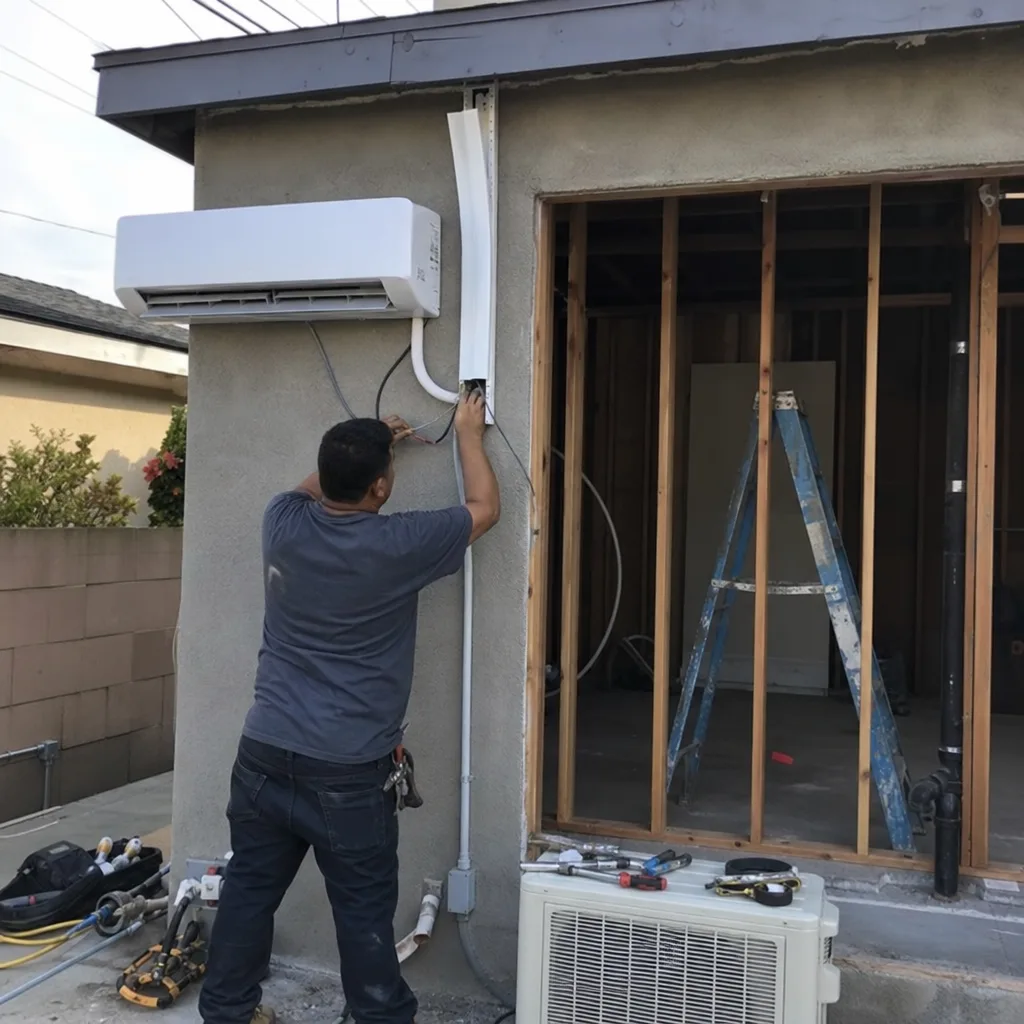
- Storing only digital copies. Portal migrations, account closures, and format obsolescence destroy digital records. The 2021 Accela platform update in Santa Ana temporarily made pre-2015 permits inaccessible. Physical backups survive.
- Assuming the contractor kept copies. Contractors retire, sell businesses, or lose records in moves. Your permit set is your responsibility. Under Haven Standard Clause 3, Ellery clients receive their complete set at project close; we recommend verifying this delivery explicitly.
- Ignoring the mechanical permit’s maintenance notes. These are not suggestions. They are code compliance conditions. A tenant’s habitability claim succeeds more easily when the landlord cannot show maintenance to the permitted standard.
- Failing to update the permit set after modifications. That second bathroom added without permit? It does not exist for insurance, sale, or tenant dispute purposes. The cost of permit amendment is always less than the cost of discovery.
- Using generic maintenance schedules. “Spring furnace check” assumes a furnace and a spring. Santa Ana’s heat pump systems, increasingly common in Title 24-compliant ADUs, have different maintenance intervals. The mechanical permit specifies equipment type; match maintenance to that specification.
- Neglecting to verify prefab ADU permits. Systems from Plant Prefab, Abodu, or similar manufacturers arrive with factory certifications, but local permit closure still requires field inspections. We’ve seen Santa Ana homeowners assume the factory paperwork completed the process. It does not. The certificate of occupancy is local.
- Disclosing too little to tenants. Minimum legal disclosure is not optimal disclosure. The landlord who provides the unit information sheet we describe above faces fewer disputes and faster resolution when disputes arise.
When to Call a Professional
Call a design-build professional when the permit history shows gaps you cannot explain, when the physical ADU does not match the permit set, when you need to modify the ADU and are uncertain whether amendment is required, or when you are purchasing a property and need a rapid assessment of ADU permit status. These are not DIY determinations; the cost of error is measured in back taxes, denied insurance claims, and habitability liability.
Ellery ADU Studio Santa Ana offers free estimates in Santa Ana. We also provide a Free Second Opinion on any written estimate already in hand, and we review existing ADU permit histories for prospective buyers. A live person answers calls 24/7 at (949) 541-8498. Every project is quoted with a written price before any work begins, per Haven Standard Clause 1. No exceptions.
Frequently Asked Questions
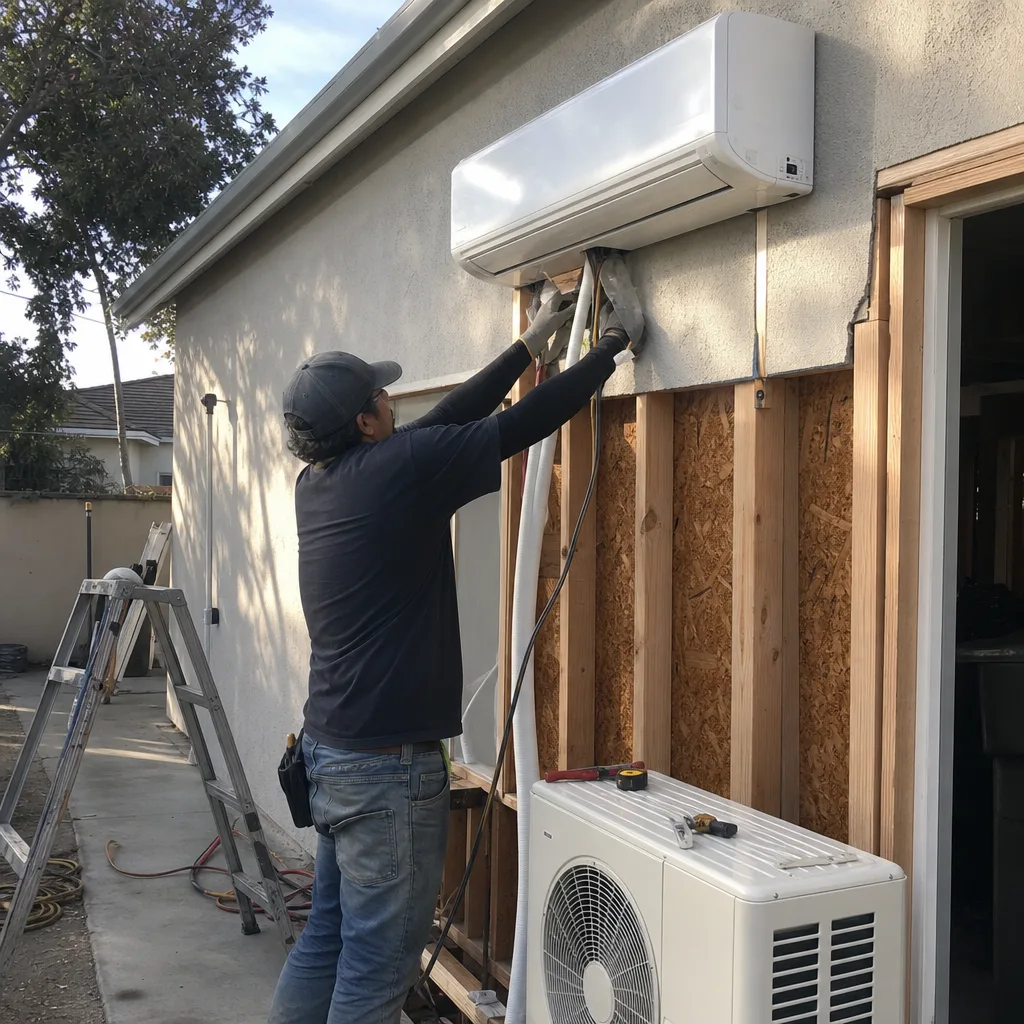
Costs typically range from $8,000 for a simple garage conversion with minor code gaps to $45,000+ for a detached unit requiring structural, electrical, and plumbing rework plus full plan check. The variance depends on how far the existing work deviates from current code, whether the original structure can be grandfathered, and whether the city requires asbestos or lead testing. Call (949) 541-8498 for a written estimate on your specific property - estimates are free, and we provide the price before any work starts.
Yes. Santa Ana’s online permit portal allows address-based searches for permits issued since approximately 2000. However, the online system shows summary status only; detailed inspection histories and copies of the permit set require an in-person or mailed request to the Building Division at 20 Civic Center Plaza. For properties with older work, we recommend the in-person request to capture any paper records not yet digitized.
Under Haven Standard Clause 5 (No Surprises), the scope is locked at signing. The written price you receive before work begins is the price you pay. No door-side upsells, no scope creep, no change orders unless you explicitly request additional work and sign a written amendment. This applies to ADU Design & Permitting in Santa Ana, construction, and all services we provide.
Plan check for a standard ADU runs 8-12 weeks in Santa Ana as of 2024-2025, with simpler garage conversions at the shorter end and complex detached units or variance requests at the longer. This is an improvement from the 16-20 week timelines we saw in 2021-2022, but still requires patience. Construction scheduling follows permit issuance; we do not begin work without approved permits. For timeline planning, call (949) 541-8498 and we’ll review your property’s specific variables.
Yes, if the work matches Santa Ana’s permit trigger thresholds. HVAC replacement requires a mechanical permit. Re-roofing over 25% of the roof area or any structural modification requires a building permit. The original permit set shows the permitted configuration; any change from that configuration requires amendment. Failure to permit maintenance work creates the same resale and insurance problems as the original unpermitted construction.
You face multiple risks: tenant habitability claims under Civil Code Section 1941.1, potential eviction defense if the unit is not legal dwelling space, insurance denial for any claim related to the unit, and county assessor back-tax assessment if the unpermitted unit is discovered. The certificate of occupancy is the threshold document; without it, the ADU is not a legal rental unit regardless of its physical condition. If you are uncertain of your ADU’s status, audit the permit history immediately or call us for a Free Second Opinion.
The Bottom Line
The ADU you build in Santa Ana today will outlast your ownership, your tenant’s lease, and probably the current version of California’s ADU laws. The permit set is the only document that travels with the property through all of those transitions. Organize your custody around it: request every document at every stage, store physically and digitally with accessibility planning, maintain to the permit’s specific conditions not generic schedules, and disclose to tenants from the permit’s facts. The homeowners who treat permitting as the product, not the obstacle, are the ones whose ADUs generate returns instead of liabilities. For more guides & resources, visit our blog.
Written by Nadia Ellery, Owner at Ellery ADU Studio Santa Ana, serving Santa Ana since 2015.