
Last updated September 25, 2026
ADU Warning Signs: A Santa Ana Homeowner’s Reference Guide
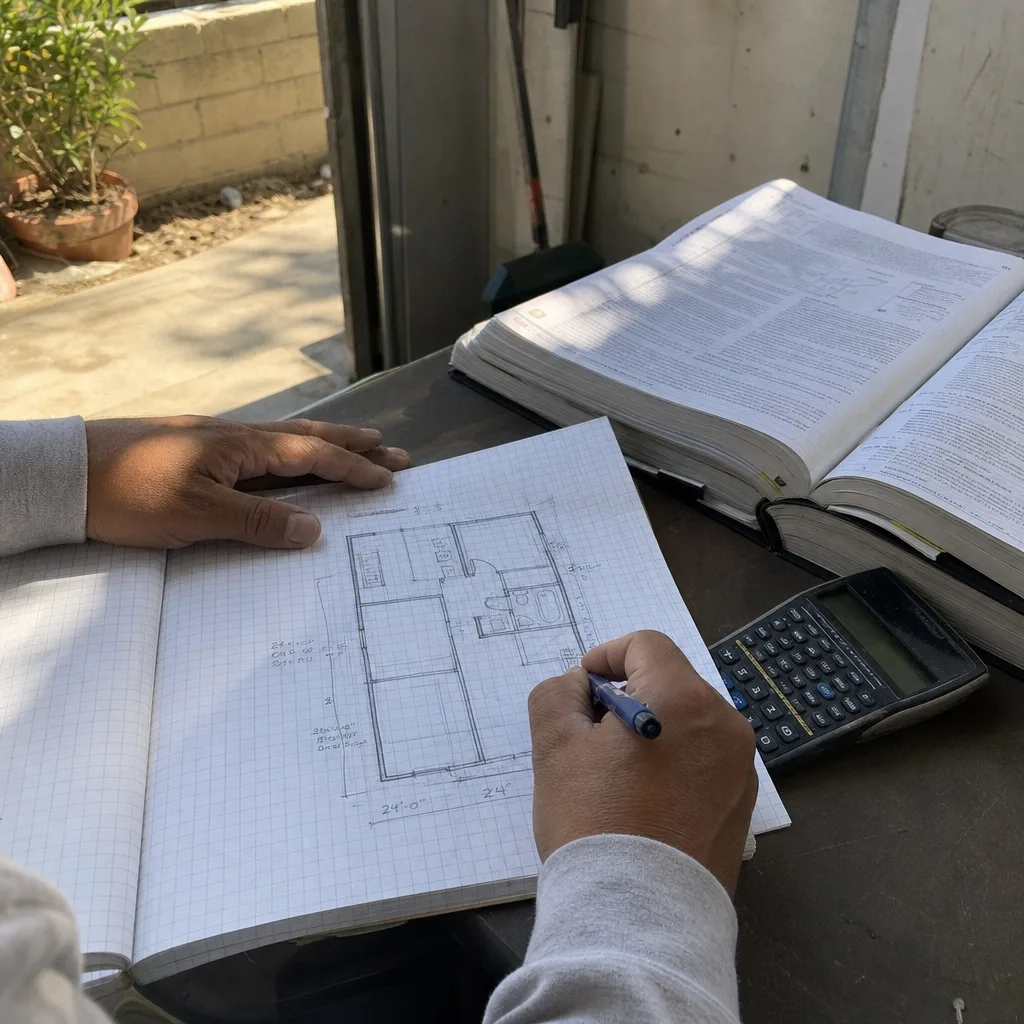
The most common ADU fraud in Orange County is not a contractor who disappears with your deposit. It is a contractor who finishes, hands over an occupancy certificate for the shell, and leaves the mechanical, electrical, or plumbing work on a separate handshake agreement that was never permitted and will not survive a title search. In Santa Ana, where median home prices have pushed past $750,000 and an ADU can add $200,000-$400,000 in assessed value, the financial incentive to cut permit corners has never been higher. This guide, alongside our The Complete Guide to ADU in Santa Ana, teaches you to read the paper trail, not just the pitch. You’ll learn how to pull permit histories through Santa Ana’s portal, spot contract language that guarantees cost escalation, and identify an unpermitted conversion before you buy a property that carries someone else’s violation.
Quick Answer
The critical ADU warning signs for Santa Ana homeowners are: permit gaps visible in the city’s online portal, cost-plus contracts without guaranteed maximums, design-build claims backed by only one license type, permit sets lacking a structural engineer’s wet stamp, and mechanical/electrical/plumbing work excluded from the primary permit. Most expensive failures stem from quiet contractual omissions, not dramatic contractor disappearances.
Table of Contents
- How to Pull and Read a Property’s Permit History in Santa Ana
- Contract Red Flags Specific to ADU Projects
- What a Legitimate Permit Set Looks Like
- Three Bid Behaviors That Predict Mid-Project Cost Escalation
- Identifying an Unpermitted ADU When Buying in Santa Ana
- What Remediation Actually Costs
- Common Mistakes to Avoid
- When to Call a Professional
- Frequently Asked Questions
- The Bottom Line
 Before
 After
AfterHow to Pull and Read a Property’s Permit History in Santa Ana
Santa Ana uses the ePermits Online Portal for all building, plumbing, electrical, and mechanical permits. Any homeowner or prospective buyer can search by address without creating an account, though registration unlocks document downloads. Here’s how to read what you find.
Step-by-Step: Pulling the Record
- Navigate to ePermits and select “Search Records” from the public access menu.
- Enter the property address exactly as it appears on the tax roll. Santa Ana’s system is sensitive to directional prefixes; “N Main St” and “Main St” return different results.
- Filter by permit type: Building (B), Electrical (E), Plumbing (P), Mechanical (M). ADU work should show coordinated permits across all four trades.
- Examine the permit lifecycle: Application Date, Issued Date, Final Inspection Date, and Status.
What the Status Codes Mean
- Issued: Permit is active but no final inspection has passed. Work may be incomplete or the contractor may have abandoned the project.
- Finaled: All required inspections passed. This is the only status that matters for title and resale.
- Expired: Permit lapsed before final inspection. In Santa Ana, building permits expire 180 days after issuance if no inspection has been requested, or 180 days after the last approved inspection. Revival requires reapplication and sometimes updated plans to current code.
- Revoked: City pulled the permit, usually for serious code violation or fraud. A red flag that demands explanation.
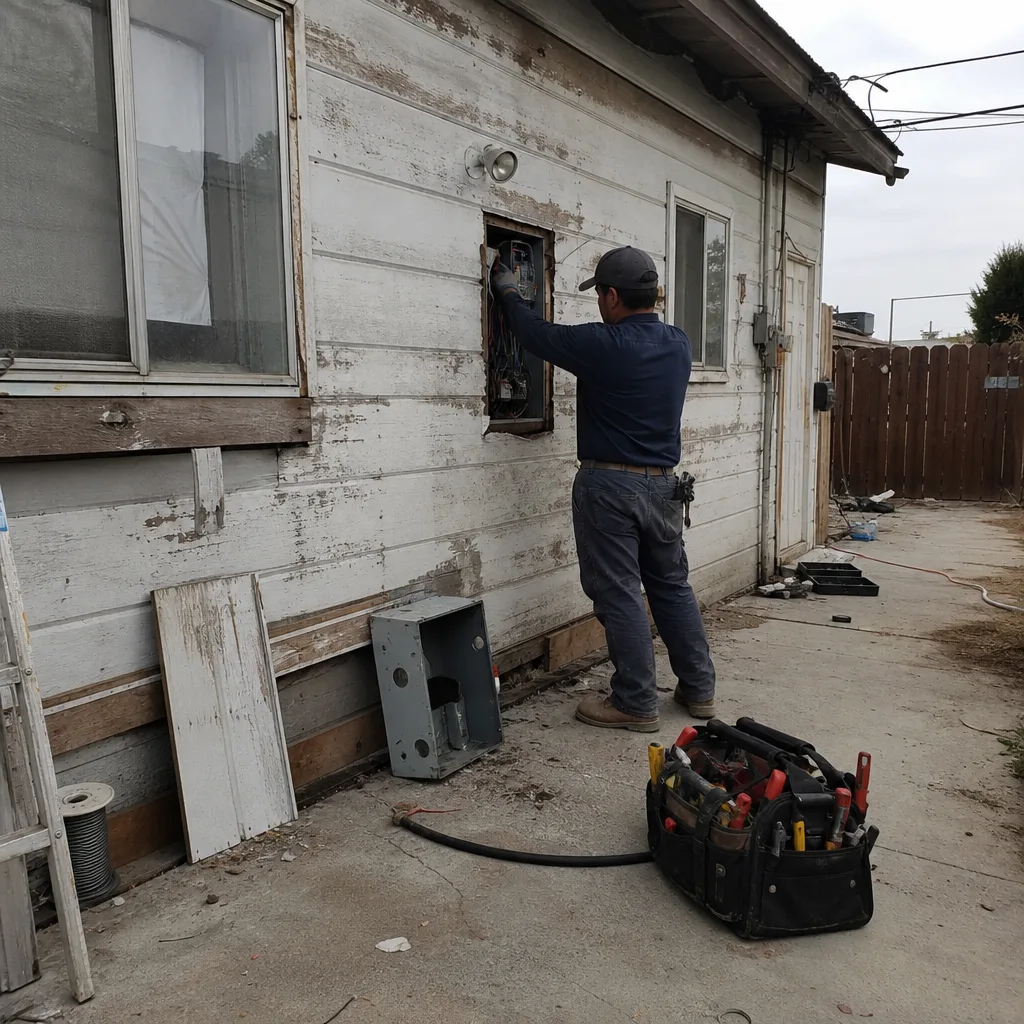
The gap that destroys value is the “finaled” shell with open trade permits. We see this regularly in Santa Ana’s older neighborhoods, particularly around French Park and Washington Square, where garage conversions from the 1980s and 1990s were common. A building permit shows “Finaled” in 1992, but no electrical or plumbing permits exist. The water heater was never inspected. The subpanel was never permitted. When the current owner sells, the title company flags the unpermitted work. The buyer’s lender demands remediation. The $15,000 garage conversion becomes a $40,000-$60,000 reconstruction to bring everything inside a single permitted scope.
Look also for permit applications with no issued date. This indicates a plan check rejection that was never resolved. Santa Ana’s plan check turnaround is typically 10-15 business days for residential work; an application sitting for months suggests a fundamental code conflict, often setback or fire separation related, that the applicant could not solve.
Contract Red Flags Specific to ADU Projects
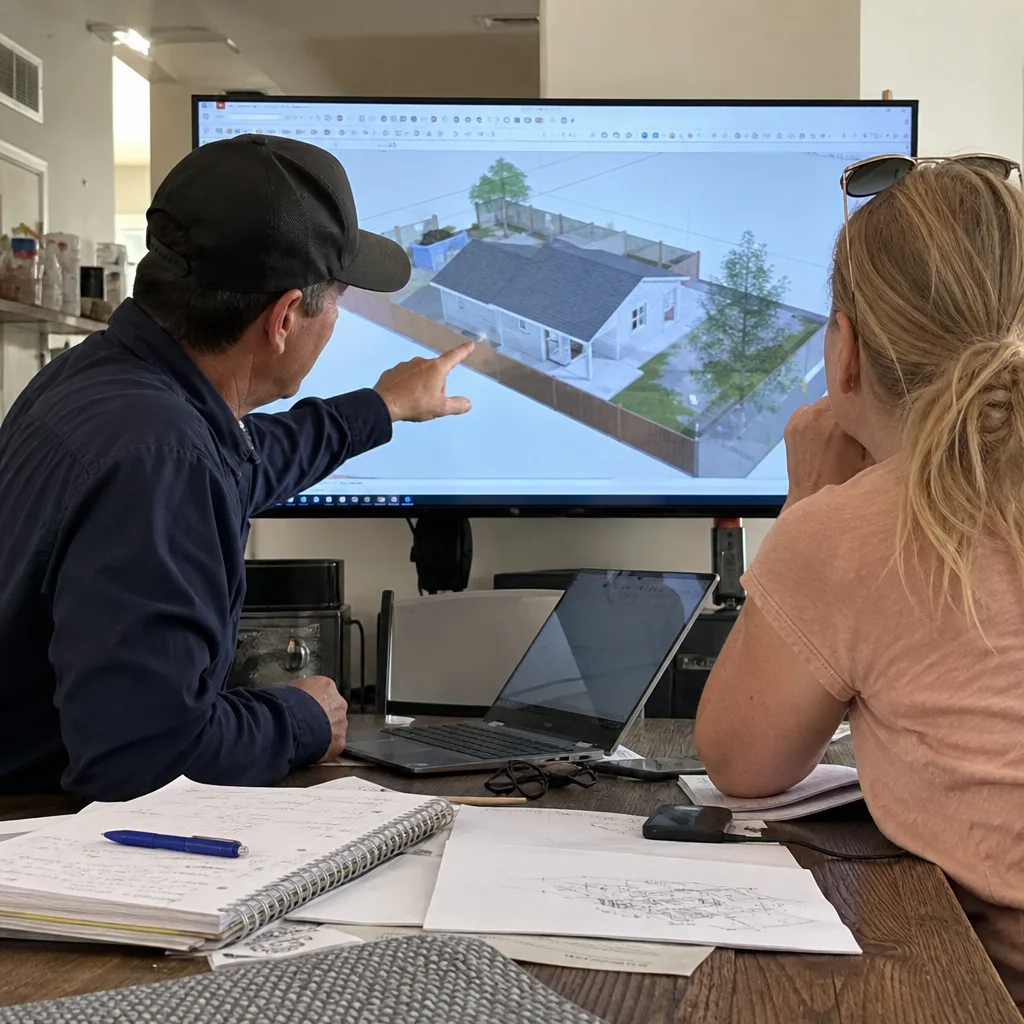
ADU contracts fail differently than room additions or kitchen remodels. The project spans design, structural engineering, energy compliance, and multi-trade construction across a longer timeline with more handoff points. These are the specific contractual omissions that predict failure.
Cost-Plus Without a Guaranteed Maximum
Cost-plus pricing means you pay the contractor’s actual costs plus a percentage fee. Without a Guaranteed Maximum Price (GMP), your exposure is unlimited. In Santa Ana’s current market, lumber volatility and labor shortages have made cost-plus attractive to contractors who want to transfer risk to homeowners. The red flag is a contract that says “cost plus 20%” with no ceiling. Under Haven Standard Clause 1, every project at Ellery ADU Studio Santa Ana carries a written price before work starts. The number is fixed. The risk is ours.
“Design-Build” Claims With a Single License
California requires distinct licensure for design and for construction. A true design-build studio holds both an architectural/design license (or employs licensed architects) and a contractor’s license (B-General or C-specialty). The red flag is a contractor who says “we do design-build” but holds only a B license and outsources drawings to a drafter with no stamp authority. Or an architect who holds only a CSLB architectural license and subcontracts construction to an unvetted crew. The blame gap opens when the city rejects the permit set and the contractor says “the architect drew it wrong” while the architect says “the contractor built it wrong.” You pay for the redesign and the rebuild. See DIY vs Professional ADU: The Santa Ana Homeowner’s Decision Guide for why unified accountability matters.
Verify both licenses through the CSLB License Check. Confirm the design license holder has completed ADU-specific work in Santa Ana, not just generic residential design.
Mechanical, Electrical, and Plumbing Excluded From Primary Scope
This is the handshake fraud described in our opening. The contract covers “construction of detached ADU shell” or “garage conversion to living space.” A separate verbal agreement covers HVAC, electrical service upgrade, and plumbing rough-in. These trades are never permitted under the primary application. The contractor uses his “guy” for electrical, who works cash and pulls no permit. The occupancy certificate issues for the shell. The unpermitted trades sit invisible until sale or insurance claim.
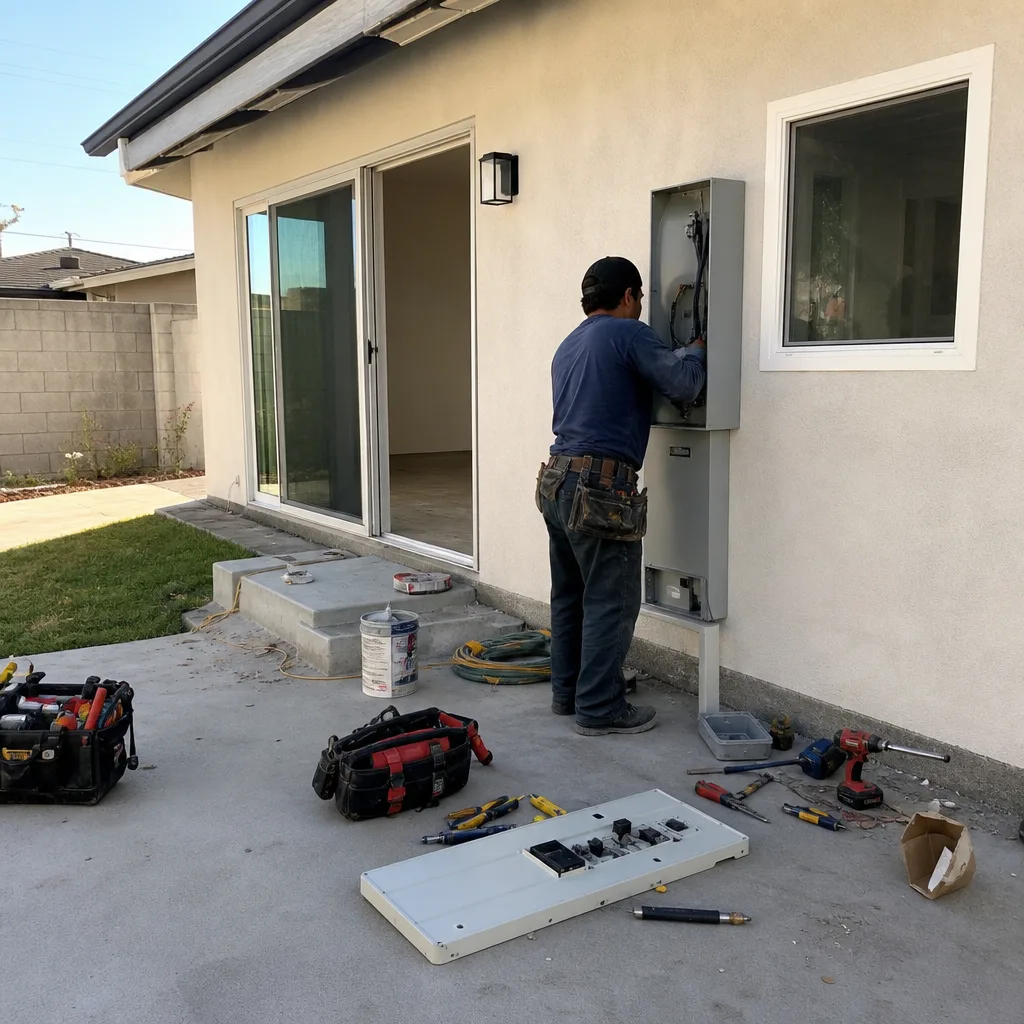
Every trade must be named in the contract scope with corresponding permit numbers tracked. At Ellery, the permit set includes MEP (mechanical, electrical, plumbing) plans coordinated with the structural and architectural drawings before submission. One permit application. One set of inspections. One final.
Vague Scope Language
Phrases like “complete ADU per plans” or “all work necessary for code compliance” create ambiguity that contractors exploit for change orders. Specific scope language names materials, methods, and standards: “HVAC: Mitsubishi mini-split system, 18,000 BTU, SEER 18 minimum, mounted on poured concrete pad with refrigerant lines in conduit.” If the contract does not specify, the cheapest compliant option becomes the default, or the upgrade becomes a mid-project upsell.
What a Legitimate Permit Set Looks Like
A permit set is not a rendering. It is a technical document package that proves the structure will stand, the energy performance meets code, and the fire separation protects occupants. Santa Ana adopts the California Residential Code with local amendments, including specific requirements for fire sprinklers in ADUs over certain sizes and enhanced seismic detailing for older neighborhoods on alluvial soils.
Required Sheets in a Complete Permit Set
- Site Plan: Property boundaries, existing structures, new ADU location with dimensions, setback distances to all property lines, utility locations, and parking compliance. Santa Ana requires 1-foot scale for residential site plans.
- Floor Plans: All levels with room labels, dimensions, door and window sizes, and structural bearing points.
- Elevations: All four sides showing exterior materials, roof pitch, door/window heights, and finish grades.
- Structural Plans: Foundation details, framing plans, shear wall locations, connection details, and load calculations. Must bear a California-licensed structural engineer’s wet stamp and signature.
- MEP Plans: Electrical panel schedules, circuiting, plumbing fixture locations and venting, HVAC equipment and duct routing.
- Energy Compliance: Title 24 calculations, typically via CBECC-Res software, demonstrating the project meets California’s energy code. Santa Ana requires this for all new conditioned space.
The Wet Stamp vs. Digital Stamp Distinction
California accepts digitally signed and sealed engineering documents through approved platforms. The red flag is a “permit set” with no engineer’s stamp at all, or a photocopied stamp from another project. Verify the stamp includes: engineer’s name, license number, expiration date, signature, and date of sealing. The date must be current to the permit application, not recycled from prior work.
Marketing drawings are the opposite: glossy 3D renderings, material boards, and lifestyle photography. These help you visualize. They do not get you a permit. A legitimate studio produces both, but never confuses them. At ADU Design & Permitting in Santa Ana, the permit set is the core product. Renderings are supplementary.
Santa Ana-Specific Amendments to Watch
Santa Ana’s local amendments include: enhanced fire sprinkler requirements in certain zones, specific street frontage standards that affect ADU placement in the Floral Park and Heninger Park neighborhoods, and drainage calculations that account for the city’s clay-heavy soils and occasional heavy winter rains. A permit set that ignores these local conditions will fail plan check or, worse, pass with conditions that create construction problems.
Three Bid Behaviors That Predict Mid-Project Cost Escalation
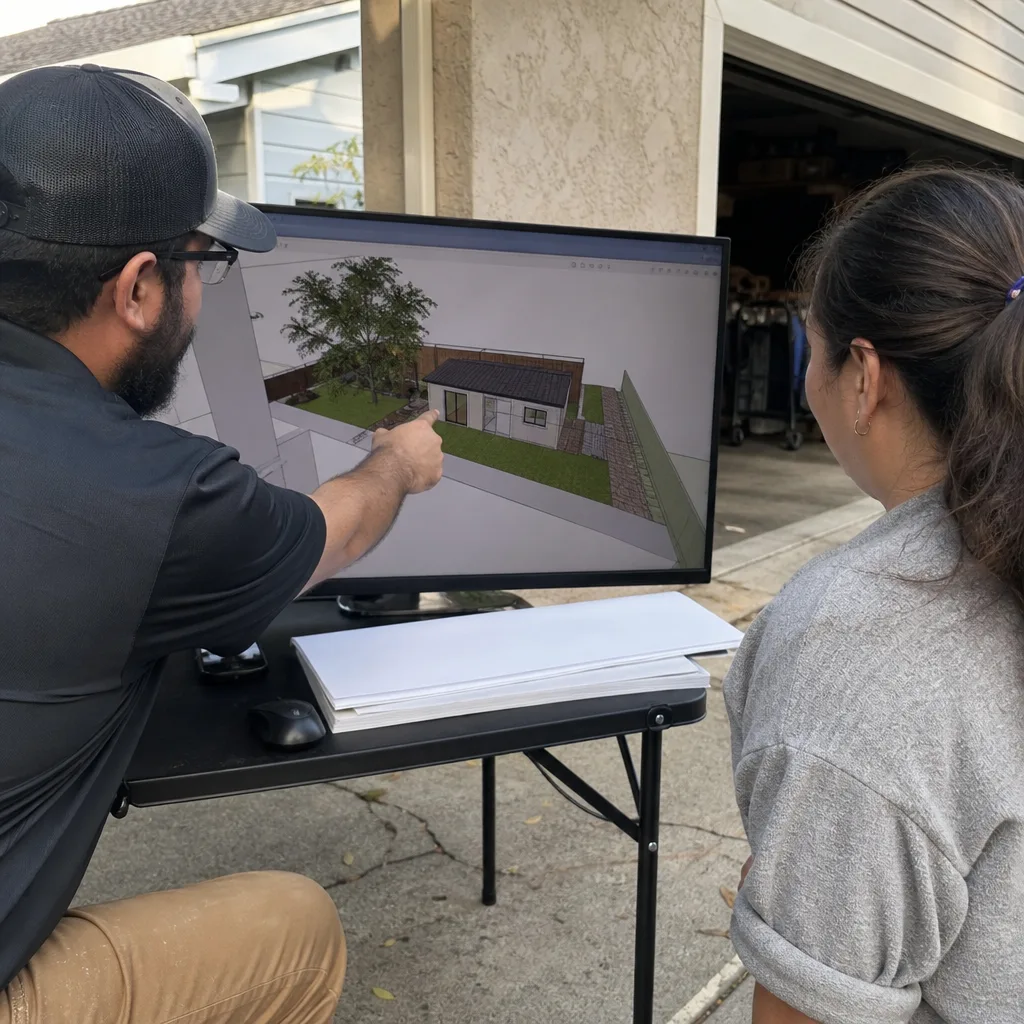
How a contractor bids reveals how they will behave when the project encounters the inevitable unknown. These three patterns correlate strongly with post-contract price increases.
Behavior 1: The Allowance-Heavy Bid
The bid lists $25,000 for “finishes” or $8,000 for “flooring” without specifying products, grades, or square footage. This is not pricing; it is a placeholder. When selection time comes, the contractor directs you to his supplier, where your preferences exceed the allowance by 40-80%. The contract language that prevents this: line-item material specifications with brand, model, and unit cost, plus a written change-order process requiring mutual signature for any substitution. Under Haven Standard Clause 5 (No Surprises), the scope is locked at signing. No door-side upsells, no scope creep.
Behavior 2: The Site-Unseen “Final” Price
A contractor provides a firm quote after a 20-minute walkthrough or from satellite imagery. For Garage Conversion ADU in Santa Ana, this is reckless. The existing slab condition, soil bearing capacity, electrical service capacity, and sewer lateral location cannot be assessed from the curb. The low price wins the contract. The “unforeseen conditions” change orders follow. The contract language that prevents this: a defined due-diligence period with exploratory work (slab cores, sewer camera, electrical load calculation) built into the initial agreement, with findings incorporated into a revised fixed price before construction begins. Ellery’s process includes this investigation in every project; the written price follows, not precedes, the site analysis.
Behavior 3: The Permits-Excluded “Base” Price
The bid is attractively low because it excludes permit fees, plan check fees, and school fees. In Santa Ana, these can total $8,000-$15,000 for a detached ADU depending on valuation and school district. The contract language that prevents this: an all-inclusive line item naming “City of Santa Ana permit fees, plan check, and school fees” with either a fixed amount or a not-to-exceed cap tied to the city’s published fee schedule. A bid that says “permits extra” or “estimate to be determined” is not a real price.
Identifying an Unpermitted ADU When Buying in Santa Ana
Buyers in Santa Ana’s competitive market often waive inspection contingencies or rely on seller disclosures that say “ADU added 2018, permits unknown.” Here’s how to protect yourself before close of escrow.
Physical Indicators of Unpermitted Work
- Meter and panel mismatch: The main electrical panel shows 100-amp service, but the property has a second meter or subpanel feeding the ADU with no corresponding permit. Look for conduit runs that exit the main structure below grade or through walls without proper sealing.
- Plumbing anomalies: Water heater in the ADU is newer than the main house but has no permit tag. Sewer cleanouts that suggest a lateral was tapped without city approval. In Santa Ana’s older neighborhoods, original clay sewer laterals are common; a PVC extension to a new ADU without permit is a failure point.
- Foundation discontinuity: The garage slab shows a cold joint or color variation where a section was poured to accommodate conversion, but no foundation inspection record exists. Santa Ana requires foundation inspection before slab pour for all habitable space.
- Height and setback violations: The ADU appears to encroach on required setbacks or exceed height limits. A quick measurement with a laser distance tool against the zoning code confirms suspicion.
- Address irregularities: The ADU has a separate mailbox, doorbell, or utility account but no separate address assignment from the city. Santa Ana assigns secondary addresses for legal ADUs; absence suggests unpermitted status.
Title and Disclosure Review
Request a preliminary title report and review for code violation liens or notices of abatement. Check seller disclosures for “improvements without permits” or “buyer to verify.” In California, sellers must disclose material facts affecting value; an unpermitted ADU qualifies. If the disclosure is silent, ask directly and document the response.
What Remediation Actually Costs
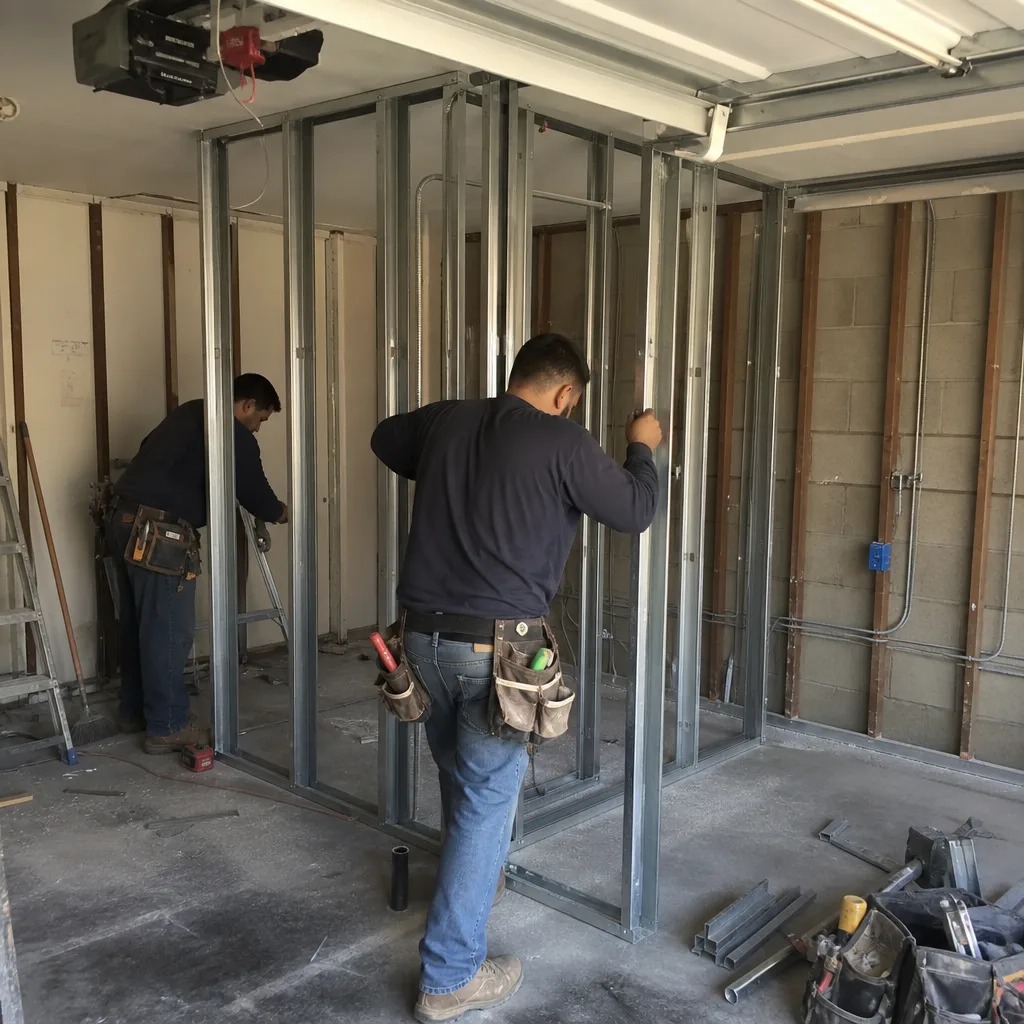
Remediation means bringing unpermitted work inside a legal permit, not demolition and rebuild. Costs vary by what was done and what must be proven to the city’s satisfaction.
| Scenario | Typical Range | What Drives Cost |
|---|---|---|
| Unpermitted garage conversion, structurally sound, MEP accessible for inspection | $15,000-$35,000 | Opening walls for inspector access, electrical load calculation, Title 24 compliance, permit fees |
| Unpermitted detached ADU, no engineered foundation, no structural plans | $45,000-$85,000 | Structural engineer retrofit design, foundation investigation, potential underpinning, full MEP permitting |
| Unpermitted electrical or plumbing only, structure is permitted | $8,000-$20,000 | Exposing work for inspection, panel upgrade if needed, sewer camera and pressure test |
| Complete demolition and legal rebuild of unpermitted ADU | $120,000-$220,000 | Demotion, disposal, full design and permitting, new construction at current code |
These ranges reflect Santa Ana’s current construction costs and fee structure. The hidden cost is time: remediation permitting can take 4-8 months, during which the space cannot be occupied or rented. For buyers counting on ADU rental income to offset a high mortgage, this delay destroys the financial model.
In our experience across 900+ ADUs since 2015, the most expensive remediation we have encountered in Santa Ana involved a New Detached ADU in Santa Ana built on a post-tensioned slab without engineering. The slab had to be removed, soil recompacted, and a conventional foundation poured. The original “savings” of skipping permits cost the owner $67,000 and 11 months.
Common Mistakes to Avoid
- Trusting a “permit pulled” claim without verifying the permit number in Santa Ana’s portal. Contractors sometimes reference a neighbor’s permit or an application number that was never issued.
- Accepting a cost-plus contract for a fixed-scope ADU. The scope is knowable; the price should be fixed. Cost-plus is appropriate only for true design-build iterations where the final design emerges through collaboration.
- Assuming a “final” inspection on the building permit covers all trades. Each trade permit has its own final. A building final without electrical final means unpermitted electrical work.
- Buying a property with an ADU based on rental income projections without verifying legal status. Santa Ana’s rent control and just-cause eviction ordinances apply differently to permitted vs. unpermitted units. An illegal unit cannot be lawfully rented.
- Hiring based on the lowest bid without comparing permit set completeness. The low bid often omits engineering, energy compliance, or MEP coordination that the higher bid includes.
- Ignoring soil and drainage conditions specific to Santa Ana’s geography. The city’s location on the Santa Ana River floodplain means certain neighborhoods require enhanced drainage and foundation detailing that generic bids miss.
- Failing to get the 365-Day Done Right Promise in writing. Verbal warranties are unenforceable. Written warranties with specific triggers and remedies are the only protection that matters.
When to Call a Professional
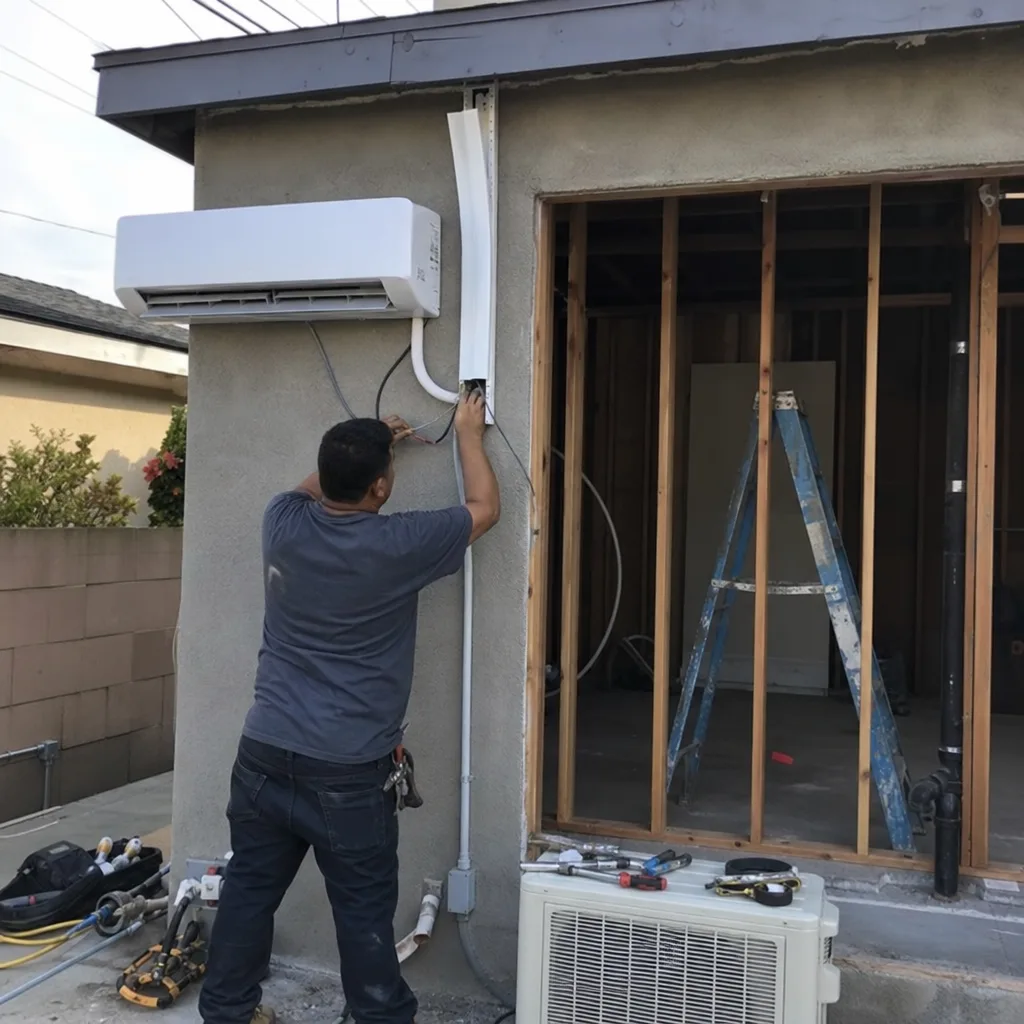
Call a licensed design-build studio when you are considering any ADU work and need certainty before committing capital; our How to Hire a ADU Contractor in Santa Ana: A Step-by-Step Guide explains what credentials to verify first. Specific triggers: you have pulled the permit history and found gaps or expired permits; you have received multiple bids with conflicting scopes and need comparison against a documented standard; you are buying a property with an existing ADU and need a remediation assessment; or you have a written estimate in hand and want a Free Second Opinion before signing.
Ellery ADU Studio Santa Ana offers free estimates in Santa Ana. A live person answers calls 24/7 at (949) 541-8498. Every estimate includes a written price before any work starts, per Haven Standard Clause 1.
Frequently Asked Questions
Legalization typically costs $15,000-$85,000 depending on whether the structure itself is sound and only the MEP work needs permitting, or whether the foundation and structure require engineering proof. Complete rebuild of a non-compliant detached unit can reach $120,000-$220,000. Call (949) 541-8498 for an exact quote on your specific property - estimates are free.
At Ellery ADU Studio, no. Under Haven Standard Clause 1, the written price is fixed before work begins. Scope changes requested by the homeowner require a signed change order with pricing. No door-side upsells, no surprise conditions. If a contractor’s contract allows price changes for “unforeseen conditions” without a defined process, that is a red flag.
We pull all permits as part of our single-contract design-build service. The permit set is our core product, not an afterthought. You receive copies of all permit applications, approval notices, and inspection results. The permit history belongs to your property address, not to us.
Plan check for a complete ADU permit set typically takes 10-15 business days in Santa Ana if the submittal is complete. Revisions add 5-10 business days per cycle. Construction permitting and inspection scheduling depend on trade availability. A typical detached ADU moves from approved permit to final inspection in 6-10 months of active construction. We provide a written schedule with milestones before construction starts.
No. Santa Ana requires resolution of all open permits before issuing new ones. Expired permits must be reactivated or abandoned through a formal process. We verify permit status as part of our initial site analysis and handle any necessary resolution before submitting your ADU application.
Prefab and modular systems from brands like Abodu, Cover, and Tuff Shed can accelerate construction but still require full permitting, foundation work, and utility connections in Santa Ana. The warning sign is a provider who delivers the module but leaves site prep, permitting, and final connections to you or an unspecified third party. Ellery specifies and coordinates these systems within the same single contract, with the same written price and permit responsibility. Ask any provider: who pulls the Santa Ana building permit, who engineers the foundation for local soil conditions, and who warrants the finished product. If the answer involves multiple contracts or vague handoffs, the risk is yours.
The Bottom Line
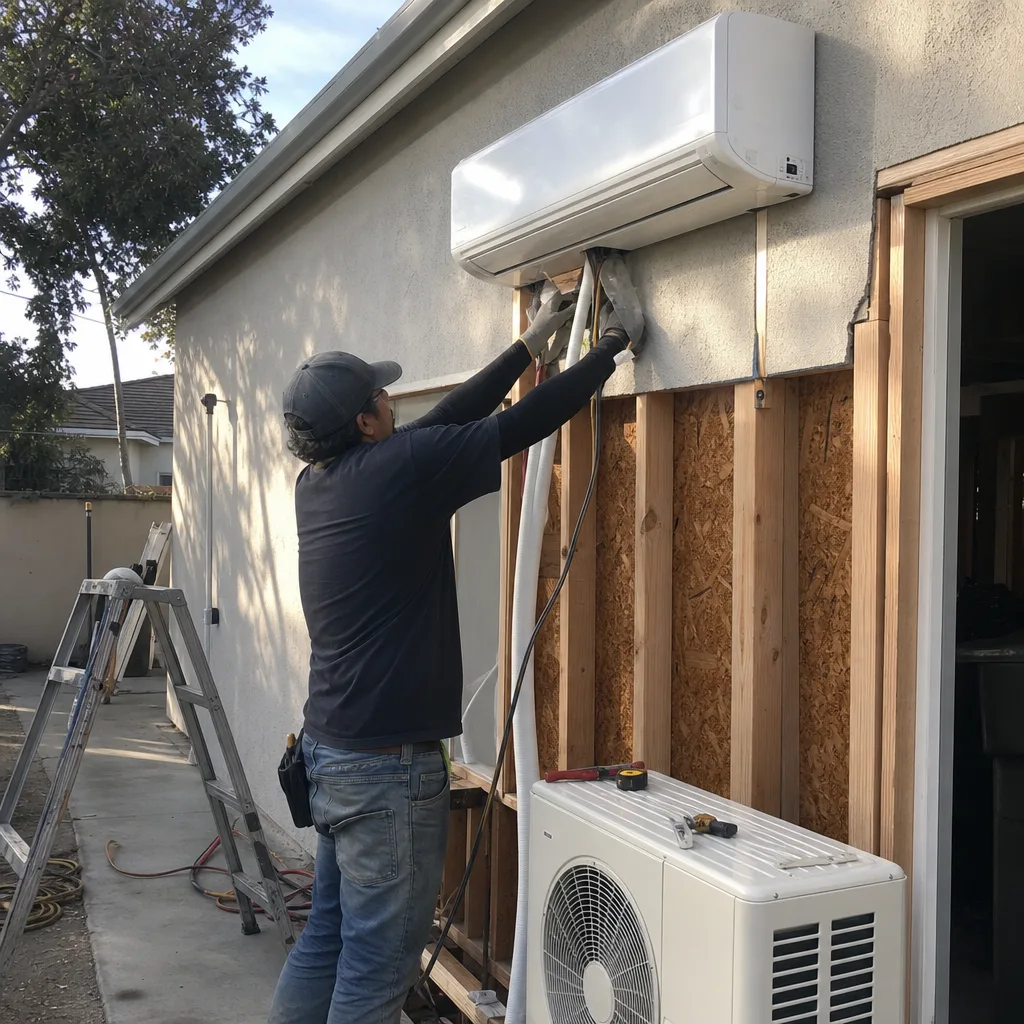
ADU warning signs are rarely dramatic. They are permit gaps in Santa Ana’s online portal, cost-plus contracts without ceilings, design-build claims with single licenses, and mechanical work excluded from the primary scope. The homeowner who reads the paper trail before signing avoids the remediation that follows. Verify permits personally. Demand written prices with line-item specificity. Confirm the permit set includes a structural engineer’s current wet stamp. And never accept a handshake agreement for work that should be permitted, inspected, and warranted in writing. Explore more guides & resources on ADU best practices. The Haven Standard exists because these protections should be standard, not exceptional.
Written by Nadia Ellery, Owner at Ellery ADU Studio Santa Ana, serving Santa Ana since 2015.