
HOA & Zoning Compliance in Santa Ana, CA
HOA and zoning compliance for an ADU in Santa Ana means confirming your project meets both the City of Santa Ana’s municipal code requirements and any recorded CC&Rs your homeowners association enforces – before a single drawing is submitted – as part of our ADU Design & Permitting process. Skipping this step is the most common reason ADU projects stall: a permit gets filed, the HOA objects, and the homeowner is left paying two sets of professionals to untangle the conflict. At Ellery ADU Studio Santa Ana, we resolve both layers in parallel, under one contract, with a written price before any work begins.
Our full compliance work sits under our ADU Design & Permitting in Santa Ana practice. If you already have a written estimate from another firm and want a second read on how they’ve handled the HOA and zoning questions, call us at (949) 541-8498 – a Free Second Opinion costs you nothing.
When You Need HOA & Zoning Compliance
Not every Santa Ana property needs the same level of compliance work. Here are the situations where getting this right – in writing, before design starts – matters most:
- Your property sits in a planned community or gated neighborhood. Large Santa Ana developments along Bristol Street and portions of the Floral Park Historic District have active HOAs with architectural review boards. Their approval timeline runs separately from the city’s, and missing that board’s meeting calendar can cost you a month or more.
- Your lot is narrower than 50 feet or has an irregular rear-yard configuration. Santa Ana’s R1 and R2 zones have setback rules – the minimum distances between your ADU and the property line – that get compressed quickly on the narrow lots common in the Willard and Delhi neighborhoods. A 4-foot side setback that works on paper can disappear once existing drainage easements are mapped.
- You’re converting a garage that faces an alley. Santa Ana has a number of alley-adjacent parcels, especially in the older grid south of First Street. The city’s ADU ordinance and your HOA may treat alley-facing structures differently from street-facing ones, particularly around exterior materials and window placement.
- Your HOA documents are more than 10 years old. California AB 670 (effective 2020) prohibits HOAs from outright banning ADUs, but it doesn’t prevent them from enforcing design standards. Older CC&Rs that predate 2020 sometimes contain language that looks like a ban but is actually enforceable only on aesthetics. We read the actual recorded document, not the summary the HOA manager sends by email.
- You’ve received conflicting information from the city and your HOA. This is common in Santa Ana’s mixed-zoning corridors near MacArthur Boulevard and in the Washington Square area. The city may allow a height of 16 feet for a detached ADU; the HOA may cap accessory structures at 12 feet. We document both constraints before design begins so the drawings don’t have to be redrawn.
- You’re planning a prefab or modular unit. Panels from brands like Cover or Dvele arrive with specific exterior profiles and material specifications. Some Santa Ana HOAs have architectural standards that require wood or stucco cladding and will reject fiber-cement or panel systems on sight. We check compatibility first, not after the unit is ordered.
Our HOA & Zoning Compliance Process
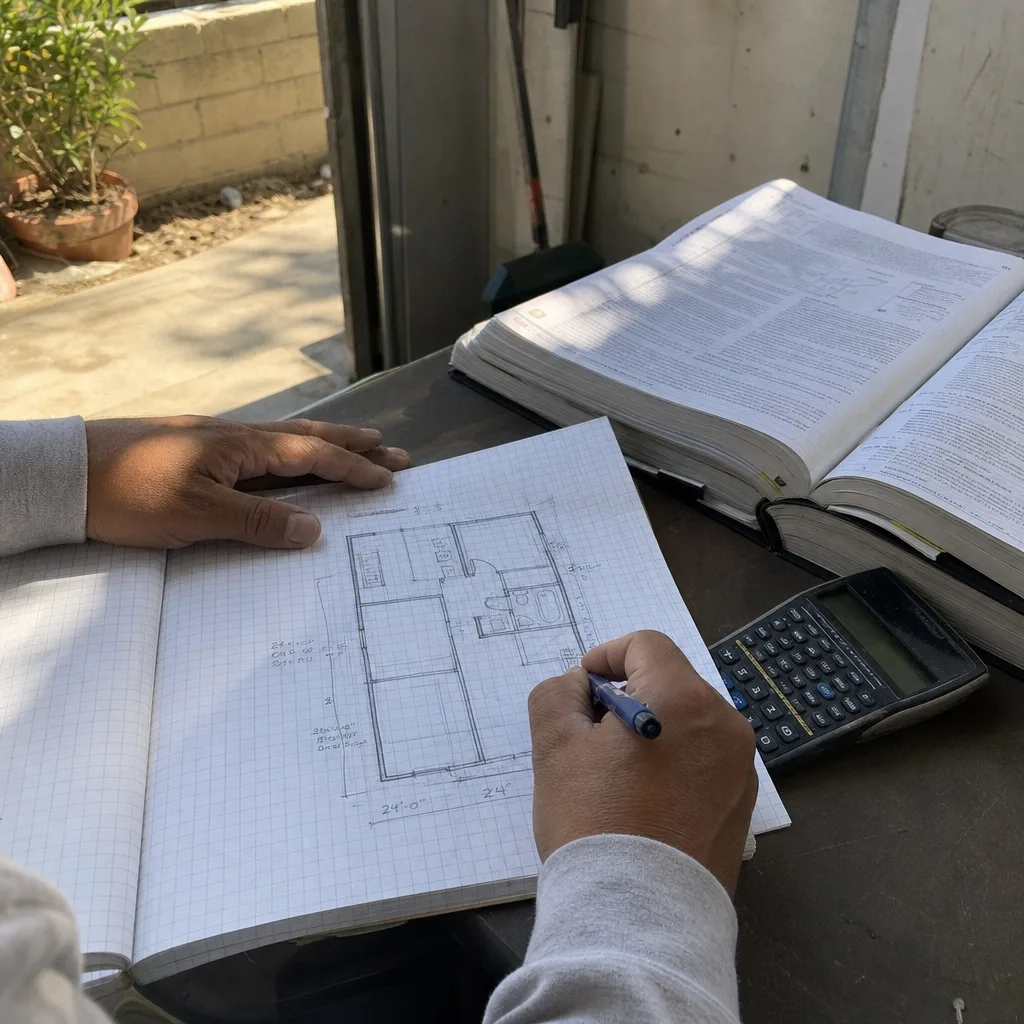
Every step below is documented. Under the Haven Standard, you receive a photo and document record at each stage – not a verbal summary, but an actual file you can reference if any question arises later with the city or your HOA.
- Title and CC&R Review. We pull your current grant deed, the recorded CC&Rs, and any amendments filed since the original subdivision. In Santa Ana, where some tracts date to the 1940s and 1950s, there are often multiple amendment layers. We read all of them. If your property is in Floral Park or another area with a Historic Preservation Overlay, we note the additional design constraints that apply before we open a drawing file.
- Zoning Confirmation and Setback Mapping. We verify your parcel’s zoning designation through the City of Santa Ana’s GIS portal and cross-reference it against the current ADU ordinance. We map the actual setbacks – rear, side, and street-facing – onto your site plan, accounting for any easements recorded against the parcel. For lots in the Transit Zoning Code area (the corridors around the ARTIC station and the Santa Ana Regional Transportation Center), different standards apply, and we flag those explicitly.
- HOA Architectural Review Preparation. If your HOA has an Architectural Review Committee (ARC), we prepare the submission package their governing documents require. This typically includes a site plan, elevation drawings, material samples or callouts, and a written narrative explaining how the proposed ADU conforms to the community’s design standards. We track the ARC’s meeting schedule and submit in advance of the correct cycle so you don’t lose 30 to 60 days to a missed deadline.
- Conflict Resolution Between HOA and City Standards. When the city allows something the HOA restricts – height, setback, exterior material – we identify the binding constraint and design to it. We don’t present the conflict to you as a problem to solve on your own; we present it with a recommended path and the design implication of each option. That recommendation is in writing before we proceed.
- Permit Set Submission with Compliance Documentation. When the permit set goes to the City of Santa Ana’s Building Division, the compliance documentation travels with it: the HOA approval letter (or a note of non-applicability if no HOA governs the parcel), the zoning confirmation, and the setback analysis. Plan checkers at Santa Ana’s permit counter have seen projects arrive without this documentation and push them to the back of the queue. Ours arrive complete.
- Response to Plan Check Comments. Santa Ana’s plan check process for ADUs typically generates one to two rounds of comments. We respond to those comments directly – you don’t have to translate between a designer and a separate contractor. Under the 365-Day Done Right Promise, if the finished ADU is not built to the permitted drawings, we make it right. That promise is in writing before the project starts, per Haven Standard Clause 6.
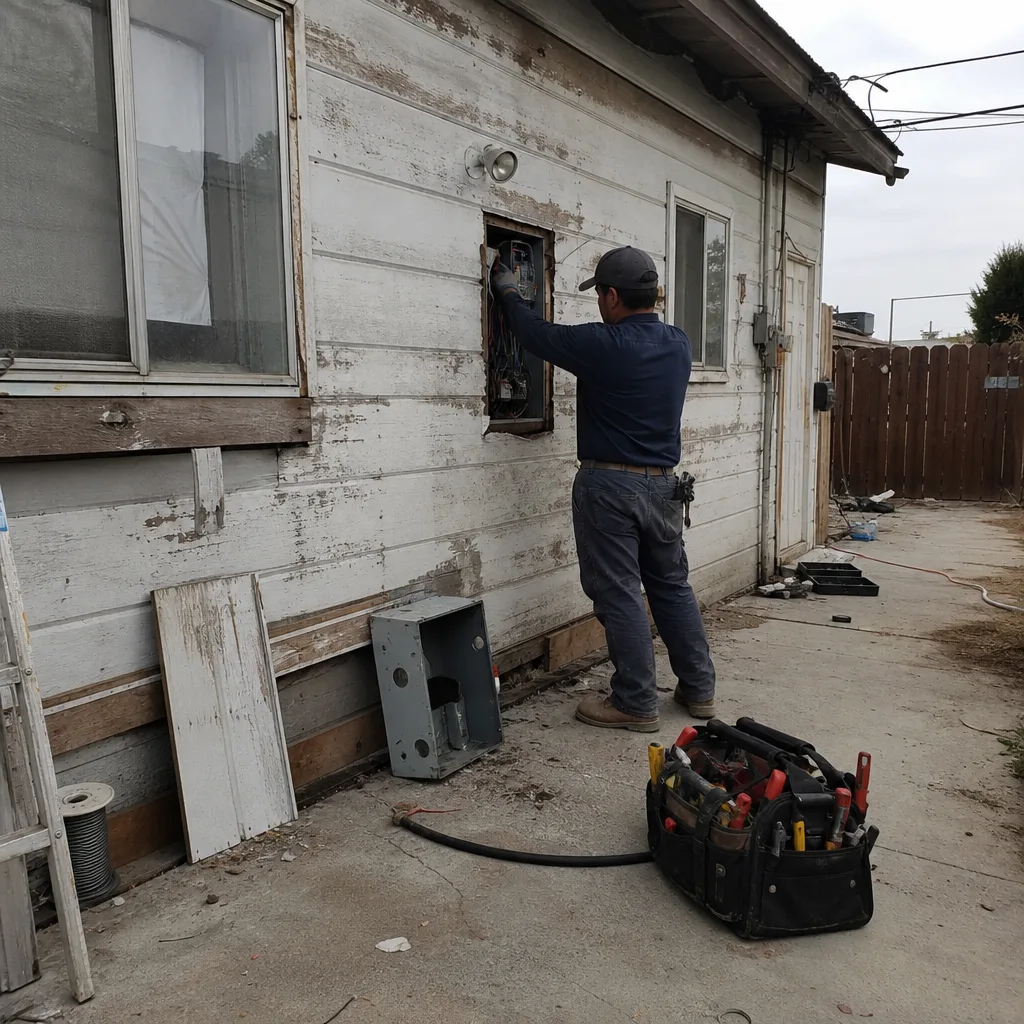 Before
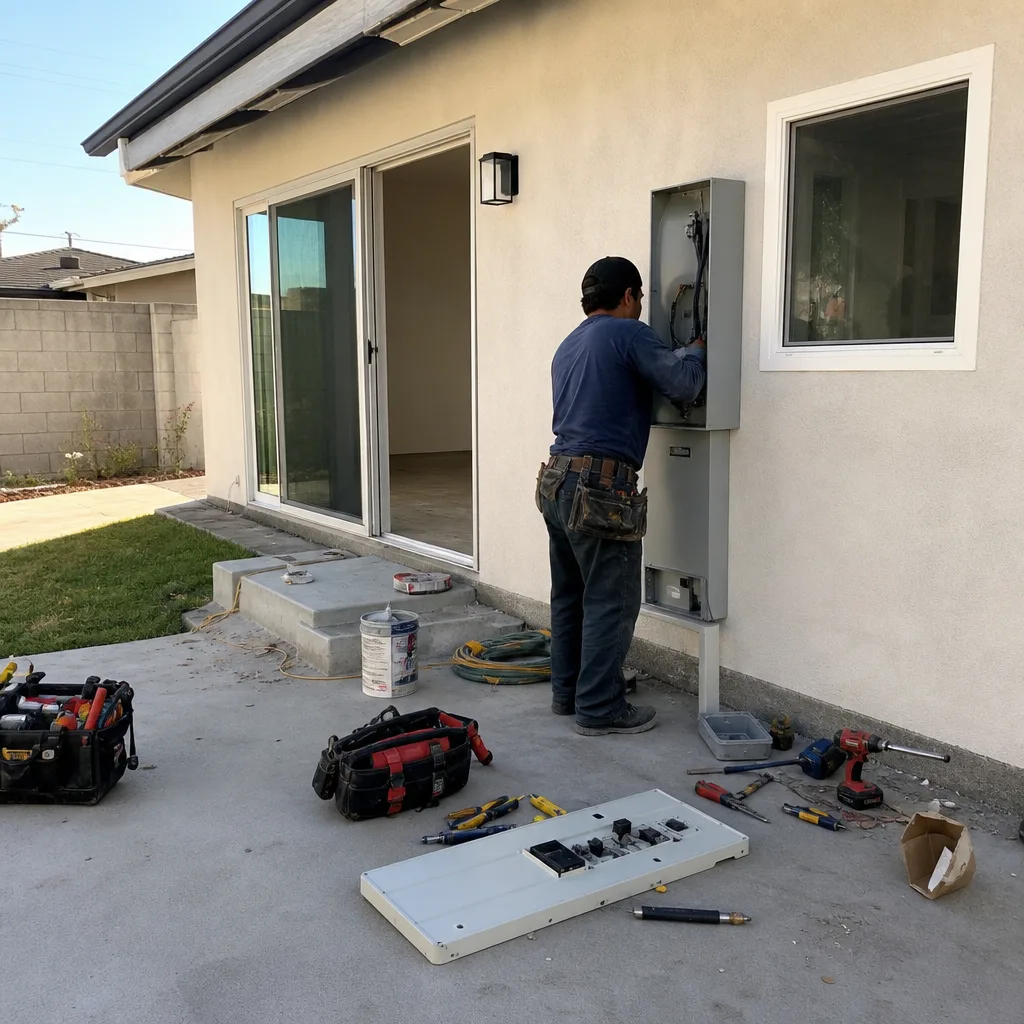 After
AfterHOA & Zoning Compliance Pricing in Santa Ana
HOA and zoning compliance work in Santa Ana is priced as part of our full ADU Design & Permitting in Santa Ana scope, not billed separately as an hourly add-on. Here is how the cost breaks down in practice, with the ranges we’ve observed across the 900+ projects we’ve completed since 2015:
- Zoning analysis and setback mapping: included in every project. No separate line item. This is baseline work; we don’t charge extra to confirm whether your lot can legally host an ADU.
- CC&R review and HOA submission package: $800-$1,800, depending on the complexity of the CC&Rs and whether the HOA requires a formal ARC presentation versus a written submittal only. Floral Park Historic District properties, which have more detailed design standards, tend toward the higher end of that range.
- Conflict resolution and redesign when HOA and city standards diverge: $400-$1,200. This covers the additional drawing revisions and written documentation needed when the two sets of rules don’t align. Most Santa Ana parcels outside of established planned communities don’t hit this line item at all.
- Plan check response (per round): included in the all-in project price. Santa Ana typically requires one to two rounds. Both are covered under the original written price – there are no per-comment billing surprises.
The all-in price for a full ADU project – design, permit set, HOA and zoning compliance, construction – is written down before any work starts. That is Haven Standard Clause 1, and it applies to every project we take, regardless of size. If you have a written estimate from another firm, call (949) 541-8498 and ask for the Free Second Opinion. Nadia Ellery reviews it personally and tells you plainly what’s there and what’s missing.
What Drives Cost Up
- HOA governing documents that require in-person ARC presentations (common in some Bristol Street corridor communities)
- Lots with recorded easements that reduce the effective buildable area below what zoning alone suggests
- Prefab specifications – for instance, a Mighty Buildings or Dvele unit – that require additional documentation to satisfy HOA material standards
- Historic Preservation Overlay parcels, which require design review beyond standard ARC submission
- Properties in Santa Ana’s Transit Zoning Code corridors, where different density and height rules apply and the analysis takes longer
FAQs – HOA & Zoning Compliance
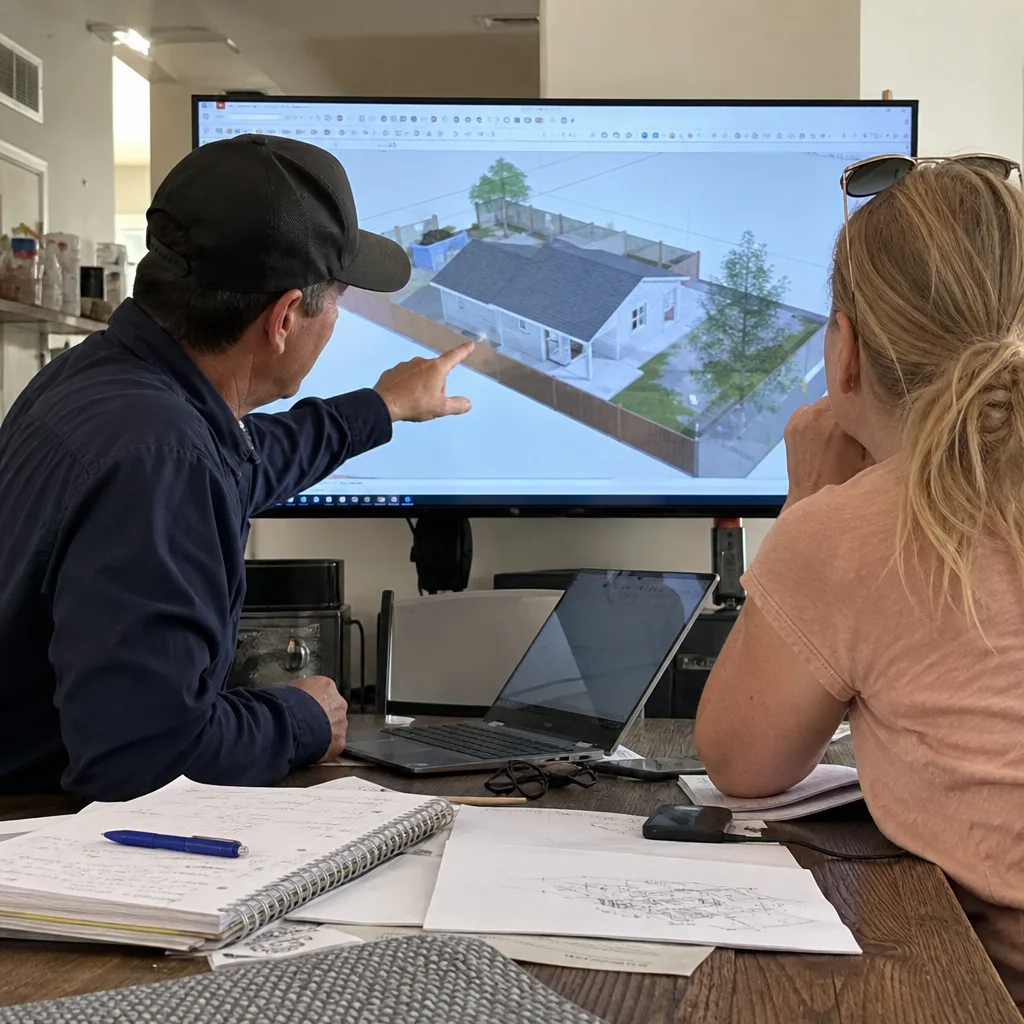
Can my HOA legally stop me from building an ADU in Santa Ana?
No – under California AB 670, an HOA cannot prohibit an ADU outright on a single-family lot. What an HOA can do is enforce reasonable design standards: materials, colors, roof pitch, and similar aesthetic requirements. In Santa Ana, we regularly see HOAs in planned communities along the 55 Freeway corridor attempt to block ADUs on grounds that don’t hold up under AB 670. When that happens, we document the specific CC&R clause in question, compare it against the statute, and provide a written response – including a Permit Application strategy – the homeowner can submit to the HOA board. Call (949) 541-8498 if you’ve already received a denial letter – the first read is free.
How long does HOA approval take in Santa Ana, and does it delay my city permit?
HOA Architectural Review Committee timelines in Santa Ana range from two weeks to 60 days, depending on how frequently the board meets and whether they require a second review cycle. The city permit process runs separately and doesn’t wait for HOA approval – but a project that starts construction without HOA approval can face a stop-work order that’s harder to resolve than the original approval would have been. We run both tracks in parallel from the first day of the engagement, so the HOA process doesn’t add calendar time to the project if we can avoid it. Call (949) 541-8498 for an honest timeline estimate based on your specific community’s review schedule.
What Santa Ana zoning districts allow ADUs, and do any restrict them more than the state minimum?
Santa Ana’s ADU ordinance applies in all residential zoning districts – R1, R2, R3, and R4 – as well as in some mixed-use zones. The city cannot be more restrictive than California state ADU law on most points, but local standards still govern setbacks (typically 4 feet rear and side for detached ADUs), maximum height (16 feet for detached ADUs in most zones), and lot coverage. Parcels in the Transit Zoning Code area near the Santa Ana Regional Transportation Center operate under a different overlay with its own standards. We begin with a Site Assessment, pulling the actual zoning data for your parcel – not a general summary – and mapping the buildable envelope before any design work starts. Call (949) 541-8498 and give us your address; we’ll confirm your zone and the applicable constraints as part of the free estimate conversation.
Do I need HOA approval before or after I submit for a city permit in Santa Ana?
Technically, the city doesn’t require proof of HOA approval before issuing a building permit in Santa Ana – but starting construction without it is a significant risk. Your HOA’s CC&Rs are a private contract, and a violation can result in fines, a requirement to modify or remove the structure, and legal costs that dwarf the price of getting approval first. We submit to the ARC and the city at the same time wherever the HOA’s meeting calendar allows, so you don’t lose weeks waiting for one process to finish before the other begins. Call (949) 541-8498 to talk through your specific timeline.
Why Ellery ADU Studio Santa Ana for HOA and Zoning Compliance
Nadia Ellery started Ellery ADU Studio in 2015, the same year California’s ADU permitting rules began shifting toward the pro-housing framework now in place. In the years since, the firm has navigated HOA review boards in Floral Park, setback disputes on narrow Delhi lots, and Transit Zoning Code overlays near the city’s transit hubs – across more than 900 completed projects, each with a written price before work started.
The design-build model matters here more than in almost any other phase of an ADU project. When the designer and the builder are separate firms, HOA objections and zoning complications get routed between two teams with different financial incentives. At Ellery, the same contract covers the drawings, the compliance documentation, and the construction. If the permit set needs to be revised to satisfy an ARC condition, that revision doesn’t trigger a change-order negotiation between two separate firms. It’s handled internally, at no additional cost to the project if the scope hasn’t changed.
The 365-Day Done Right Promise applies to the whole project, compliance included. If the finished ADU is not built to the permitted drawings – drawings that already reflect the HOA’s approved specifications – Ellery makes it right. In writing. Before the project starts.
For homeowners weighing a prefab option – a Cover unit for a rear-yard detached ADU, or a Mighty Buildings structure on a side yard – we coordinate the manufacturer’s documentation with the HOA submission so the ARC sees the full picture in one package, not a patchwork of emails from three different vendors.
We’re independently owned and operated, and the home office is here to answer calls from live people at any hour. No voicemail queue, no callback that doesn’t materialize. If you’re at the point where you need to know whether your Santa Ana property and its HOA can accommodate the ADU you have in mind, the fastest path is a direct conversation.
Start with a Written Price, Not a Guess
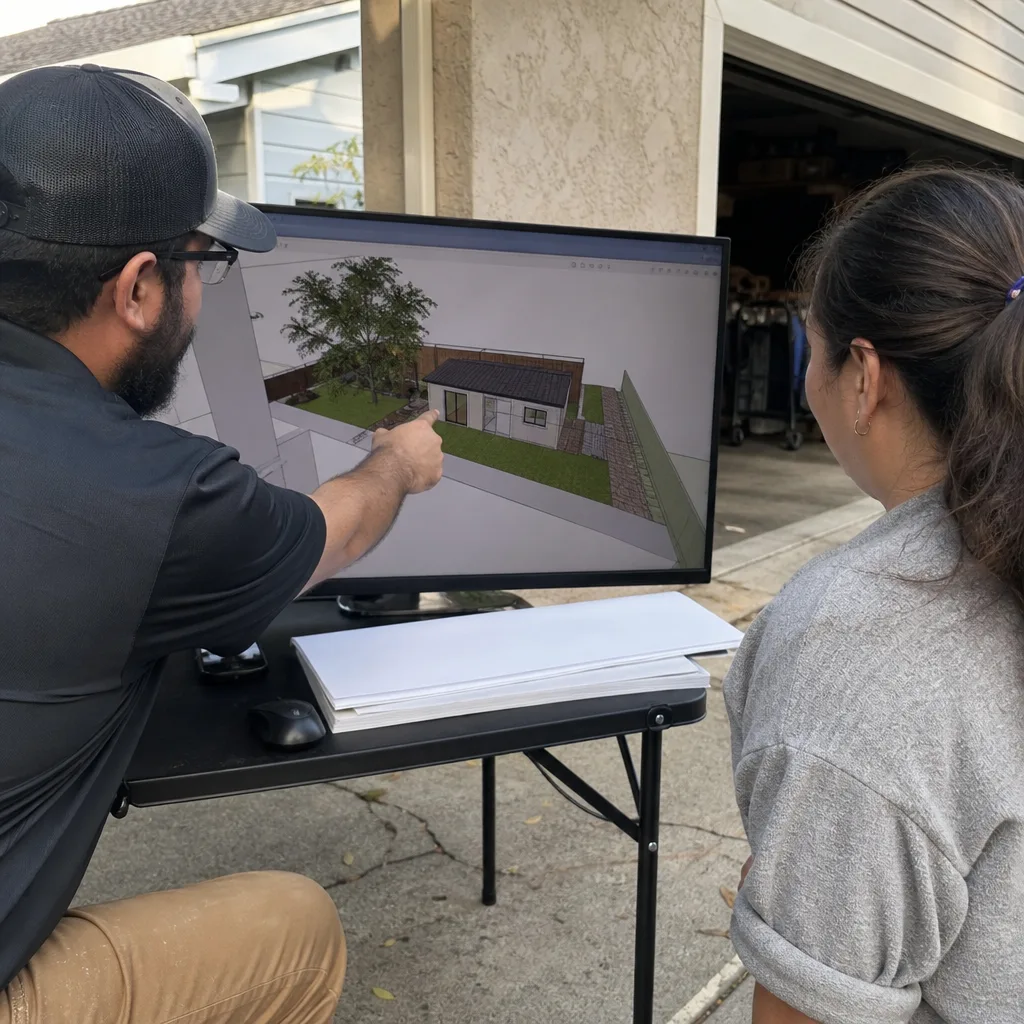
Every HOA and zoning compliance engagement at Ellery ADU Studio Santa Ana begins with a written price before any work starts. That’s Haven Standard Clause 1, and it applies whether your project is a straightforward R1 lot with no HOA or a Floral Park parcel with a historic overlay and an active architectural review board.
Call Nadia Ellery and the team at (949) 541-8498. If you already have a written estimate from another firm, bring it – the Free Second Opinion is there specifically for homeowners who want to know what they’re actually agreeing to before they sign. We’ll review what the other firm has proposed and tell you plainly what the HOA and zoning compliance work will require for your specific Santa Ana address.
Written by Nadia Ellery, Owner at Ellery ADU Studio Santa Ana, serving Santa Ana.