
Last updated September 25, 2026
Seasonal ADU Care for Santa Ana: Year-Round Homeowner’s Guide
Santa Ana’s namesake winds are not a marketing metaphor. The National Weather Service issues a Santa Ana Wind Warning when sustained offshore gusts exceed 25 mph, and during those events, embers travel farther than most homeowners assume. An ADU with standard mesh vent screens and unraked eaves is a structure that looks insured on paper but may not survive the conditions that trigger the policy. This guide maps maintenance to Santa Ana’s actual weather pattern: fire season, rainy season, and two transition periods. You’ll learn what to inspect, when to document it, and how that documentation protects your rental income and resale value. For ADU Design & Permitting Maintenance Checklist for Santa Ana Homeowners, see our detailed resource.
Quick Answer
Seasonal ADU care in Santa Ana means maintaining to four phases: Santa Ana wind season (October through January) for ember resistance and defensible space, rainy season (December through March) for drainage and seal integrity, summer heat preparation (April through May) for HVAC efficiency before SCE rate tiers shift, and year-round rental compliance for smoke detectors, GFCI outlets, and water heater safety valves. See ADU Permits, Codes & Inspections in CA: What You Need to Know for regulatory context. Document everything with dated photos; this record supports insurance claims and California’s required seller disclosures.
Table of Contents
- Santa Ana Wind Season: October Through January
- Rainy Season: December Through March
- Summer Heat Preparation: April Through May
- The Two Transition Periods: April-May and September-October
- Year-Round Rental Compliance That Doubles as Maintenance
- How to Document Maintenance for Insurance and Sale
- Special Notes for Prefab and Modular ADUs
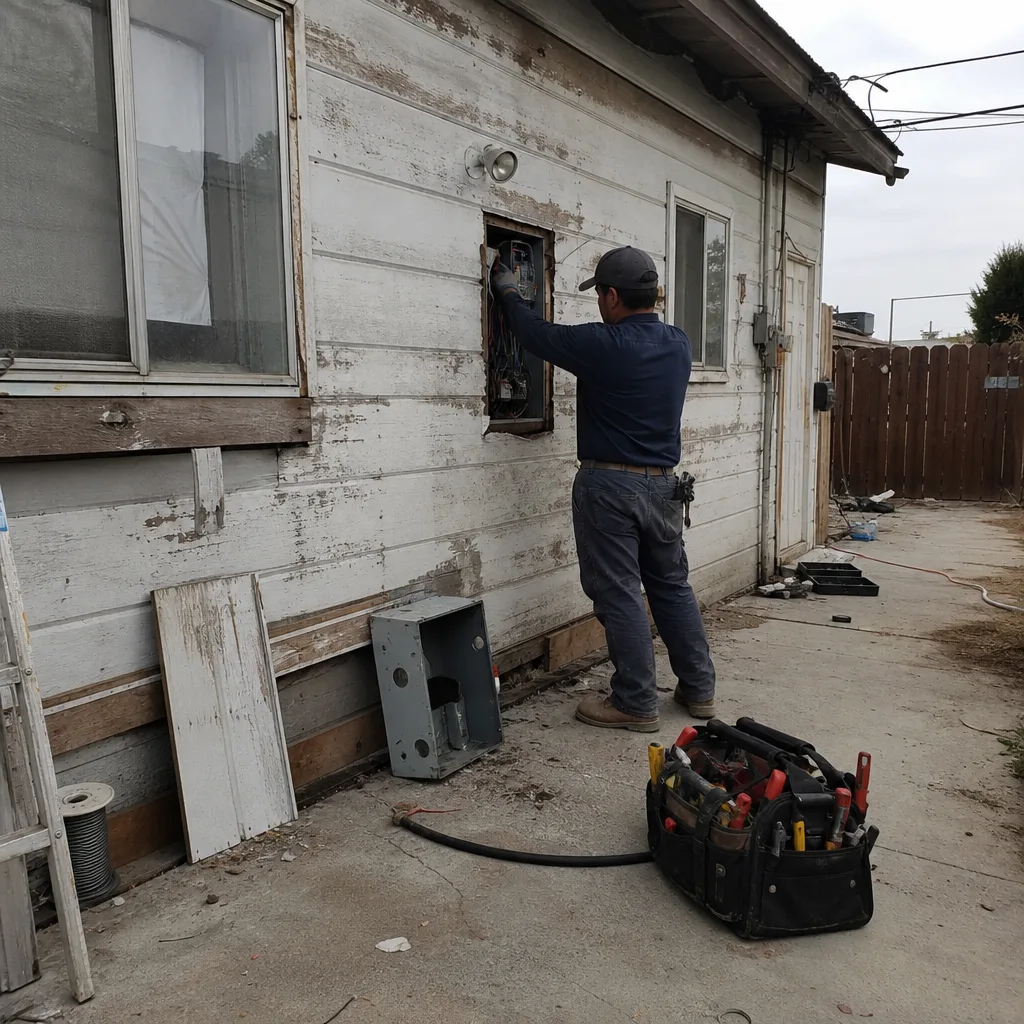 Before
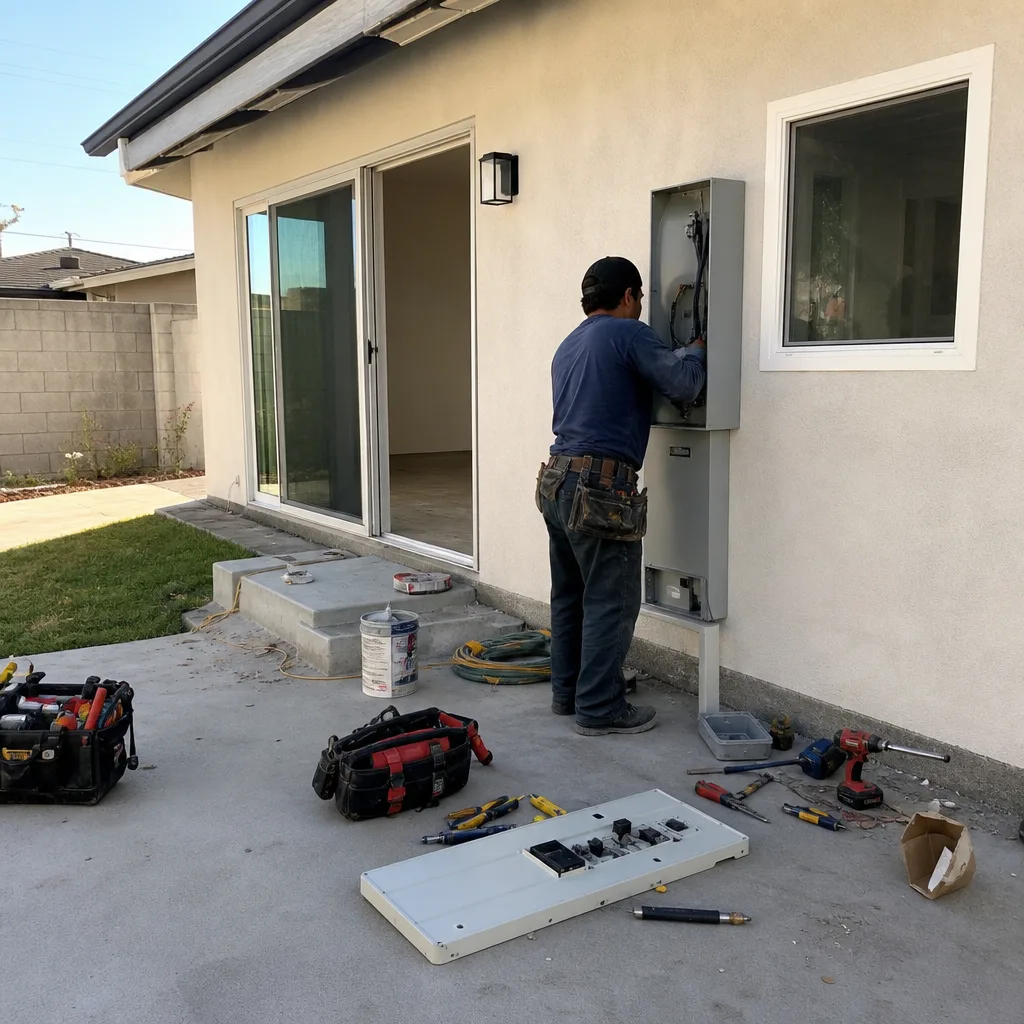 After
AfterSanta Ana Wind Season: October Through January
The Santa Ana winds are a katabatic event: dry air descends from the Great Basin, compresses, and accelerates through the Santa Ana River canyon and adjacent passes. Wind speeds in the foothill neighborhoods of Santa Ana - Olive, Santiago Park Terrace, and the lower slopes of Orange Park Acres - regularly exceed 50 mph during peak events. For an ADU, this is not a siding problem. It is an ember intrusion problem.
We have inspected ADUs in Santa Ana after wind events where the main house survived and the ADU did not. The difference was almost always vent screening and perimeter clearance.
Wind Season Checklist
- Replace standard vent mesh with 1/8-inch metal screening. California Building Code Chapter 7A requires this for new construction in Wildland-Urban Interface zones, but many older ADUs and garage conversions predate the rule. Standard fiberglass mesh melts at 300°F. Ember-resistant metal mesh does not. Check gable vents, soffit vents, and any crawl space or attic vents on the ADU.
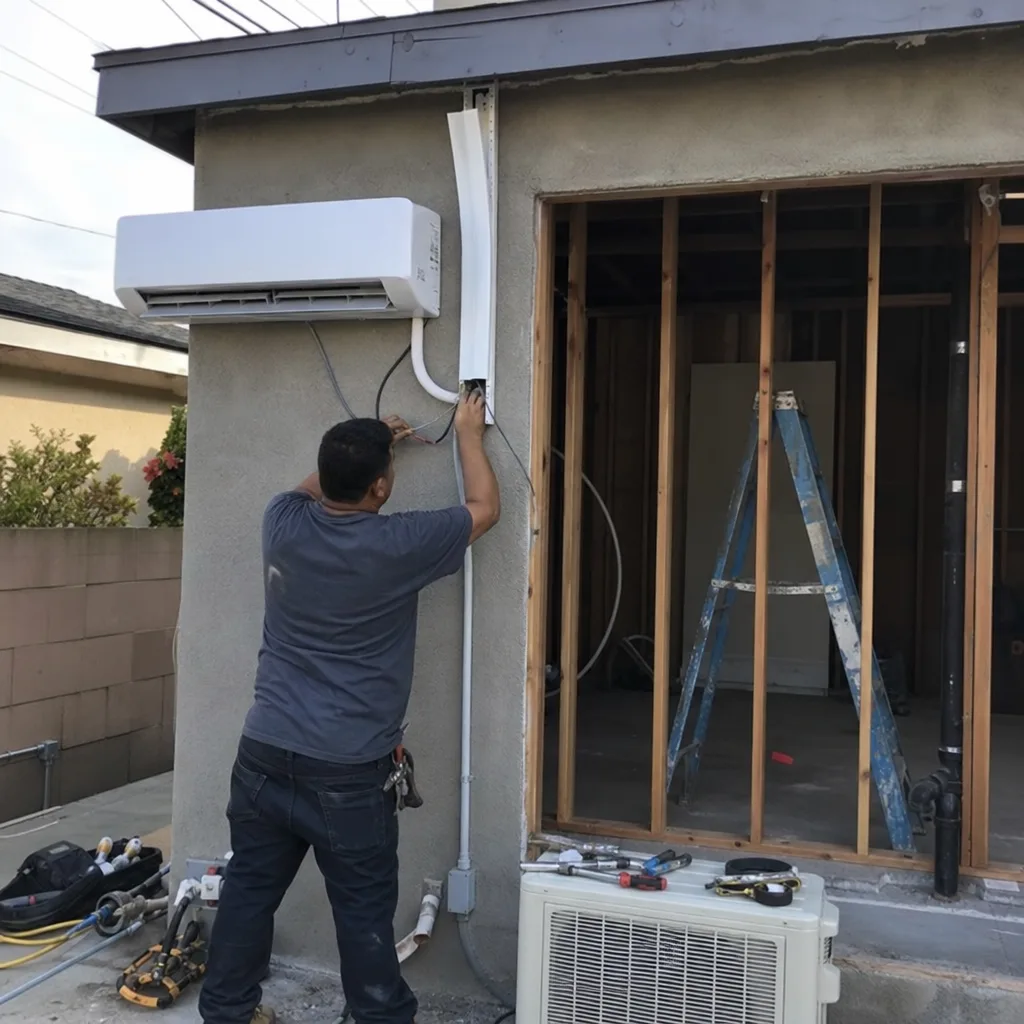
- Audit exterior caulking at all penetrations. Wind-driven embers seek gaps. In our experience, the most common failure points are where conduit, gas lines, or mini-split refrigerant lines pass through the ADU envelope. The caulk should be continuous and rated for exterior exposure. Silicone fails faster in Santa Ana’s UV load than polyurethane; we specify polyurethane on our ADU projects for this reason.
- Confirm five feet of noncombustible clearance around the ADU perimeter. This is defensible space Zone 0, and it is where most Santa Ana homeowners fail. Potted plants with organic soil, wicker furniture, and even mulch within five feet of the structure are fuel. Replace with gravel, concrete, or bare mineral soil. In the compact lots of Santa Ana’s Washington Square and Floral Park neighborhoods, this five-foot zone often extends into the setback - the minimum distance the city requires between your ADU and the property line. If your ADU is tight to the line, every inch of that zone matters more.
- Inspect and secure rooftop mechanical equipment. Mini-split condensers, vent fans, and any solar hardware on the ADU roof must be anchored to manufacturer specifications. We have seen condensers slide across flat roofs in 60-mph gusts, tearing membrane and creating water intrusion paths that show up months later.
- Clean gutters and roof valleys of accumulated debris. This is standard advice, but in Santa Ana it is fire-specific. Dry leaves in a gutter are fuel in the air path. Document the cleaning with a dated photo.
The cost of wind-season preparation for an existing ADU typically runs $400-$1,200, depending on vent count and whether you need a hand crew for clearance work. If you’re planning a new garage conversion ADU in Santa Ana, we specify ember-resistant vents and noncombustible perimeter materials from the permit set forward - no retrofit needed.
Rainy Season: December Through March
Orange County receives 10 to 14 inches of annual rainfall, concentrated in these months. Santa Ana’s soil is heavy in clay, particularly in the older neighborhoods north of the 5 Freeway and in the flat areas near the Santa Ana River. Clay expands when wet and contracts when dry. An ADU slab that was poured without proper drainage or a functioning perimeter drain will move. The symptoms show up as sticky doors, cracked tile, and separations at window frames.
We document this on every site visit. Our photo record includes the slab edge, the grade slope, and any standing water. Clients receive this evidence, not a summary of how it felt.
Rainy Season Tasks
- Confirm positive drainage away from the ADU foundation. The grade should fall six inches in the first ten feet. In Santa Ana’s dense lots, ten feet is often impossible; in those cases, a swale or perimeter drain is the engineered alternative. If water pools within three feet of the slab after a storm, the drainage is failing.
- Test door and window seals with a smoke pencil or incense stick. Hold it near the closed unit on a windy day. Draft indicates seal failure. For rental ADUs, this is also an energy code compliance issue: California’s Title 24 requires operable windows and doors to meet air leakage standards. A tenant’s complaint about a cold unit is often a seal problem, not an HVAC problem.
- Inspect the water heater temperature-pressure relief (TPR) valve. Lift the test lever briefly; water should discharge through the drain line. If it does not, the valve is seized and must be replaced. This is a $15 part and a 20-minute job, but a failed TPR valve is a scalding hazard and a code violation for rental units.
- Replace HVAC filters after the first heavy rain. Santa Ana’s winter rain pulls pollen and dust from the air, and the first storm loads filters fast. For mini-split systems, clean the indoor unit filters monthly during rental occupancy. For central systems, the filter change is the tenant’s responsibility per most leases, but the landlord must confirm it happens - a clogged filter in summer will trigger a service call that costs more than a year’s supply of filters.
- Check exterior paint and stucco for water staining. Staining below windows, at sill plates, or along the foundation line indicates a breach in the weather barrier. In Santa Ana’s climate, water intrusion dries quickly on the surface, so the damage is often hidden until it is structural. A documented photo record catches it early.
Drainage correction for an existing ADU in Santa Ana typically costs $800-$2,500, depending on whether a French drain or surface grading is required. For a new detached ADU in Santa Ana, we design the foundation and drainage as a single system, with the grade plan included in the permit set.
Summer Heat Preparation: April Through May
Southern California Edison’s summer rate tiers shift in June. The price per kilowatt-hour can double or triple between Tier 1 and Tier 2, depending on your plan. An ADU with an inefficient mini-split or poorly sealed envelope will hit those tiers fast, and the tenant - or you, if the unit is unoccupied - will pay for maintenance that should have happened in April.
This is not about comfort. It is about operating cost, which affects rental yield and, ultimately, the ADU’s contribution to your property value.
Pre-Summer Checklist
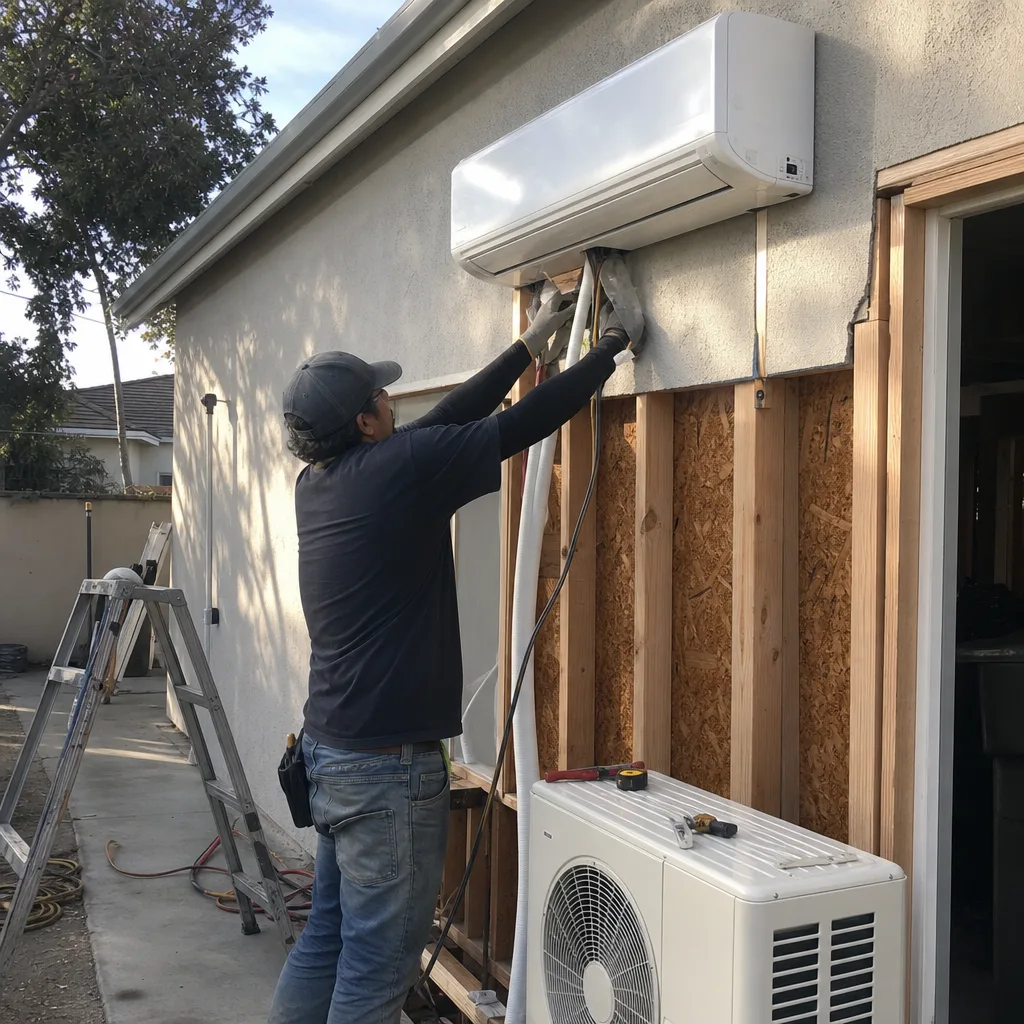
- Service the mini-split or HVAC system in April. Clean coils, check refrigerant charge, and confirm the condensate drain is clear. A system that is 10% low on refrigerant can run 20% longer to meet setpoint. In SCE territory, that inefficiency is expensive. We specify Mitsubishi, Daikin, or equivalent systems on our ADU projects and require commissioning records - the documentation that proves the system was tested at startup.
- Test and reset programmable thermostats. For rental ADUs, lock the tenant-accessible range to 68-78°F. This prevents extreme settings that strain equipment and spike bills. The lock function is standard on most modern thermostats but rarely used.
- Inspect attic or roof cavity insulation. Santa Ana’s summer sun load on a dark shingle or tile roof will drive attic temperatures above 140°F. Blown-in insulation settles over time; what was R-38 at construction may be R-30 or less. We measure depth and document it. Re-blowing attic insulation costs $1.50-$2.50 per square foot in the Santa Ana market.
- Check exterior shading devices. Awnings, exterior shades, and even mature trees reduce solar heat gain more effectively than interior blinds. If a tree that shaded the ADU has been removed or pruned, the cooling load has increased. Adjust thermostat programming or consider exterior shade installation before June.
- Verify window screen integrity. This is maintenance and security: damaged screens are an entry point. In rental units, we recommend half-screen or removable designs that do not compromise the weather seal.
The full pre-summer service for an ADU HVAC system in Santa Ana runs $200-$450. If the system is more than ten years old, we provide a replacement quote with a written price before any work starts - Haven Standard, Clause 1.
The Two Transition Periods: April-May and September-October
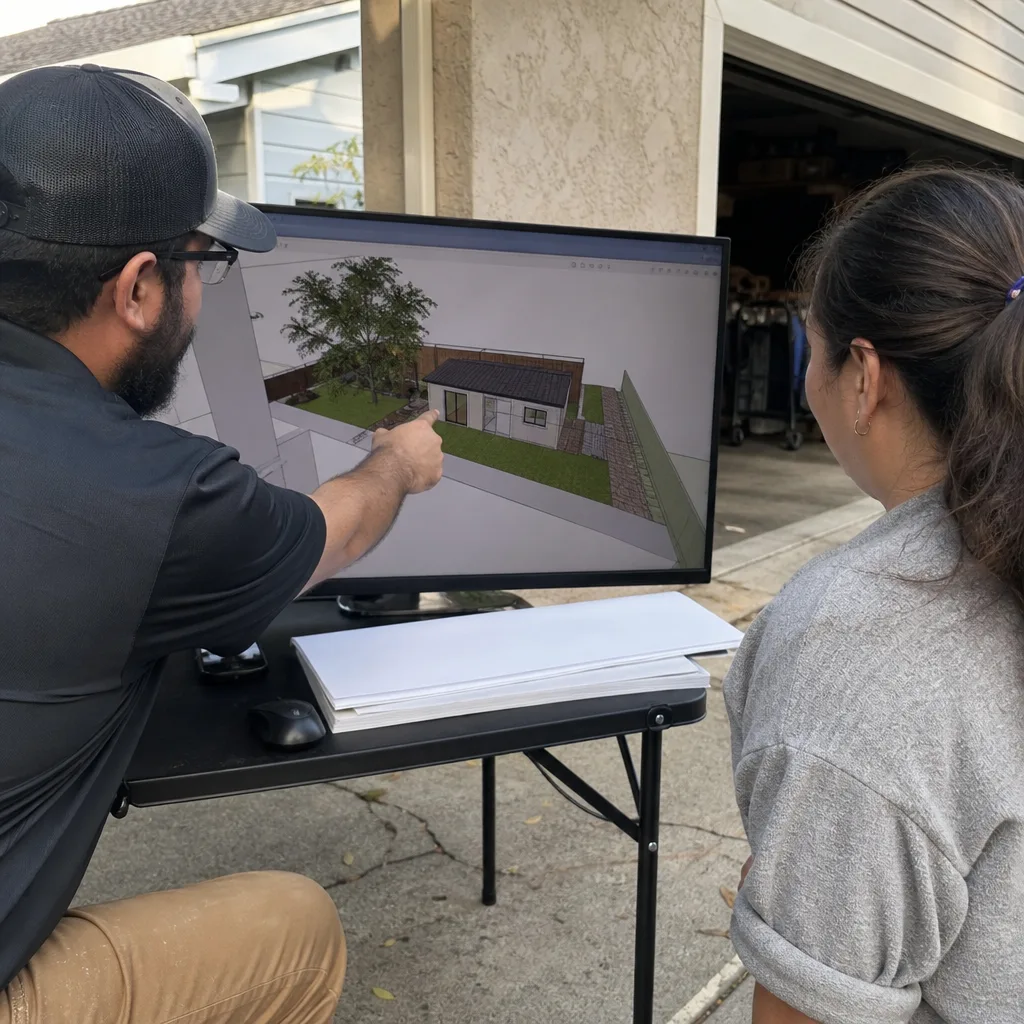
Santa Ana’s shoulder seasons are short and volatile. September and October bring the highest fire risk: dry vegetation after summer, offshore winds returning, and the first Santa Ana events. April and May bring the last reliable rain and the first heat spikes. These periods are for tasks that do not fit cleanly in the other phases.
September-October Tasks
- Schedule the wind-season inspection early, before the first Red Flag Warning. Contractors book fast when warnings issue.
- Test the ADU’s emergency lighting if the unit has a separate electrical meter or subpanel. Battery-backed egress lights have a test button; press it and confirm 90-minute runtime.
- Inspect the ADU’s separate gas meter or appliance shutoff valve. In a wildfire evacuation, the ability to shut off gas at the ADU - not just the main house - matters.
April-May Tasks
- Conduct the full pre-summer HVAC service described above.
- Inspect and clean the ADU’s dryer vent if the unit has in-unit laundry. Lint accumulation is a fire hazard and an efficiency loss. The vent should be rigid metal, not flexible duct, and should terminate outside with a backdraft damper.
- Walk the roof or hire a drone inspection. Santa Ana’s winter rain and spring winds dislodge tiles and damage flashing. Repair before summer heat makes roofing work unpleasant and more expensive.
These transition periods are also when we schedule our ADU Design & Permitting in Santa Ana consultations for homeowners planning new units. Permit timelines at Santa Ana’s Community Development Agency vary seasonally; submitting in October or April often avoids the summer backlog.
Year-Round Rental Compliance That Doubles as Maintenance
California rental law and Santa Ana’s local requirements create a maintenance schedule whether you intend one or not. Treating compliance as maintenance prevents the emergency repairs that destroy cash flow.
Monthly or Per-Turnover Tasks
- Smoke and CO detector function test. Press the test button; replace units over ten years old. Document the test date. In a fire or CO event, a plaintiff’s attorney will request this log.
- GFCI outlet test. Press the test button; the outlet should trip and reset. Failed GFCIs are a shock hazard and a code violation. Replacement is a 15-minute job if you keep spare units on hand.
- Water heater TPR valve test. As described in the rainy season section, but this is a quarterly minimum, not annual.
- HVAC filter inspection. For occupied units, confirm the filter is present and not clogged. For vacant units, remove and store filters to prevent mold growth in the frame.
Annual Tasks
- Pest control perimeter treatment. Santa Ana’s warm climate supports year-round termite and ant activity. A licensed applicator’s annual inspection and treatment is $150-$300 and satisfies most lease addendums.
- Sewer line camera inspection if the ADU connects to an older main. Orange County’s clay sewer mains, common in pre-1970 neighborhoods, are vulnerable to root intrusion. A camera inspection every two to three years catches it before backup.
- Window and door hardware lubrication and adjustment. Sticky latches get forced; forced latches break. A can of dry lubricant and ten minutes per unit prevents replacement.
For Ellery ADU Studio Santa Ana home clients with rental ADUs, we include a maintenance schedule in the project closeout documentation. The 365-Day Done Right Promise covers defects in workmanship; the maintenance schedule protects everything else.
How to Document Maintenance for Insurance and Sale
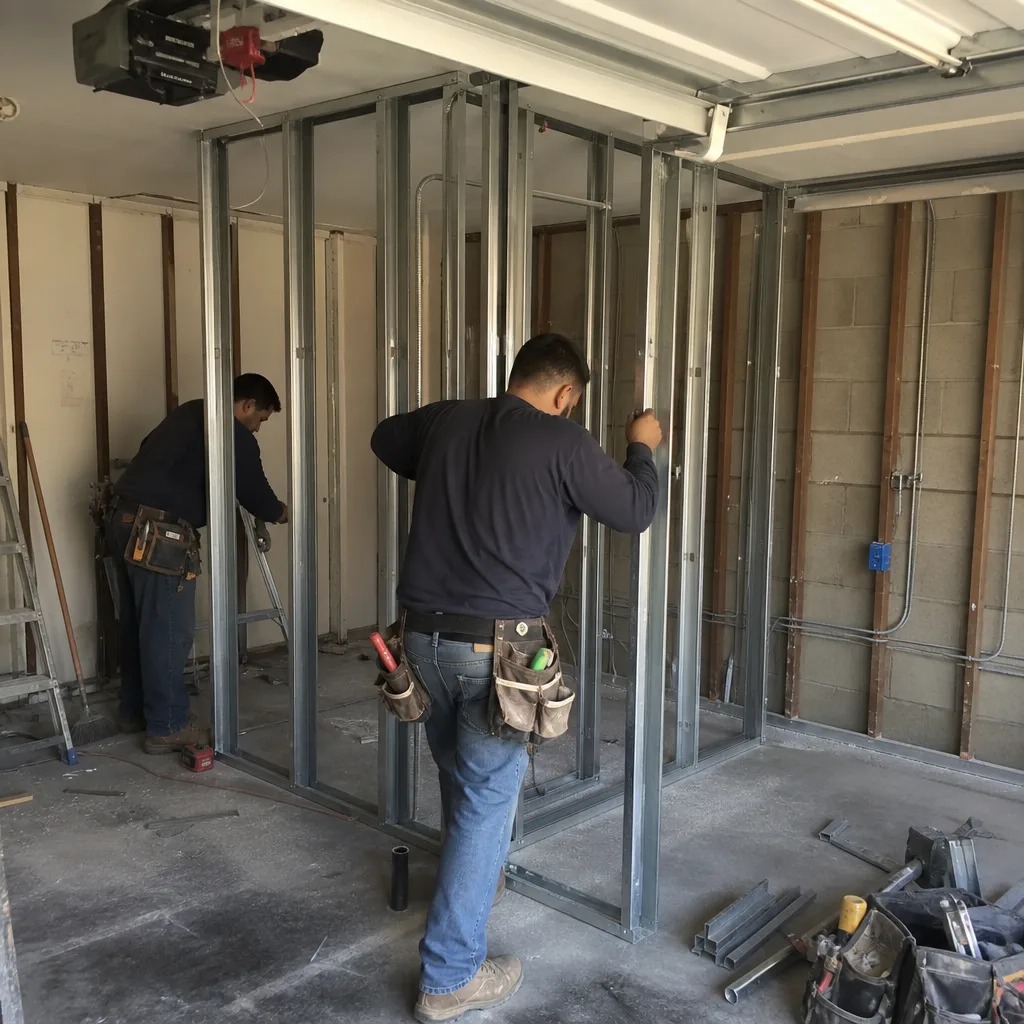
California Civil Code Section 1102 requires sellers to disclose material facts about property condition. An ADU with a documented maintenance history is a disclosed asset; an ADU without records is a liability that buyers discount or walk from. Insurance adjusters operate similarly: a claim with dated photos of pre-event condition is processed faster and more favorably than one without.
The Documentation Format We Recommend
- Digital folder structure by year, then by season. 2024 / Wind Season, 2024 / Rainy Season, etc.
- Each entry: date, task, photo, and note. Example: “2024-10-15 / Replaced gable vent screens with 1/8″ metal mesh / [photo of installed screen] / Used #8 stainless screws, not staples, per wind-load requirement.”
- Receipts and invoices as PDFs in the same folder. This creates a chain of custody for major items: HVAC service, drainage work, roof repair.
- Tenant communication log for rental units. Email or text confirmations of maintenance appointments, filter change reminders, and any reported issues with your response. This protects against habitability claims.
For prefab and modular ADUs - systems from Cover, Dvele, or Mighty Buildings, for example - the manufacturer may have specific maintenance requirements that differ from site-built standards. We coordinate these requirements into the same documentation format, so the owner has one system, not two.
If you are preparing to sell, compile the last three years of records into a single PDF. Provide it to your agent as a marketing document. In Santa Ana’s competitive market, a maintained ADU with records commands a premium over a comparable unit without.
Special Notes for Prefab and Modular ADUs
Prefab and modular ADUs - including systems from Cover, Dvele, Mighty Buildings, and Boxabl - arrive with manufacturer maintenance schedules that differ from site-built practice. The steel frame of a Mighty Buildings unit does not rot, but its proprietary exterior finish may require specific cleaning agents. The panelized envelope of a Cover unit is highly efficient but has sealant joints that need inspection on a different cycle than standard stucco.
We specify and coordinate these systems within the same single contract as our site-built work. The maintenance schedule is included in project closeout, adapted to Santa Ana’s actual climate phases. Do not apply generic ADU maintenance advice to a prefab unit without checking the manufacturer’s requirements; doing so may void the warranty.
For Boxabl units, which are compact and often placed on minimal foundations, wind anchoring is critical. The manufacturer’s tie-down specification must be verified after any soil work or drainage modification near the unit.
Common Mistakes to Avoid
- Treating Santa Ana winds as a “fire risk” rather than a structural and ember-intrusion risk. The wind itself damages roofs and equipment; the embers it carries start fires inside the envelope. Both require distinct tasks.
- Waiting for tenant complaints to trigger maintenance. A tenant who reports a cold unit in January has been uncomfortable for weeks. Scheduled seasonal checks catch problems before they affect occupancy or reviews.
- Using flexible dryer duct or plastic vent covers. These melt in Santa Ana heat and ignite from lint. Rigid metal duct and metal hoods are code for a reason.
- Neglecting the ADU’s separate utility shutoffs. In an emergency, the main house shutoff does not help if the ADU has a separate gas meter or electrical subpanel. Label them clearly and confirm access.
- Assuming a new ADU needs no maintenance for five years. Settlement, sealant curing, and initial equipment break-in create more maintenance needs in years one and two than in years three through five. The first two years are when we find most of the issues covered by our 365-Day Done Right Promise.
- Failing to document. A maintenance task without a photo or receipt did not happen, for insurance or legal purposes. The five minutes to photograph and file is cheaper than any dispute.
When to Call a Professional
Call a licensed contractor or specialized technician when: the slab shows new cracking or differential settlement; the HVAC system does not reach setpoint after filter and coil cleaning; water stains appear on interior surfaces; or the ADU was built without permits and you need a compliance evaluation. Electrical panel work, gas line modification, and roof structural repair require licensed trades in California and are not DIY-appropriate.
Ellery ADU Studio Santa Ana offers free estimates in Santa Ana for ADU maintenance planning, compliance evaluations, and pre-sale documentation reviews. Call (949) 541-8498. We also provide a Free Second Opinion on any written estimate already in hand.
Frequently Asked Questions
Annual seasonal maintenance for an existing ADU in Santa Ana typically runs $800-$2,500, depending on size, age, and whether drainage or HVAC service is needed that year. Prefab units with manufacturer-specific requirements may fall at the lower end if the envelope is simpler. Call (949) 541-8498 for an exact quote - estimates are free, and every project is quoted with a written price before any work begins, per Haven Standard, Clause 1.
Most homeowner policies cover ADUs under the main dwelling coverage, but the limits may not reflect replacement cost. A detached ADU with its own kitchen and bath is often underinsured at standard dwelling extension limits. Schedule a specific review with your agent, and provide your maintenance documentation as evidence of condition. Ellery ADU Studio does not sell insurance, but we document build condition at project closeout to support your application.
Walk the perimeter after the first heavy rain each season and look for new cracking, soil separation, or water pooling. A formal inspection by a structural technician is warranted if you observe differential settlement - doors that stick, windows that crack, or visible slab movement. In our experience, most Santa Ana ADU foundation issues show up in years two through four, after initial settlement completes.
Homeowners can legally perform filter changes, vent cleaning, caulking, and basic landscaping clearance. Electrical, plumbing, gas, and structural work require licensed trades in California. For rental ADUs, some tasks - annual smoke detector testing, GFCI function - are your legal responsibility regardless of lease terms; delegating to a tenant does not transfer liability. Call (949) 541-8498 if you need a maintenance schedule designed for your specific ADU and occupancy type.
Keep three years minimum of dated photos, invoices, and correspondence with tenants about maintenance. California’s Transfer Disclosure Statement asks about known defects and repairs; a complete record lets you answer accurately and confidently. For ADUs built by Ellery ADU Studio, we provide a project closeout binder with permit records, inspection sign-offs, and photo documentation that satisfies most buyer due diligence.
The 365-Day Done Right Promise covers defects in Ellery’s workmanship and materials - items that fail because of how we built, not because of normal wear or owner neglect. Maintenance is the owner’s responsibility, but we design our ADUs with maintenance access and schedules in mind. If you are unsure whether an issue is a defect or maintenance, call (949) 541-8498 for a free evaluation.
The Bottom Line
Santa Ana’s climate demands an ADU maintenance schedule built to its actual conditions: wind-driven ember risk, clay soil drainage, and summer rate-tier heat loads. The four-phase approach - wind season, rainy season, summer preparation, and year-round compliance - protects structure, income, and resale value. Document every task with dated photos and receipts. The record is as valuable as the maintenance itself when insurance or sale time arrives. For new ADUs, design for maintainability from the permit set forward; for existing units, start the schedule now and build the record over time. Explore more guides & resources on ADU ownership.
Written by Nadia Ellery, Owner at Ellery ADU Studio Santa Ana, serving Santa Ana since 2015.