
Plant Prefab New Detached ADU: The Santa Ana Owner’s Guide
We stock and install Plant Prefab-compatible components for new detached ADUs in Santa Ana, with typical installed replacement costs running $2,800-$6,400 depending on the subsystem and model year. Most calls we field are same-day or next-day. Owners usually discover a failure when the unit’s HVAC stops cycling, a window wall leaks at the sill during Santa Ana’s driving winter rains, or the electrical subpanel throws repeated breakers - often after the original warranty period has passed but before the structure has seen a decade of California thermal cycling.
Which Plant Prefab Models This Applies To
Plant Prefab’s new detached ADU line has shifted specs across production runs, and the part you need depends on which generation you’re working with. The LivingHome 10 and LivingHome 30 series, built between 2018 and 2022, used a specific 100-amp Siemens subpanel and VRF mini-split configuration that differs from the 2023-and-newer models, which moved to 125-amp service and heat-pump-ready rough-ins. The window wall systems also changed manufacturers mid-cycle: earlier units shipped with Fleetwood aluminum frames, while current production uses Western Window Systems. We carry both gasket profiles and can read the etched marking in the frame corner to confirm which generation you have.
For the foundation-level utilities, Plant Prefab’s standard spec calls for a 4-inch slab with radiant-ready tubing, but Santa Ana’s expansive clay soils in the Floral Park and Washington Square areas have pushed some units toward differential settlement that stresses the DWV connections. We stock Fernco-style transition couplings rated for that movement, sized to the 3-inch main stack that Plant Prefab standardized on across all new detached models. OEM versus aftermarket: for electrical and structural connections, we specify OEM or UL-listed equivalent only - the permit inspector in Santa Ana will flag anything less. For weathersealing and hardware, we use commercial-grade aftermarket that meets or exceeds the original spec, documented in your photo record.
Signs Your Plant Prefab New Detached ADU Is Failing
- HVAC short-cycling or failure to maintain setpoint. The VRF system’s line set runs through a sealed chase in the Plant Prefab wall cavity. If the flare connection loosens from thermal expansion - common after three to five Santa Ana summers - refrigerant drops slowly and the compressor labors. You’ll hear it running almost constantly while the interior temperature drifts.
- Water intrusion at window wall corners or sill plate. The Fleetwood-to-drywall transition in pre-2023 units relies on a backer rod and fluid-applied sealant that degrades under UV exposure. Santa Ana’s south-facing exposures see enough hours of direct sun to accelerate this. Staining on the interior drywall below the frame is your first visible signal; by then the OSB sheathing behind is often wet.
- Repeated breaker trips on the subpanel serving the ADU. Plant Prefab’s 100-amp Siemens panels from the 2018-2022 run have documented issues with bus bar oxidation in humid coastal air, even inland in Santa Ana during marine layer mornings. The breaker feels warm to the touch and trips under load that should be well within rating.
- Slab cracks with corresponding door or window misalignment. The 4-inch slab spec assumes stable substrate. In Santa Ana’s clay-heavy zones, seasonal moisture swings cause heave. You’ll see diagonal cracks in the slab finish and the entry door will stick seasonally - worse in late summer after the soil has dried and shrunk.
- Low water pressure or slow drains isolated to the ADU. The PEX distribution manifold is factory-assembled and pressure-tested, but the transition to site plumbing happens at a buried coupling near the main structure. If that coupling was backfilled with native clay rather than drain rock, settling can kink the line or bell the fitting.
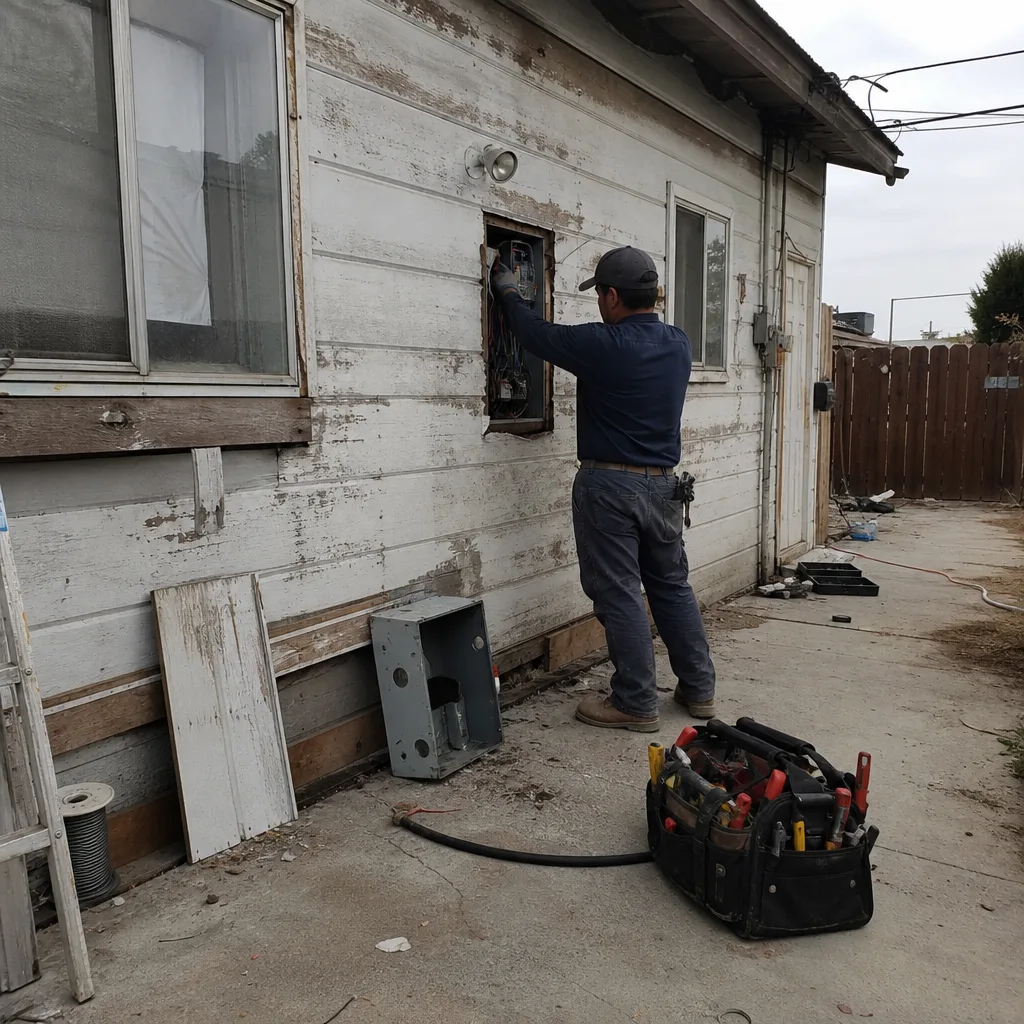 Before
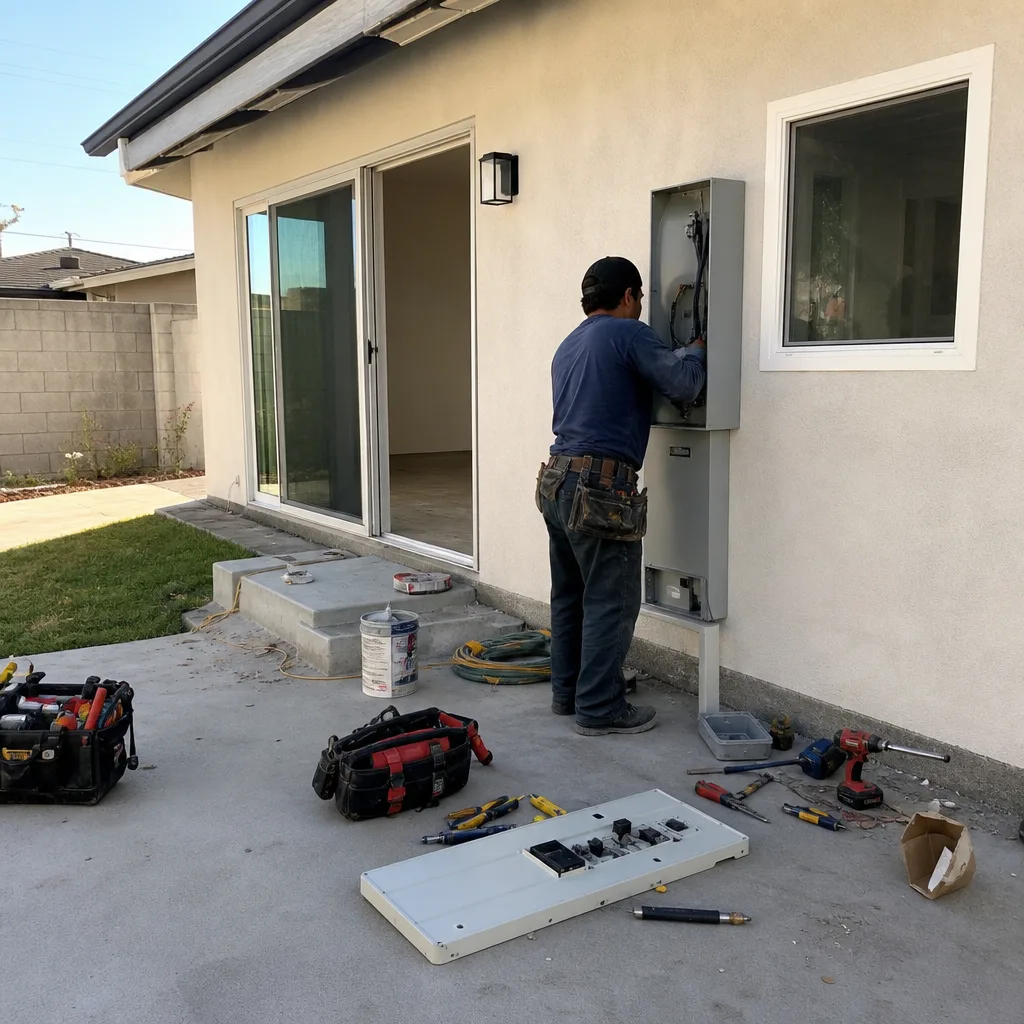 After
AfterReplacement Cost & What’s Included
| Component / Service | Typical Range in Santa Ana |
|---|---|
| VRF line set repair or replacement (refrigerant recovery, flare, pressure test) | $2,800 - $4,200 |
| Window wall sealant system replacement (removal, substrate repair, fluid-applied, trim) | $3,400 - $5,600 |
| Subpanel replacement with OEM Siemens, permit, inspection | $2,200 - $3,800 |
| Slab stabilization with polyurethane injection + DWV repair | $4,600 - $6,400 |
| Site utility line repair (PEX or DWV transition, excavation, backfill) | $2,800 - $4,800 |
What drives the range: accessibility of the failed component, whether the original installation documentation is available (we request it upfront - it saves diagnostic time), and whether the repair triggers a Santa Ana building inspection. Under Haven Standard Clause 1, the written price you receive before work starts is the price you pay; no change orders for conditions we could have observed. Every repair includes a documented photo record of the failure, the repair, and the test results. Our 365-Day Done Right Promise covers the workmanship; OEM electrical components carry their manufacturer’s warranty, which we register for you.
DIY or Call Us?
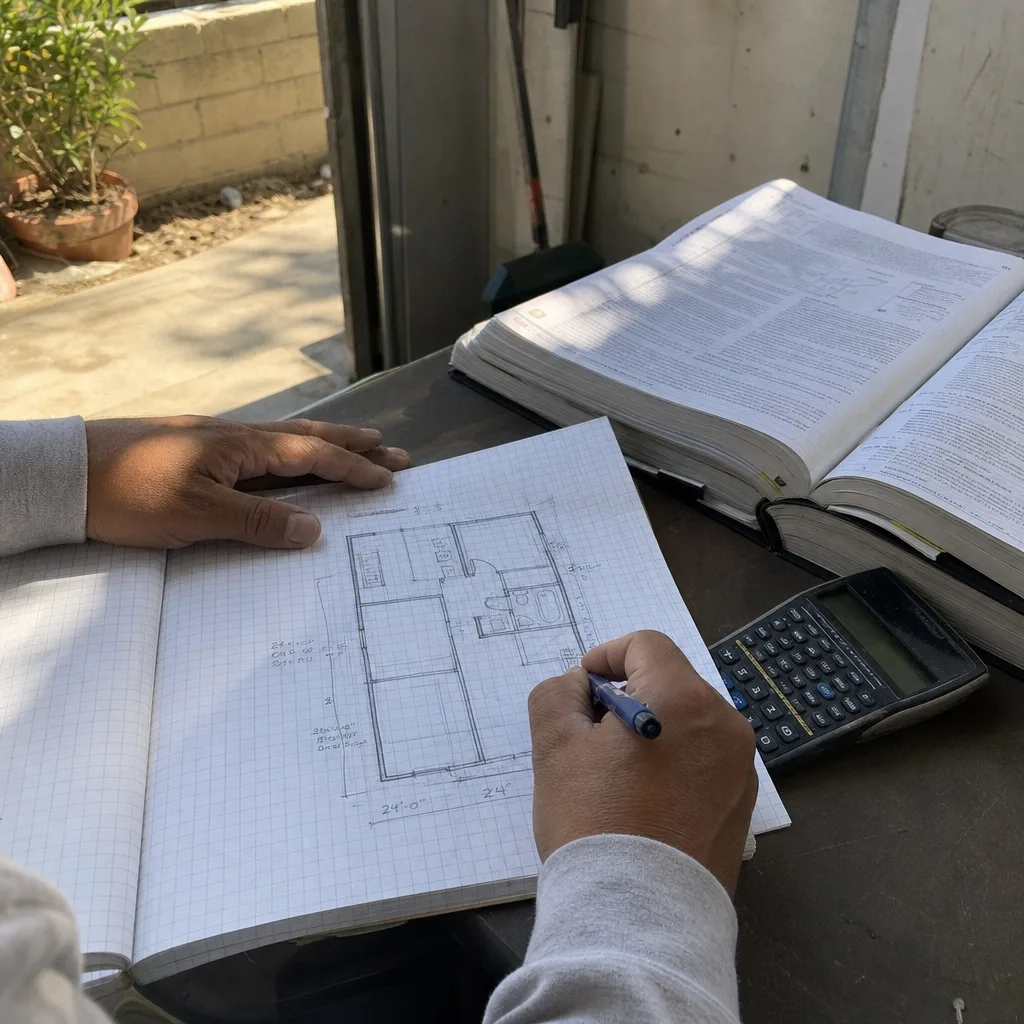
There is a clear line here. An owner can safely check the breaker panel for warmth, look for the etched window frame marking, or photograph a slab crack for documentation. What we do not recommend: opening a VRF refrigerant circuit (EPA certification required, plus recovery equipment), disturbing the window wall sealant without understanding the drainage plane behind it, or working inside an energized subpanel. The refrigerant lines run at pressures that can cause serious injury if a flare lets go during handling; the electrical work, if done incorrectly, creates a fire risk in a structure that may be occupied by tenants.
If you’ve already identified the symptom and want confirmation of the part number and a written price to fix it, call (949) 541-8498. We bring the compatible components to the site, verify fit before opening anything, and permit the work if the city requires it.
FAQs
Fluid-applied sealant under direct south or west exposure typically shows degradation at seven to ten years in this climate, sooner if the original application missed mil thickness at the sill. The marine layer moisture plus summer UV is harder on the material than inland desert conditions. Call (949) 541-8498 for an exact condition assessment - estimates are free.
A leaking flare can often be re-made and pressure-tested without replacing the entire line set, saving roughly $1,800-$2,400. If the leak is in the buried or chase-run section, replacement is usually more reliable than a buried splice. We test first, then quote both paths under Haven Standard Clause 1.
Most component replacements - subpanel, line set flare, window wall sealant - are completed in one working day. Slab stabilization with utility repair runs two to three days to allow for cure times and inspection scheduling. We specify the timeline in writing before you sign.
We stock the common failure items for the 2018-2024 production runs: both gasket profiles, the Siemens subpanel and breakers, Fernco transition couplings, and the specified sealant system. For model-year-specific components we don’t carry, we confirm the part number from your unit’s documentation and source it before scheduling - no return trips charged to you.
Here is what it costs, here is what you get, here is the document that says so. That’s how we’ve handled every ADU project since 2015, including the Plant Prefab units we’ve specified and coordinated across Santa Ana. Nadia Ellery keeps that battered copy of the ADU statute on her desk because the rules actually matter when a permit set goes to the city - and because a written promise only counts if you can point to the clause.
Call (949) 541-8498 to schedule your free estimate. Bring your Plant Prefab documentation if you have it; if not, we’ll read the markings on site and tell you exactly what needs to happen next.
Written by Nadia Ellery, Owner, Ellery ADU Studio Santa Ana at Ellery ADU Studio Santa Ana, serving Santa Ana and nearby areas.