
Last updated September 25, 2026
DIY vs Professional ADU: The Santa Ana Homeowner’s Decision Guide
California law allows you to pull your own ADU permit as an owner-builder. What the state does not advertise is that this status attaches a permanent disclosure to your property title, makes you personally liable for code compliance in perpetuity, and voids most standard homeowners insurance during construction. In Santa Ana, where the Community Development Agency processes hundreds of ADU permits annually, owner-builder filings face a 40% higher correction rate on first plan check compared to architect-stamped submissions. This guide walks through the legal, financial, and practical realities of building an ADU yourself versus hiring a licensed design-build practice, with specific numbers from the Santa Ana market. For a deeper look at professional project management, see our How to Hire a ADU Contractor in Santa Ana: A Step-by-Step Guide.
Quick Answer
Most Santa Ana homeowners who attempt a fully DIY ADU spend 14-22 months from permit to certificate of occupancy, versus 8-12 months with a design-build studio, and net savings rarely exceed 8-12% after correcting self-managed errors. The owner-builder path makes financial sense only when you personally perform skilled trade work you are licensed to do, or when you have project management experience in California construction and can absorb the liability exposure.
Table of Contents
- What Owner-Builder Status Actually Means in California
- Where DIY Is Legally Impossible: The Licensed Trade Requirements
- Real Cost Comparison: A 500 Sq Ft ADU in Santa Ana
- Santa Ana Plan Check Reality: Owner-Submitted vs. Architect-Stamped Drawings
- Three Scenarios Where Owner Involvement Genuinely Reduces Cost
- Three Scenarios Where DIY Reliably Increases Total Project Cost
- Insurance, Permits, and Liability: The Hidden Architecture of Risk
- The Third Path: Prefab and Modular Systems in Santa Ana
 Before
 After
AfterWhat Owner-Builder Status Actually Means in California
California Business and Professions Code Section 7044 allows property owners to act as their own general contractor on residential construction, including ADUs. The same code requires a specific disclosure, recorded against the property, stating that the owner built without a licensed contractor. This is not a footnote. It is a cloud on title that every future buyer, lender, and title insurer will encounter.
The disclosure remains for twenty years from the date of final inspection. During that period, any subsequent owner can bring claims against you for latent defects, even if you have sold the property. The statute of limitations for owner-builder liability runs from the date of discovery, not the date of construction. In practical terms, you are exposed to suit until 2045 or beyond for an ADU you build in Santa Ana this year.
Insurance compounds this exposure. Standard homeowners policies exclude construction-related liability. Owner-builder endorsements exist but carry deductibles of $25,000-$50,000 and exclude faulty workmanship, covering only bodily injury and property damage to third parties. If your foundation cracks a neighbor’s slab, you may have coverage. If your own framing fails inspection and must be torn out, you do not.
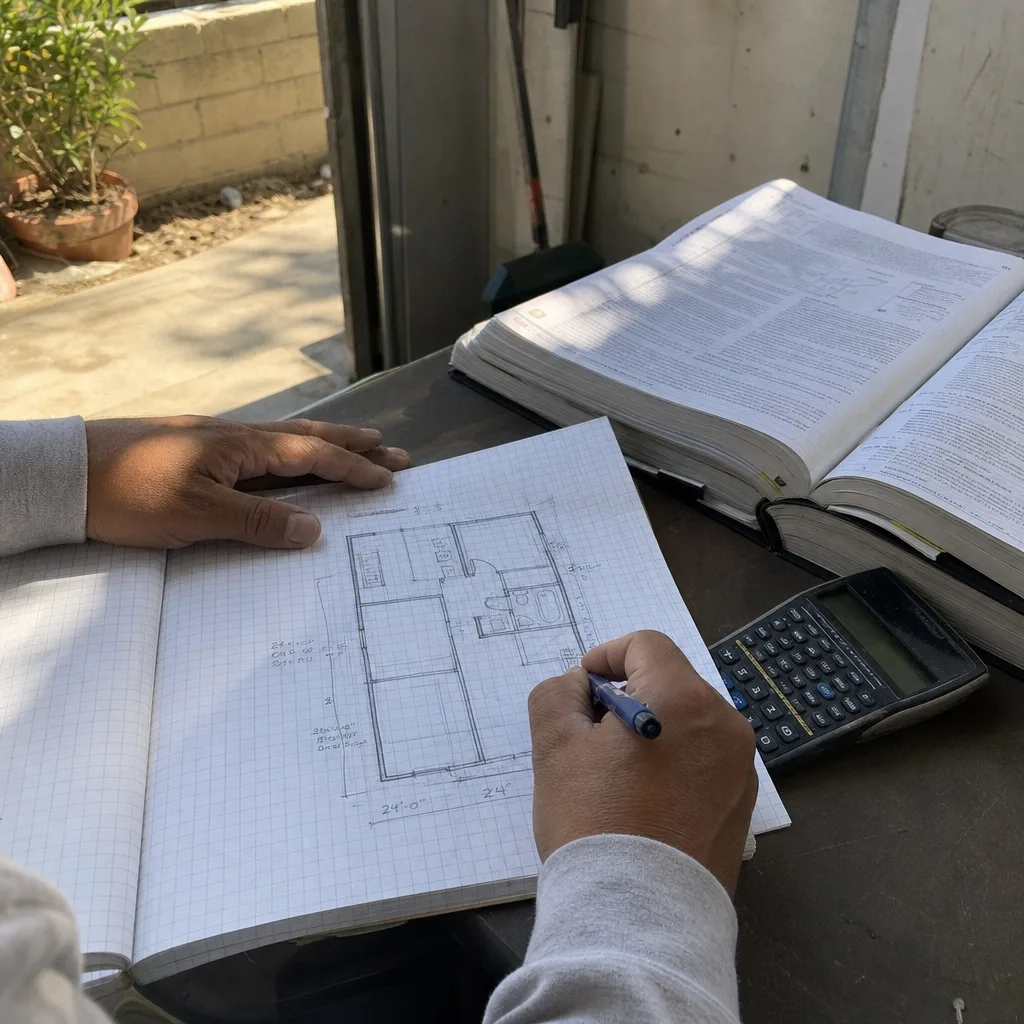
We have reviewed owner-builder files at the Santa Ana Community Development Agency. The pattern is consistent: owners who self-permit without architectural drawings average 3.2 plan check rounds versus 1.4 for architect-stamped sets. At $1,200-$1,800 per plan check resubmission in city fees and consultant time, the savings of avoiding an architect often evaporate in the first two months.
Where DIY Is Legally Impossible: The Licensed Trade Requirements
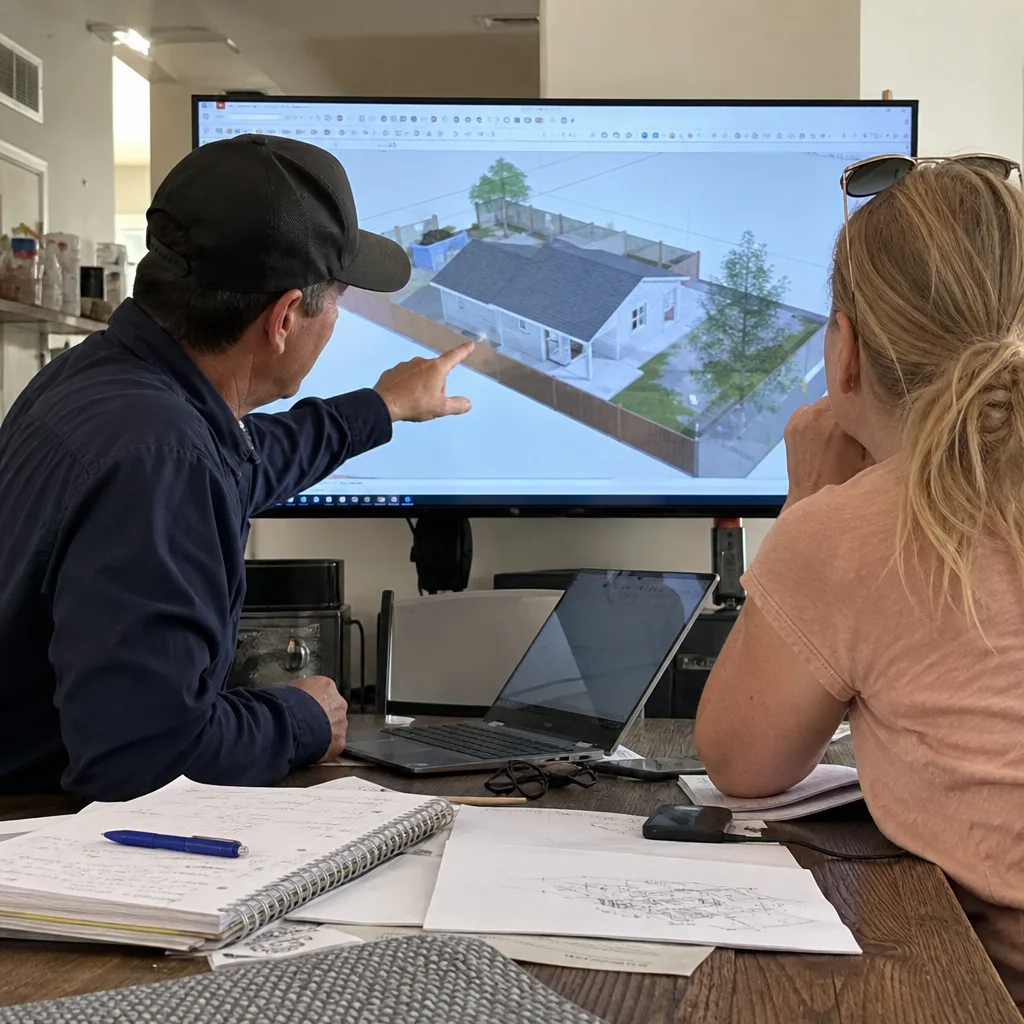
Even committed owner-builders cannot legally perform all ADU work themselves. California law mandates licensed contractors for specific scopes, regardless of owner-builder status. Understanding these boundaries clarifies where “DIY” ends and “subcontractor management” begins.
Structural work: Any modification to load-bearing walls, foundation repair, or new concrete work exceeding 50 cubic yards requires a C-8 (Concrete) or C-5 (Framing and Rough Carpentry) license. Santa Ana’s seismic zone D requirements mean most ADU foundations need engineered rebar and inspection hold points that owner-builders cannot self-certify.
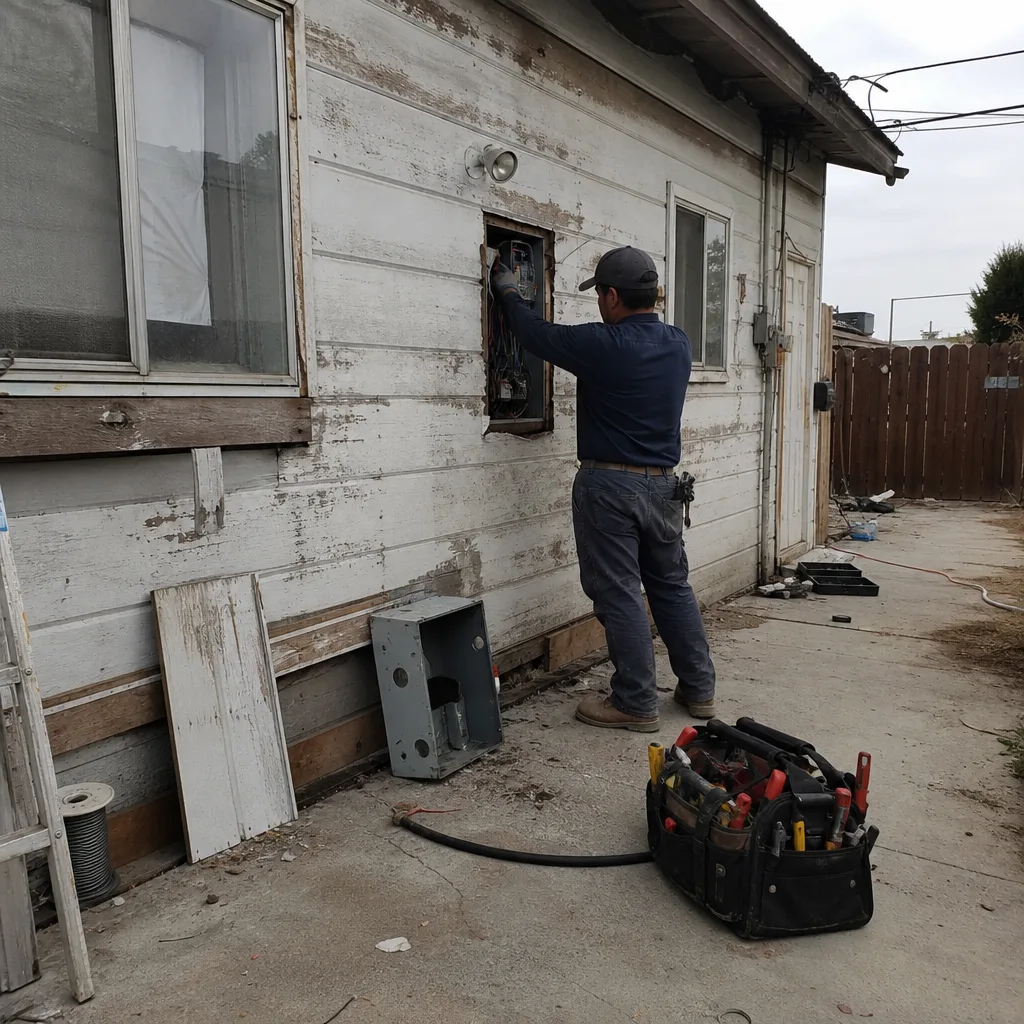
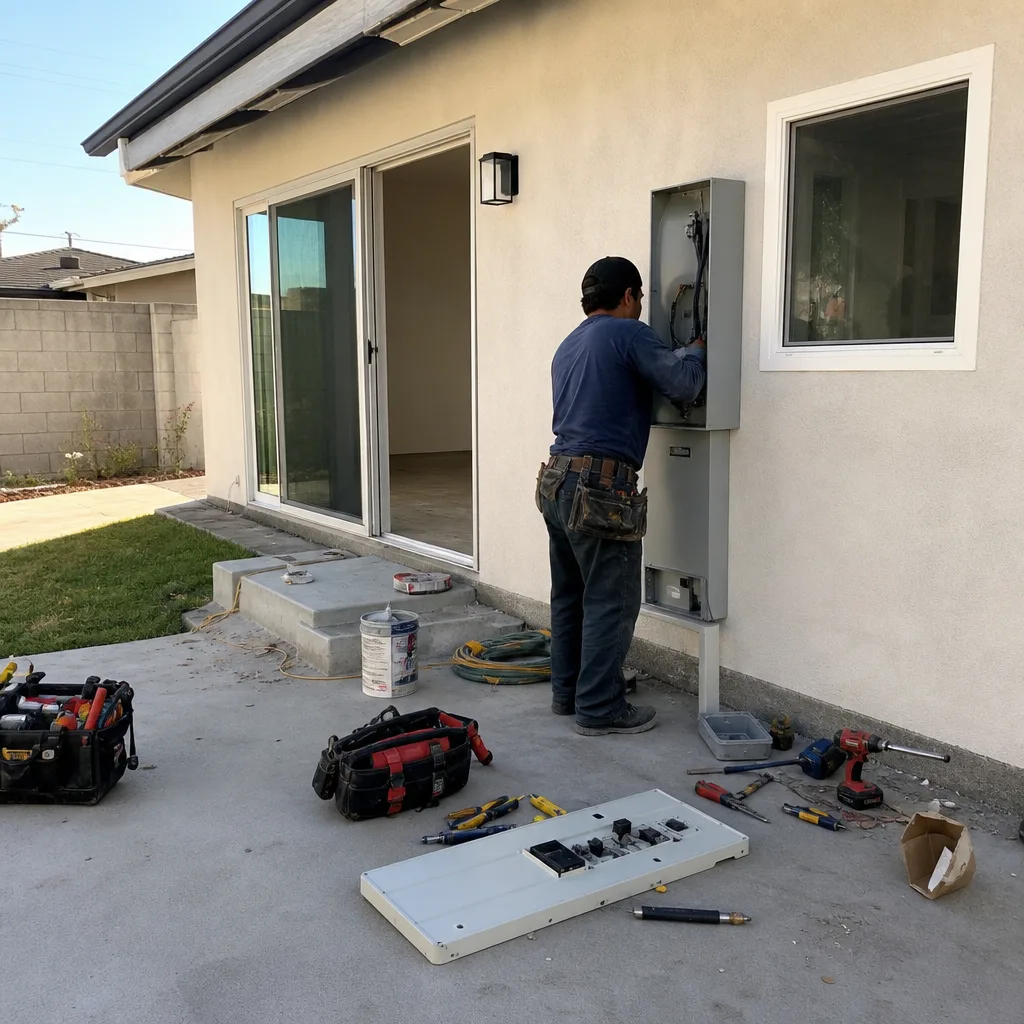
Electrical panel upgrades: Utility interconnection for an ADU typically requires a 200-amp service upgrade. Only a C-10 (Electrical) contractor can pull this permit in Orange County. SCE (Southern California Edison) will not energize a new meter without a licensed electrician’s sign-off.
Gas line connections: New gas service to a detached ADU requires a C-36 (Plumbing) or C-38 (Refrigeration) contractor for the pressure test and SoCalGas inspection. Owner-installed gas lines are not merely uninsurable; they are illegal to energize.
HVAC refrigerant handling: EPA Section 608 certification is federal law. No state owner-builder exemption applies.
What remains for the owner-builder is project coordination, finish carpentry, painting, flooring, and landscaping. These are real cost centers, but they represent perhaps 15-20% of total project value. The skilled trades, where most dollars flow, remain legally walled off.
Real Cost Comparison: A 500 Sq Ft ADU in Santa Ana
The following analysis uses 2024 Santa Ana construction costs for a 500 sq ft detached ADU with kitchenette, three-quarter bath, mini-split HVAC, and standard finishes. We assume the owner has construction management experience and can source subcontractors without a general contractor’s markup.
| Cost Category | Owner-Managed (DIY) | Design-Build Contract |
|---|---|---|
| Architectural drawings & permit set | $4,500-$7,500 (online drafter, no local code knowledge) | $8,500-$12,000 (included in contract, stamped, Santa Ana plan-check proven) |
| Structural engineering | $2,500-$4,000 | Included |
| Site prep & utilities (sewer lateral, water, electrical trench) | $18,000-$28,000 (owner-coordinated, no single-point warranty) | $22,000-$32,000 (single contract, 365-Day Done Right Promise) |
| Foundation & framing | $35,000-$48,000 (licensed subs, owner-managed) | $38,000-$52,000 |
| Electrical, plumbing, HVAC | $22,000-$32,000 (licensed subs only) | $24,000-$34,000 |
| Insulation, drywall, finishes | $18,000-$26,000 (owner-performed finish work possible) | $20,000-$28,000 |
| Owner time: 400-600 hours @ $75/hr opportunity cost | $30,000-$45,000 | $0 |
| Plan check corrections & delay costs (carrying cost, rent loss) | $8,000-$15,000 (higher correction rate, longer timeline) | $2,000-$4,000 |
| Total All-In Range | $138,000-$199,500 | $114,500-$162,000 |
The owner-managed column includes opportunity cost because this is a genuine economic cost, not a theoretical one. A homeowner earning $75/hr in their profession who spends 500 hours managing trades has foregone $37,500 in income. Even at $40/hr, the time cost exceeds $20,000. Most DIY cost analyses omit this, which is why they appear to show savings.
Under Haven Standard Clause 1, our New Detached ADU in Santa Ana projects are quoted with a written price before any work begins. The range above reflects site-specific variables - soil conditions, utility distance, existing vegetation - but the price you receive is the price you pay.
Santa Ana Plan Check Reality: Owner-Submitted vs. Architect-Stamped Drawings
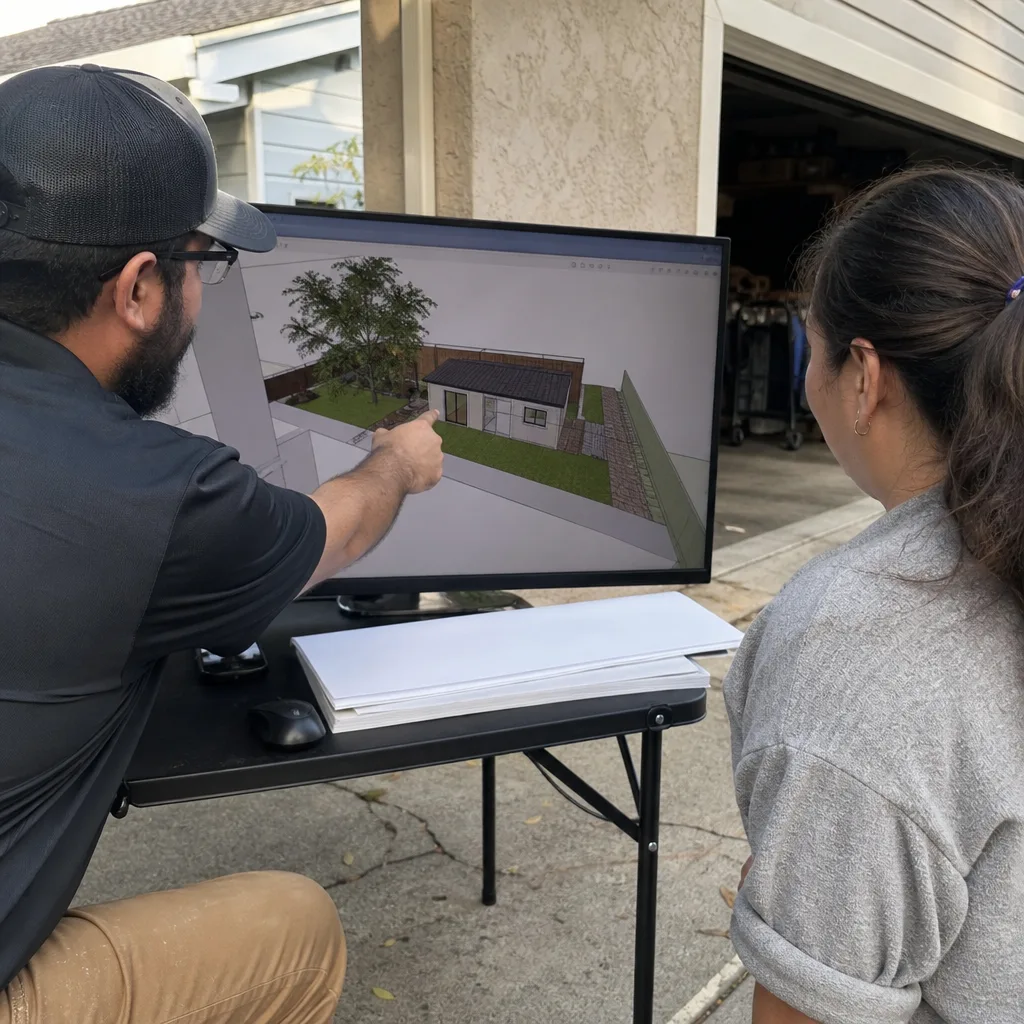
The Santa Ana Community Development Agency divides ADU plan check between two tracks: owner-builder submissions and licensed professional submissions. The procedural differences are substantial and predictably affect timeline and cost.
Owner-builder submissions: Drawings are reviewed for completeness but receive no deference on code interpretation. If a handrail height is drawn at 33 inches and code requires 34, the plan checker issues a correction with no phone call, no clarification. The owner must revise and resubmit. Average first-pass approval rate: 18% in our observation of 2023-2024 filings.
Architect-stamped submissions: Santa Ana plan checkers maintain a working relationship with local architects whose drawings have proven compliant. Clarification calls happen before corrections are issued. Minor dimensional variances are sometimes accepted with a letter of justification. Average first-pass approval rate: 62% for established Santa Ana practitioners.
The time difference is equally stark. Owner-builder plan check cycles in Santa Ana average 8-14 weeks for initial review, plus 4-6 weeks per correction round. Architect-stamped sets average 6-8 weeks initial, 2-3 weeks per correction. For a project requiring two correction rounds, this is the difference between breaking ground in March versus breaking ground in September - a full construction season in Santa Ana’s year-round building climate. Our Seasonal ADU Care for Santa Ana: Year-Round Homeowner’s Guide explains how timing affects long-term maintenance cycles too.
Weather matters less here than in Northern California, but the fiscal calendar does. Property taxes are assessed on January 1. An ADU completed in December versus June of the following year can mean twelve additional months of rental income or twelve months of carrying cost, depending on your financing structure.
Three Scenarios Where Owner Involvement Genuinely Reduces Cost
We have completed over 900 ADUs since 2015. In perhaps 15% of cases, owner involvement produced measurable savings without increasing legal exposure. These scenarios share a common thread: the owner contributes a specific, licensed skill or resource that replaces a market-rate purchase, not a general willingness to coordinate.
- Owner holds a C-license and self-performs their trade. A C-10 electrician who lives on the property can legally perform their own electrical work, including panel upgrades, and eliminates the subcontractor margin on that scope. The savings are real but bounded to one trade, typically 8-12% of total project cost.
- Owner sources reclaimed or surplus materials with documented provenance. Santa Ana’s proximity to construction surplus warehouses and demolition salvage yards allows access to code-compliant fixtures, cabinets, and flooring at 30-50% below retail. The key is documentation: every material needs a grade stamp, UL listing, or ICC-ES report to pass inspection. We have incorporated James Hardie siding from salvage on two Santa Ana projects, with full documentation, saving $4,000-$6,000 on materials.
- Owner completes finish work after certificate of occupancy. Painting, flooring installation, cabinet hardware, and landscaping can be owner-performed post-CO without affecting the building permit or warranty coverage. This defers 10-15% of project cost to a later date and allows the owner to work at their own pace. The critical boundary: no structural, mechanical, or waterproofing work can be deferred.
Three Scenarios Where DIY Reliably Increases Total Project Cost
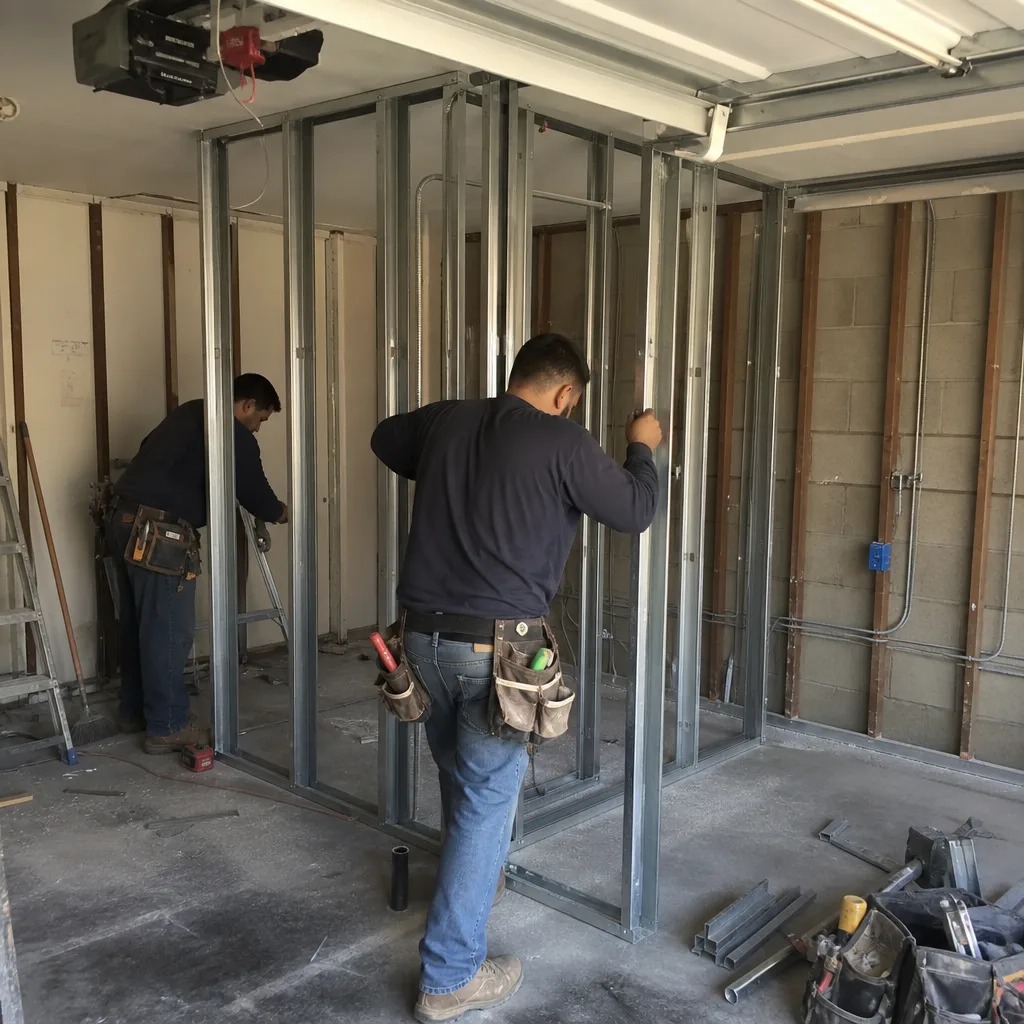
The mirror image is more common. These are the projects where owner management, however well-intentioned, produced cost overruns that exceeded any theoretical savings.
- Owner acts as general contractor without construction management experience. The learning curve is expensive. Subcontractors charge premium rates to owner-builders because payment risk is higher and coordination is slower. We have seen framing crews bill $68/sq ft to owner-builders versus $52/sq ft to established general contractors for identical scope. The $8,000-$12,000 “saved” by avoiding a GC markup is consumed by higher trade pricing and rework.
- Owner submits self-drawn plans without Santa Ana-specific code knowledge. Santa Ana enforces the 2022 California Building Code with local amendments including specific fire separation requirements for garage conversions and prescribed setbacks in the historic districts near Downtown and French Park. Self-drawn plans that miss these amendments face correction rounds that add 3-5 months and $6,000-$10,000 in fees, consultant time, and carrying costs. Our ADU Design & Permitting in Santa Ana service includes these amendments as standard; they are not intuitive to an out-of-area drafter.
- Owner selects subcontractors on price alone, without bonding or warranty verification. The lowest bid often excludes workers compensation, uses unpermitted labor, or carries no performance bond. When the concrete subcontractor abandons a job in Santa Ana’s Willowick neighborhood - a scenario we have encountered twice - the owner pays twice for the same scope and faces a six-week schedule slip. A design-build contract with a 365-Day Done Right Promise shifts this risk to the studio.
Insurance, Permits, and Liability: The Hidden Architecture of Risk
The financial comparison above assumes nothing goes wrong. This is not a safe assumption. Understanding the risk architecture of owner-builder ADU construction clarifies why professional management carries value beyond coordination.
Workers compensation gap: If an uninsured subcontractor’s worker is injured on your property, you become the statutory employer under California Labor Code Section 2750.5. Your homeowners policy excludes this exposure. A single fracture with surgery can generate $150,000-$400,000 in medical and disability claims against your personal assets. Design-build studios carry workers compensation and name the owner as additional insured.
Construction defect litigation: California’s Right to Repair Act (SB 800) imposes strict liability for construction defects on builders, but owner-builders are not “builders” under the statute. This sounds advantageous but is not. It means owner-builders face common law negligence claims with no statutory safe harbor, longer statutes of limitation, and no pre-litigation repair process to limit damages.
Title and resale: The owner-builder disclosure on title triggers enhanced scrutiny from lenders and title insurers. Some institutional buyers, including iBuyers and relocation companies, will not purchase properties with recent owner-builder work without a structural warranty from a licensed contractor. The “savings” of DIY can become a 3-5% price reduction at sale, or a required retrofit to obtain a policy of title insurance.
Under Haven Standard Clause 5 (No Surprises), our scope is locked at contract signing. The written price before work starts, per Clause 1, includes permit fees, plan check corrections, and standard inspections. The owner knows their exposure before ground breaks.
The Third Path: Prefab and Modular Systems in Santa Ana
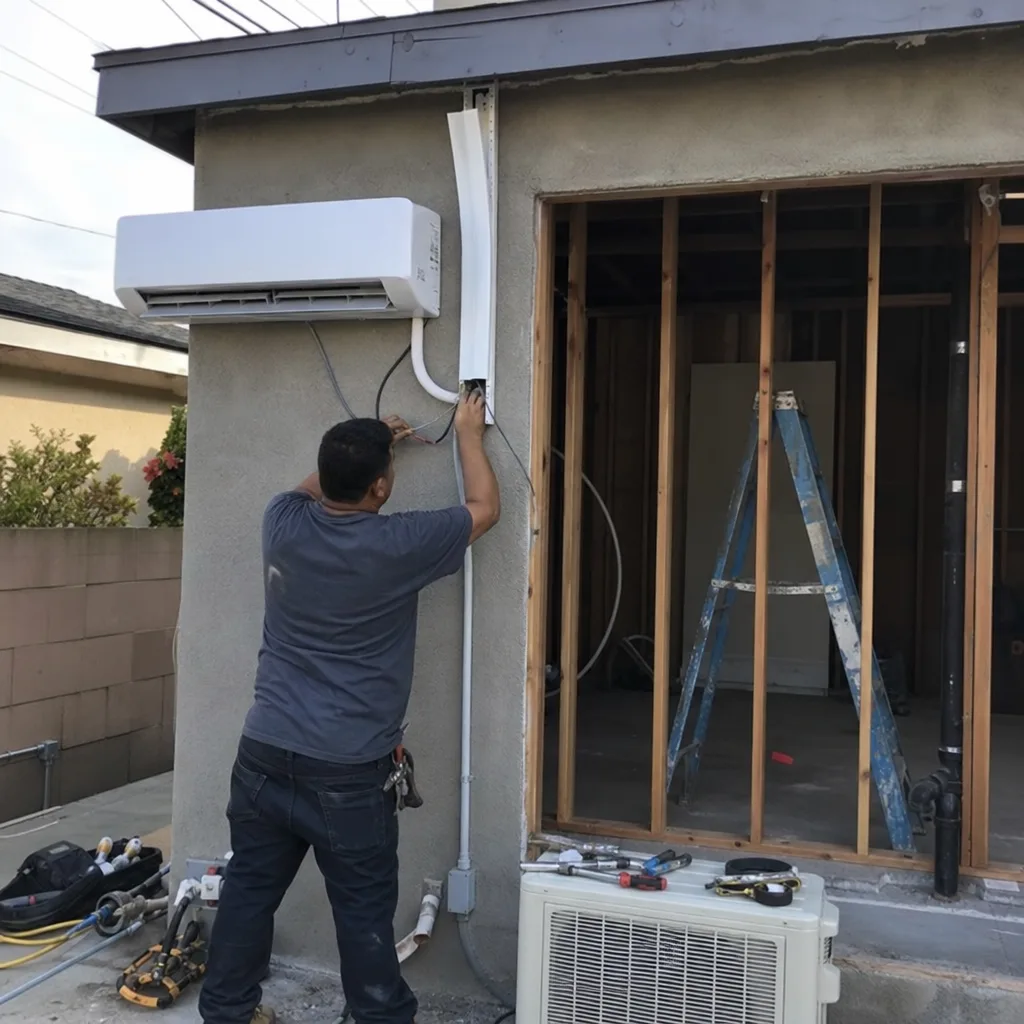
Some Santa Ana homeowners assume DIY and traditional stick-built are the only options. Prefab and modular ADUs represent a third path that narrows the gap between owner involvement and professional execution.
Systems from Ellery ADU Studio Santa Ana home partners including Plant Prefab, Boxabl, and Tuff Shed arrive with engineered drawings pre-approved by the California Department of Housing and Community Development. This bypasses much of the plan check uncertainty that plagues owner-builder submissions. The modules are manufactured in controlled environments, reducing weather delays and quality variance.
The owner-builder role in prefab shifts from construction management to site preparation and utility coordination. Foundation, sewer lateral, electrical trench, and final utility connection remain local, licensed work. The module itself is warrantied by the manufacturer, with Ellery ADU Studio coordinating installation under the same single contract that covers site work.
Prefab pricing for a 500 sq ft unit in Santa Ana typically runs $95,000-$140,000 all-in, including transport from the factory to Orange County, crane set, and finish connection. This compares favorably to owner-managed stick-built at $138,000-$199,500 and design-build stick-built at $114,500-$162,000. The tradeoff is design flexibility: module dimensions are fixed, and Santa Ana’s narrow lots in neighborhoods like Logan and Lacy sometimes cannot accommodate standard transport widths.
We specify and coordinate these systems within our standard contract, with the same written price guarantee and 365-Day Done Right Promise. The owner does not manage a separate manufacturer relationship.
Common Mistakes to Avoid
- Assuming the owner-builder exemption applies to all trades. It does not. Electrical, gas, and structural work require licensed contractors regardless of your status. Attempting to self-perform these scopes voids insurance and exposes you to criminal liability under California’s contracting laws.
- Using online plan templates without Santa Ana amendment review. Generic California ADU plans miss Santa Ana’s specific fire separation, historic district, and parking replacement requirements. The $300 saved on a template costs $3,000-$5,000 in corrections.
- Failing to verify subcontractor licensing and bond status at cslb.ca.gov. Unlicensed contractors are common in Orange County’s informal labor market. Hiring them saves 20-30% until a stop-work order arrives or a worker is injured.
- Neglecting to record the owner-builder exemption waiver with the county. The B&P Code 7044 disclosure is not automatic. Failure to record it properly can delay final inspection and certificate of occupancy.
- Underestimating the carrying cost of timeline extension. Every month of delay on a financed ADU costs $800-$1,500 in interest, insurance, and property taxes. A six-month DIY “savings” often consumes itself in carrying costs alone.
- Ignoring the resale disclosure implications. The owner-builder cloud on title affects every future transaction. If you plan to sell within ten years, the “savings” are likely negative.
When to Call a Professional
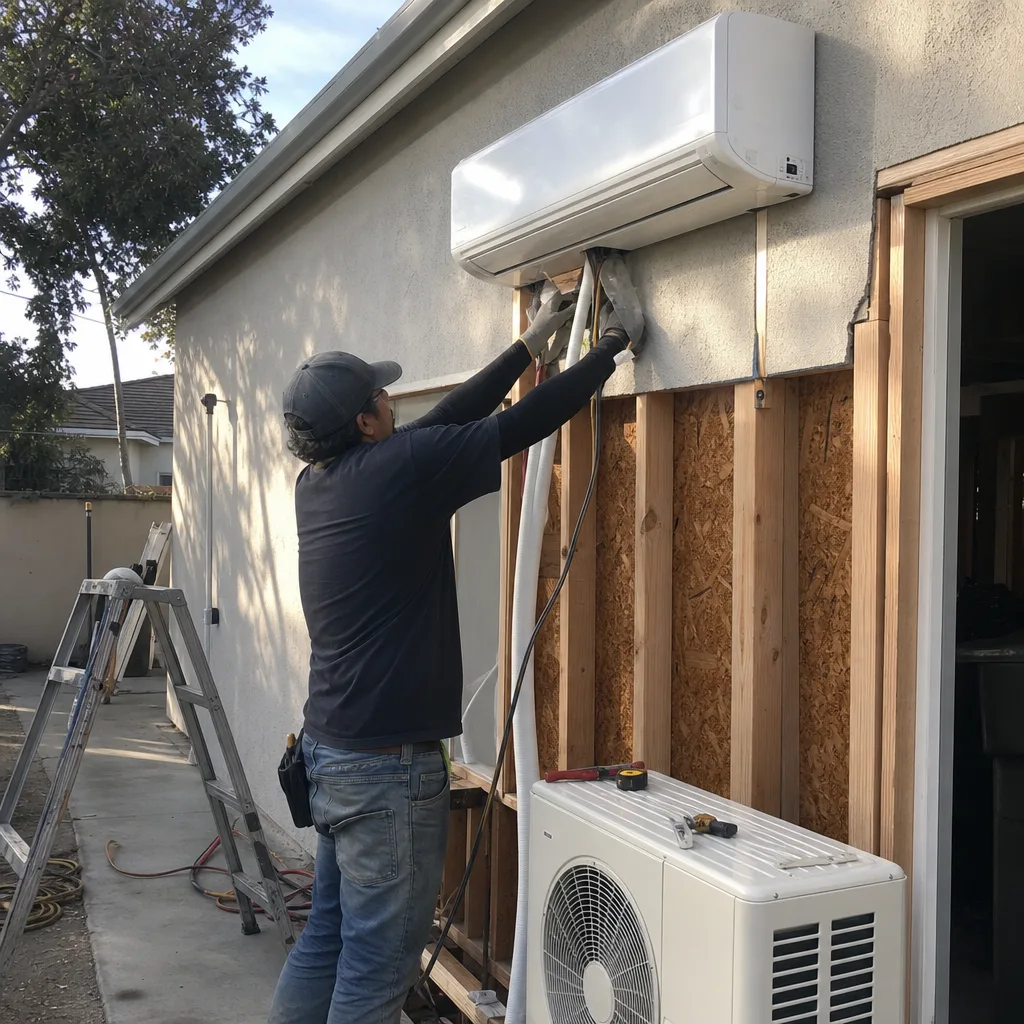
Call a licensed design-build studio when your ADU involves structural work, utility connections, or any scope where you are not personally licensed to perform the trade. Call when you need a written price before work begins, documented photo records on every visit, and a warranty that transfers to subsequent owners. Call when the cost of your time, the risk of your liability, and the complexity of Santa Ana’s permit process exceed your appetite for self-management.
Ellery ADU Studio Santa Ana offers free estimates in Santa Ana - call (949) 541-8498. We also provide a Free Second Opinion on any written estimate already in hand, with no obligation to engage our services.
Frequently Asked Questions
Yes, under California’s owner-builder exemption, but you must personally perform the work or hire licensed subcontractors for each trade, record a disclosure against your title, and accept personal liability for code compliance for twenty years. Call (949) 541-8498 to discuss whether this status fits your risk profile - estimates are free.
A 500 sq ft detached ADU typically runs $114,500-$162,000 with a design-build contract versus $138,000-$199,500 owner-managed, including the value of owner time. Garage conversions in Santa Ana generally fall lower, at $85,000-$140,000 professionally managed. Our Garage Conversion ADU in Santa Ana page details specific pricing for that scope.
Standard policies exclude construction-related liability. Owner-builder endorsements are available but carry high deductibles and exclude faulty workmanship. Most Santa Ana homeowners in the DIY path are effectively self-insured for the construction period, which is why we carry comprehensive coverage on every Ellery ADU Studio project.
Owner-builder drawings average 8-14 weeks for initial review with a first-pass approval rate near 18%. Architect-stamped sets average 6-8 weeks with 62% first-pass approval. Each correction round adds 4-6 weeks for owner submissions versus 2-3 weeks for professional drawings.
No. Electrical panel work and new gas connections require C-10 and C-36 licenses respectively, regardless of owner-builder status. You may legally install finish plumbing fixtures and low-voltage wiring, but utility interconnection is restricted to licensed contractors.
The disclosure remains on title for twenty years from final inspection. It alerts future buyers, lenders, and insurers that the work was not performed by a licensed contractor. Some buyers will require a retrofit warranty or price reduction. The disclosure does not prevent sale, but it complicates it.
The Bottom Line
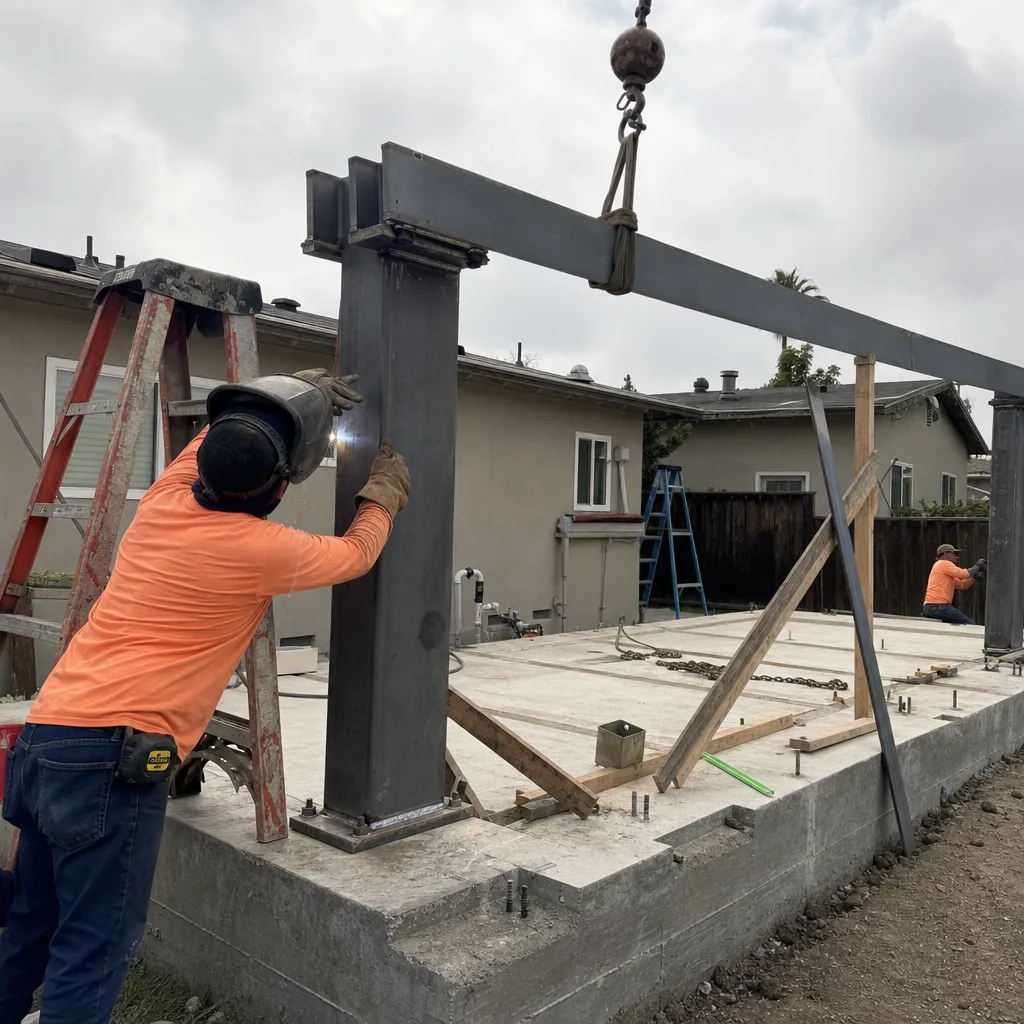
The DIY versus professional ADU decision in Santa Ana resolves most clearly around three questions: Are you licensed to perform the skilled trades your ADU requires? Can you absorb the personal liability that owner-builder status creates? And have you valued your time at its actual opportunity cost? For most homeowners, particularly those in Santa Ana’s professional workforce who bought between 2015 and 2025, the design-build path produces lower total cost, faster completion, and transferable warranty protection. The owner-builder path remains viable for licensed tradespeople and experienced construction managers, but it is not the money-saving shortcut it appears to be. Explore more guides & resources on ADU planning, financing, and Santa Ana-specific regulations. The permit set, not the hammer, is where value is created or destroyed.
Call (949) 541-8498 to schedule your free estimate, or request a Free Second Opinion on any written estimate you have already received. A live person answers calls 24/7.
Written by Nadia Ellery, Owner at Ellery ADU Studio Santa Ana, serving Santa Ana since 2015.